N° 7
July/August 2026
—
TTS Italia is the Italian ITS Association founded with the aim to promote the development and deployment of Intelligent Transport Systems (ITS) in Italy. |
|
|
|
|
| The interview by Morena Pivetti |
|
|

"AI must not become the breaking point for mobility security"
Interview with Nunzia Ciardi, Deputy Director General of the National Cybersecurity Agency: meaningful human oversight is needed
At the annual TTS Italia conference "AI and Cybersecurity for the mobility of people and goods," where the Association presented its Position paper of the same name, her speech was among the most appreciated by speakers and attendees. Therefore, we decided to ask Nunzia Ciardi, Deputy Director General of the National Cybersecurity Agency, to revisit the assessments she shared there, regarding the opportunities and risks of the AI revolution, in this wide-ranging interview that offers many insights. In her responses, Ciardi explores the increasingly pressing issue of the infrastructure and transportation ecosystem, highlighting potential weaknesses in the logistics chain and the actions needed to ensure its security, both digital and physical. Technological investments are not enough; a cultural evolution is also needed, along with building the necessary skills.

The cyber news of recent times hasn't been encouraging. How would you describe the current state of cyber threats, especially for the transportation sector?
Our data shows a year-over-year increase in attacks of around 38% in 2025. This figure, taken alone, makes headlines. But alongside this is another, one that rarely makes headlines and instead reveals a nuance I believe should not be overlooked: the events that result in an incident with confirmed impact—those that cause real damage—increase by a much smaller fraction, 7%. On the one hand, pressure is increasing, but from above, the number of successful attacks is decreasing. It is in this gap—between a growing threat and proportionally decreasing damage—that the true state of affairs is measured. More detected events and fewer incidents with concrete consequences is not a paradox: it is the signature of a defense and early warning system that is starting to function. But the truly important figure is not how many attacks there are: it is what they affect. In mobility, an attack is almost never a simple data theft. It is an event that can have physical consequences, with potential real victims. When we talk about people traveling by train, subway, or connected car, and about goods passing through ports, freight terminals, and logistics corridors, we're talking about systems on which the physical safety of citizens and the economic continuity of the nation depend. This is what makes the domain so sensitive: the economic value of connected mobility is directly proportional to its vulnerability.
And, indeed, the sector is among the most exposed. Your Position Paper ranks it fifth among the most attacked sectors globally, and, looking at Italy, our recent Annual Report to Parliament places it sixth in terms of number of victims and—even more telling—third among the targets of DDoS campaigns. A convergent picture: mobility is now a structural, not an occasional, objective. And yet—and this is the point I want to emphasize—alongside the worsening threat, there is also a maturing defense. Europe and Italy have built a robust regulatory framework in just a few years. These aren't top-down requirements: they're the backbone of a growing collective awareness. More and more operators have understood that security isn't an additional cost, but the very basis of service continuity. I would describe the real threat situation like this: we're facing an adversary that's more capable and faster than ever before, but we're not helpless. The difference will be made by our ability to transform the rules into daily practice, and not leave them on paper.
In your speech at the TTS Italia Conference in June, you used a clear image: extreme efficiency comes at a hidden cost: fragility. A supply chain optimized down to the last millimeter has little margin and an attack surface spread across many players, many of which are SMEs with uneven cyber maturity. What does this mean, in concrete terms, for those who must protect ports, interports, and logistics corridors?
It means overturning an idea we take for granted. We're used to thinking that efficiency is always a virtue, and to a large extent it is: modern logistics is a marvelous system of containers tracked in real time, automated warehouses, and routes recalculated minute by minute. But a system optimized down to the last millimeter is, by definition, a system with very little margin. And where there are no margins, a single point of failure isn't isolated: it immediately propagates downstream. The same quality that makes the supply chain performant also makes it fragile.
Added to this is the fact that the attack surface isn't concentrated, it's distributed. A supply chain is made up of freight forwarders, carriers, port operators, customs, and tracking platforms—and many of these players are small and medium-sized businesses, with unequal levels of cyber maturity. The experienced attacker knows this well: they don't try to break down the "security door" of the large operator, but rather try to enter through the ajar window of the weakest link and then move along the chain, unduly exploiting mutual trust.
This is why it's no coincidence that NIS2 requires robustness and resilience not only from the large hub, but throughout the entire supply chain. Protecting a port today doesn't mean securing a perimeter: it means protecting an ecosystem. Further complicating the ecosystem today is Artificial Intelligence, which, while exceptional at certain optimization tasks, has its own unique attack surface. If a system autonomously decides how to route a load, which goods to prioritize, anyone who can manipulate the data feeding it can influence real decisions: divert a flow, hide a good, create an artificial bottleneck. There's no need to shut down the port: just convince the algorithm to make the wrong decision. It's a silent attack, which doesn't shut down anything, and for this very reason, it's the most difficult to detect. Defense, then, must shift: from protecting the wall to protecting the integrity of data and decisions.
At the TTS Italia Conference, you began with a clear statement: "AI is optimization, not a panacea." Does this help us understand where artificial intelligence brings real value and where it should be kept within a deterministic guardrail, with humans as the ultimate authority?
Let's start with what the artificial intelligence we use every day actually is. It's advanced statistics: extraordinarily powerful, but statistical. Large language models, at their core, are predictors of the next word; they return the statistically most probable sequence based on data produced in contexts that may have nothing to do with the one in which we're using them. They don't "understand" the railway system or the logistics chain. In a conference room, it's a philosophical distinction; in a traffic control room, it's a security distinction. Calling a statistical predictor "intelligence" exposes us to the risk of delegating to it a judgment it doesn't possess.
With this premise, the map becomes clear, and it's not at all anti-AI. Where artificial intelligence optimizes a process, it achieves performance that I would call superhuman: it predicts peaks in demand weeks in advance, optimizes train occupancy and reduces empty trips, and identifies an anomaly—a spreading delay, a festering fraud—before it becomes a problem. In these areas, it should be used generously, and it's no coincidence that the legislation itself treats it with light requirements.
The situation changes when AI stops suggesting and begins to decide and act on its own: mobile robots, stacker cranes, and automated shuttles that move in spaces filled with people, triggering one another's actions without anyone in between giving their consent. Here, the advantages remain real—in fact, automation often makes work safer, freeing humans from the burden of handling heavy loads, narrow aisles, and night shifts in yards, and with them, real accidents. But the longer the chain of automatic decisions becomes, the more difficult it becomes to understand where it breaks down.
The principle of adoption is simple: insurmountable physical safety limits cannot be "guessed" statistically: they must be rigid constraints, written in a deterministic and certified logic. Within those limits, AI can optimize as much as it wants. This is the concrete meaning of "meaningful human control": not a human ratifying decision already made by the machine, but a human remaining the final authority where the decision impacts people's safety. And with control comes responsibility: when delegating to an autonomous system, it must always be clear who is responsible. A chain of decisions that no one can explain after an accident isn't innovation: it's a lack of accountability.
You reiterate that the real risk isn't AI itself, but delegating to it a judgment it doesn't possess—mistaking apparent correlation for true prediction. In an era where many are adopting AI "out of fashion," what does it mean for an organization to be truly aware? And how does one learn to ask the right questions?
Being mindful means, first of all, resisting a widespread temptation: adopting artificial intelligence systems—perhaps autonomous, perhaps agentic—partly for the sake of fashion, partly for marketing, because "everyone is doing it" and no one wants to seem left behind. This isn't innovation: it's an abdication of judgment. And paradoxically, it's also the surest way to introduce fragility into a system, because it entrusts a machine with a decision no one has truly trained it to make.
The mature approach is exactly the opposite, and less flashy: it's a process of discernment, application by application. It's necessary to ask, "For this specific problem, is AI the right tool? And if so, within what limits?" A mindful organization is one that can distinguish true prediction from apparent correlation, that knows the limits of the tool it adopts, that manages its attack surface, and that knows how to place each technology where it's truly needed, not where it's not meant to be seen.
As for learning the right questions, I believe it starts with a change in posture. The right questions don't arise from blind faith in technology, nor even from prejudicial suspicion. They arise from expertise: from knowing how a tool works well enough to recognize its weaknesses. The crucial question, faced with any AI system, is not "how powerful is it?", but "what happens when it fails, and who notices?" An organization that gets used to asking this question, before adopting and not after an incident, has already done the hardest part of the job.
Security, it's often said, is only as strong as its weakest link—and in an ecosystem of operators, suppliers, employees, and citizens who use connected mobility services every day, awareness can't remain confined to specialists. How do you build a culture of security that becomes truly widespread, a shared heritage and not the purview of a select few?
As we've said, in a distributed supply chain, the attacker enters at the least protected point, and that point is almost always human rather than technological: a reused password, an attachment opened thoughtlessly, a procedure bypassed to "get things done faster." No defensive technology, no matter how sophisticated, holds if the culture surrounding it is fragile. This is why awareness cannot remain a specialist's affair. Building a widespread culture means, in concrete terms, three things. The first is to stop considering security a separate technical issue and start treating it as a dimension of everyone's work—from the top management who decides on investments to the operator on the dock. Management's responsibility, here, cannot be delegated: security is a governance issue, not just an IT department. The second is continuous training, not one-off compliance: threats evolve, and an awareness frozen yesterday is already discovered today. The third, perhaps the most subtle, is language. If we talk about security only in the jargon of experts, we relegate it to the purview of a select few. If, however, we learn to explain it, then it becomes a shared heritage, because a certain amount of caution ultimately protects not only abstract entities, but also colleagues, passengers, and citizens.
As an Agency, we are working precisely in this direction: raising the level of collective awareness, so that safety ceases to be perceived as an imposed constraint and is recognized for what it is—the condition that allows everything else to function. Safe mobility is not the product of a few skilled technicians: it is the result of many people who, each in their own place, are careful about what they do and how they do it.
The Position Paper produced by TTS Italia also emphasizes this point: the transition requires not only technological investments, but a cultural evolution to bridge the digital divide and the skills gap. What skills does the country really need to manage the convergence between AI and cybersecurity, and where do we start to build them?
Absolutely right: the most difficult part of this transition, ultimately, isn't technological, but cultural and organizational. You can buy the best systems in the world, but without the right people to choose the right tool for the right problem, those systems will remain untapped power—or, worse, poorly managed risk. The "digital divide" and the "skills gap" aren't formulas: they are the real gap between the technologies we adopt and the skills we use to govern them.
The skills the country needs, then, aren't just the hyper-specialized ones—though necessary, and we still train too few of them. Above all, we need a hybrid figure, rare today: someone who knows how to navigate the boundary between artificial intelligence and cybersecurity, between data logic and security logic, and who speaks both the language of the engineer and that of the decision maker. The convergence of these disciplines isn't governed by separate silos: it's governed by people capable of bringing their languages together. This is why the best teams are multidisciplinary and—it's worth mentioning—multi-gender, because a complex risk environment is best addressed with diverse perspectives.
Where do we start? With serious and ongoing investment in training, which isn't episodic and doesn't end when the technology is purchased. With controlled testing environments, where we learn from safety mistakes rather than from the real system. And with structural collaboration between industry, institutions, universities, and research: none of these worlds, alone, has all the necessary expertise. The Agency is directly committed to this, because expertise is, ultimately, the first and most solid security infrastructure a country can build.
You concluded your speech at the TTS Italia Conference by saying that a country's technological maturity isn't measured by how much AI it can squeeze into everything, but by its ability to choose the right tool, remembering that in certain contexts, this remains human intelligence, and learning to manage it well. If you had to leave readers with just one message, what would it be?
Safe mobility isn't a well-written document: it's a train arriving, a cargo that isn't diverted, a barrier that rises when it needs to. The more we make mobility smarter—and this applies to every field—the more that intelligence could become a target. The difference between a country that transforms digitalization into resilient efficiency and one that transforms it into vulnerability lies entirely in the ability to distinguish. Our task—industry, institutions, research, and the Agency together—is to transform principles into daily practice, and ensure that the intelligence of our systems never becomes their breaking point, but remains the foundation of national security.
Who is Nunzia Ciardi. Nunzia Ciardi has been Deputy Director General of the National Cybersecurity Agency since September 16, 2021. She was the first woman to head the Italian Postal Police, a force of two thousand experts dedicated to combating cyberterrorism, financial cybercrime, online child pornography, protecting national critical information infrastructure, hacking, and cybercrime in general. Always connected, for work and pleasure, she is fascinated by the infinite potential of the web, which she vigorously defends from those who would make it a dangerous place. She is a member of the Scientific Committee of the Permanent Observatory on Security and of the Scientific Committee of the Permanent Observatory on Education Policies of EURISPES. She is a member of the Board of "Women4Cyber," an initiative launched by the European Cybersecurity Organization (ECSO) aimed at increasing the involvement of women in the cybersecurity sector. She has taught at various police schools, at the Carabinieri Officers' School, and at the Center for Advanced Defense Studies, and is a speaker at various universities and organizations on the main activities of the Cybersecurity Agency. Author of the book "Con lo smartphone usa la testa" (Use your head with your smartphone), Sperling & Kupfer, 2018, and of scientific publications on cybercrime, she collaborated on the Clusit Reports. She is an ambassador for Telefono Rosa against violence against women. Winner of the "Inspiring Fifty 2021 Italy" award, presented by figures from the worlds of business, entrepreneurship, and academia to women who serve as role models in the technology world. Winner of the Golden Apple at the 35th edition of the Marisa Bellisario Award in recognition of women who make a difference with an exemplary managerial career in the institutional world: "A model woman of institutions who works every day for our security with great intuition and dedication." |
| |
|
|
Axis enables a smarter and safer world by improving safety, security, operational efficiency, and business intelligence. As a leading network technology company, Axis offers video surveillance, access control, intercom, and audio solutions, which it supports with intelligent analytics and high-quality training.
Axis has over 5,000 employees in over 50 countries and collaborates with technology partners and system integrators worldwide to provide solutions to customers. Founded in 1984, Axis is headquartered in Lund, Sweden.
—
THREE QUESTIONS TO...
Andrea Sorri - Business Development Director - Segment Development Manager Smart Cities EMEA Axis

A Strategic Shift in Traffic Intelligence. Axis recently completed the acquisition of FF Group, a specialist in high-end vehicle recognition software. How does this move redefine your strategy within the ITS sector, and what unique opportunities does it create for city authorities and traffic integrators?
The acquisition of FF Group represents a key milestone in our journey to become a solutions enabler for the traffic industry. By integrating FF Group's expertise, we can now offer a fully integrated solution for clients requiring less complexity. By developing hardware and analytics in-house, we can optimize the software to maximize the performance of our ARTPEC SOC. This translates into greater accuracy, easier installation, and a single point of contact for support. For Italian cities, many of which are currently transitioning to "Smart City" infrastructure, this ensures their data is reliable, secure, and ready for high-level traffic management and urban planning. The ecosystem remains open, as our technology partners can add their own apps with more specific features and customizations for non-standard situations. ALPV itself offers APIs for integration into third-party systems. We are simply raising the bar to enable increasingly scalable and advanced solutions.
The Evolution of ALPV – Beyond the License Plate. Axis License Plate Verification (ALPV) has been a staple of traffic technology for some time. How is Axis, now bolstered by FF Group’s expertise, evolving this technology, and what new capabilities are now possible at the "edge"?
We are moving beyond simple plate reading. With the integration of FF Group’s deep learning algorithms into our AXIS License Plate Verifier (ALPV), we continue to develop our advanced Vehicle Identification capabilities. This means our cameras no longer just "read" a plate; they "understand" the vehicle. Our latest systems can now classify vehicles by Make, Model, and Color (MMC), as well as identify the vehicle type (e.g., car, van, truck, or bus). This is all processed directly on the camera—at the "edge"—which minimizes bandwidth usage and allows for near-instantaneous triggers. In the context of Italian ITS, this is invaluable for enforcing Low Emission Zones (LEZ), managing "ZTL" (Limited Traffic Zones), and assisting law enforcement in identifying vehicles even when a plate is obscured or missing.
What does it mean to make an informed decision in a city? It is one of the most challenging contexts in which to make decisions. Is understanding trends more, less or equally important than identifying anomalies?
Let’s bring in more data and tools so that this data is more granular, street-level and easy to consult. Understanding what is happening across the city can still require manual monitoring and time-consuming analysis. AXIS Data Insights helps bridge that gap by aggregating and presenting data from Axis devices making it easier to spot trends, patterns and anomalies, understand changes over time, and act with greater confidence.
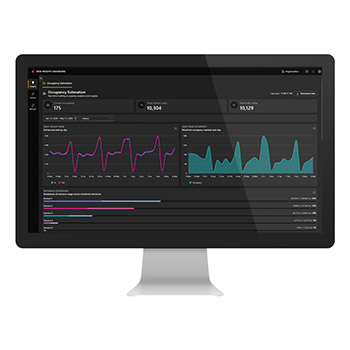
AXIS Data Insights aggregate scene and event data generated via Axis Scene Intelligence to understand how operations evolve, identify patterns over time and detect deviations early – whether the focus is on occupancy, traffic flows, environmental conditions or other operational metrics. And, of course, it offers open APIs for easy integration with other cities’ systems.
—
PRODUCT IN THE SPOTLIGHT
Precision at Speed – The AXIS P1486-LE and Global Shutter Technology
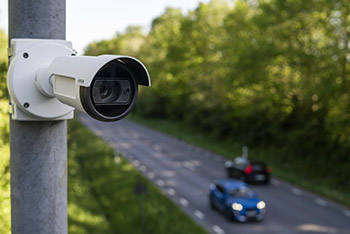
Axis recently launched the AXIS P1486-LE, which features a 3 MP global shutter sensor. Why is this specific hardware advancement a "game-changer" for traffic applications, particularly in high-speed environments like motorways or for urban tolling? In the world of ITS, motion blur is the enemy of actionable data. Traditional cameras often use a "rolling shutter," which captures an image line-by-line. When vehicles are moving at high speeds, this can lead to "rolling shutter distortion," where the vehicle or its license plate appears skewed or "stretched." For an analytics engine, this distortion can mean the difference between a successful read and a missed event.
The AXIS P1486-LE solves this by using a global shutter sensor, which captures the entire 3 MP frame simultaneously. This ensures "frozen," crystal-clear images of vehicles traveling at high speeds without any geometric distortion. When you combine this with its 3 MP resolution, you get an incredible level of detail—allowing for precise License Plate Recognition (LPR) and vehicle identification across multiple lanes. Furthermore, because it is built on our latest SoC ARTPEC-9, the camera can run advanced analytics like AXIS Object Analytics and our FF Group-powered LPR software natively. Paired with strobing IR-light the camera is made to see both inside the car and the license plate simultaneously. This opens up for detecting use of cell phones and non-use of seat-belt and other potential use cases. For Italian authorities, this means a reliable, all-in-one solution for everything from automated tolling to enforcing speed regulations and improving overall road safety.
Summary of the AXIS P1486-LE functionalities:
- Resolution: 3 MP for high detail.
- Sensor Type: Global shutter (eliminates motion blur).
- Intelligence: Built-in analytics.
- Vision: Equipped with OptimizedIR for clear identification even in darkness.
|
|
|
|
|
ROAD SAFETY EDUCATION: sometimes, changing perspective is all it takes to find a new road.

Eltraff presents ON THE RIGHT ROAD, the new innovative road safety education project designed for schools, communities and events.
The initiative stems from the belief that, today, road safety education can no longer be limited to simply teaching rules or spreading fear-based messages. To promote truly aware and responsible behaviour, people must be actively, concretely and meaningfully involved, encouraging critical thinking and using scientific data.

For this reason, ON THE RIGHT ROAD uses play, gamification, positivity and direct experience as educational tools, through a language that is close to the participants. The audience is not a passive spectator: participants are involved in activities that encourage them to engage, reason together, make decisions and truly take part. The project promotes peer discussion, allows people to experiment and make mistakes in a safe environment, and helps them understand risky road behaviours more effectively.
The goal is to turn road safety education into a positive, fun and practical experience, one that leaves a lasting mark and contributes to building a safer and more responsible mobility culture.
We have created proposals for schools, educators and the general public, tailored to all school levels, teenagers and adults, with materials designed to speak the specific language of each age group: card games, quizzes, videos, infographics, posters, stickers, postcards, memes, T-shirts, gadgets and much more.

We enter classrooms with interactive activities based on gamification, where students learn by playing, engage with one another, make decisions and reflect on risky behaviours.
For those who educate — teachers, trainers and Local Police — we provide ready-to-use kits and training programmes to help them use the materials effectively.
And we also bring road safety directly to people: public events, evenings in venues, free breath alcohol tests, practical demonstrations, information stands, interactive shows, travelling escape rooms and activities designed to engage the public.
With ON THE RIGHT ROAD, we take road safety education beyond traditional boundaries: not a frontal lesson, but an active, engaging and memorable experience. |
Real-time C-ITS data by Yunex Traffic improves truck arrival predictability in logistics

A SCALE pilot with Codognotto demonstrates how connected mobility can bring greater visibility and efficiency to freight operations
Yunex Traffic is helping logistics operators improve the predictability of truck arrivals by bringing real-time road data into logistics operations. As part of the European SCALE project, the company is supporting Codognotto, a leading European logistics operator, in evaluating how connected mobility services can reduce uncertainty, improve planning, and enhance coordination across logistics centers.
A key challenge in freight transportation is limited visibility into truck arrivals. Without reliable real-time information, logistics hubs can face congestion, longer wait times, and difficulties allocating resources efficiently. Through vehicle-to-everything (V2X) communication, the pilot enables direct data exchange between trucks and roadside infrastructure, providing operators with real-time information to better anticipate arrivals and manage incoming traffic.
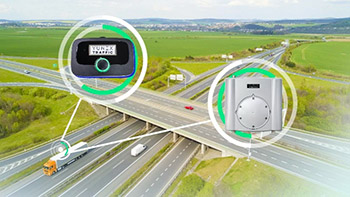
At the heart of the pilot is Yunex Traffic’s connected onboard unit, OBU2X, which has been deployed in a fleet of Codognotto trucks. The solution enables vehicles to receive infrastructure-generated information, including traffic conditions, road events, and other operational messages.
The real value of the pilot lies in how this information is integrated into logistics processes. Data received by the vehicles is transferred to Yunex Traffic’s cloud-based management platform and then integrated into Codognotto’s Transportation Management System (TMS). This gives logistics teams greater visibility into truck movements and estimated arrival times, supporting more informed operational decisions.
The pilot is expected to deliver several operational benefits, including:
- Improved visibility into incoming truck traffic
- Better planning and resource allocation at logistics centers
- Reduced wait times and operational disruptions
- Enhanced coordination between drivers and logistics hubs
- More efficient and reliable freight transportation operations
The pilot is currently being implemented in northern Italy, in the regions of Treviso and Verona. It involves an initial fleet of three vehicles, with plans to expand to 20 trucks as the project progresses.
For Codognotto, the key value lies in transforming infrastructure-generated information into actionable insights that improve operational efficiency, service reliability and the overall sustainability of freight transport." – Marco Torresan, Innovation Specialist, Codognotto.
While full deployment is expected by July 2026, the pilot already demonstrates how connected mobility can support real-world logistics operations. By integrating real-time road intelligence directly into transportation management systems, Yunex Traffic is helping logistics operators move from uncertainty to predictability, enabling more efficient and coordinated freight flows.
|
|
|
|
|
CELERITAS MSE 2021: Speed Enforcement, Safety Effectiveness

Founded in 2003 by engineers from the University of Siena and now part of the Zenita Group, EngiNe is a highly specialized technology company focused on the development of advanced solutions for smart mobility, traffic enforcement, infrastructure monitoring and Smart City applications.
Through continuous investment in research and innovation, EngiNe designs and develops high-tech systems for traffic control and road safety, contributing to the development of increasingly efficient, safe and sustainable infrastructures.
Among the company's most innovative solutions is CELERITAS MSE 2021, a dynamic speed enforcement system designed to support law enforcement operations through a flexible, innovative and highly technological approach.
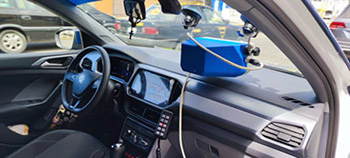
Unique in its category, CELERITAS MSE 2021 can be installed on virtually any service vehicle within minutes, without requiring permanent modifications to patrol vehicles. The system automatically detects speeding violations involving both approaching and receding vehicles, operating effectively during mobile patrol activities as well as in stationary enforcement operations.
The integration of advanced Artificial Intelligence algorithms also enables automatic vehicle classification without the need for additional sensors or connections to the service vehicle, ensuring operational accuracy, ease of use and full compliance with data protection regulations.
The combination of mobility, rapid deployment, accuracy and technological innovation makes CELERITAS MSE 2021 a highly effective tool for traffic enforcement and contributes significantly to improving road safety, benefiting communities and all road users.
Contact:
Angelo Dionisi
Executive Director - EngiNe S.p.A.
E-mail: a.dionisi@engine.it |
Octave Alto Mass Transit

Public transport networks are among the most complex infrastructure environments in the world. Routes interconnect, assets span vast geographies, and different teams need to work from the same understanding of the network to keep services running reliably. Yet in most agencies, the data that describes this infrastructure is fragmented across systems that don't connect to each other, and rarely connects to the actual physical structure of the network it's meant to represent. The result is a gap between what the network actually looks like and what any single team can see at any given moment. And that gap is where coordination breaks down, decisions slow, and disruptions happen.
Octave Alto Mass Transit is a topology-based infrastructure mapping and management solution purpose-built for public transportation agencies. At its foundation is a GIS and Linear Referencing System (LRS) engine that models the entire transit network - tracks, routes, stations, switches, electrification, construction - spatially and linearly, referenced to the real geometry of the infrastructure. Every asset, every network element, every change in the field is anchored to its exact position on a live, connected network model that every team across the organisation works from simultaneously.

This shared foundation changes how transit agencies operate. Engineering, operations, maintenance and planning teams no longer work from different versions of the network, they work from one authoritative picture, updated in real time. Field teams capture and update asset data directly from mobile devices, feeding a live 2D and 3D digital twin of the network. When something changes - a track condition, a station asset, a construction update - everyone sees it immediately, in context, with the spatial relationships around it already visible. Coordination that previously required meetings and email chains happens naturally, because the network itself becomes the communication layer.
Alto Mass Transit is organised into dedicated modules - Network Management, Track Characteristics, Station Management, Electrification and Construction - each built around the shared LRS-accurate network model and configurable to the specific operational needs of the agency. Unlike generic GIS platforms that require heavy configuration and specialist resource to support transit use cases, Alto Mass Transit is purpose-built for public transportation, with dedicated data models and workflows tailored to linear, network-centric transit environments.
For agencies that require deeper asset lifecycle governance like procurement, compliance, work order management and audit trails at enterprise scale, Alto Mass Transit integrates with Octave Attune EAM, connecting the spatial network intelligence layer with full enterprise asset management in one seamless solution.
For further information:
Sara Tomassini
Executive Marketing Manager, EMEA - Octave
+3463818085
sara.tomassini@octave.com
|
|
|
|
|
|
ATAC, no more scratch cards, now comes the hi-tech parking meter for paying with a tap
Paying for parking now requires a simple tap with a payment card (credit, debit, or prepaid) or mobile phone, as is already the case on buses and at subway turnstiles. ATAC, TTS Italia founding member, is rapidly continuing its digitalization process, now installing new hi-tech parking meters.
With the removal or replacement of the "columns," which began last April, paying for parking tickets will also become contactless.
These 250 next-generation parking meters are gradually being added to the 1,150 already in place.
The work will be completed in the second half of 2027, when all parking meters will be state-of-the-art.
This work allows us to continue the process of dematerializing parking tickets, already underway with the app channels, and which will be completed by the end of this year with the definitive elimination of scratch cards.
Starting June 30th, newsstands and tobacconists will no longer sell parking cards, but at some locations it will be possible to ask the cardholder to make the payment, as is already the case with phone top-ups or bills.
Under no circumstances will it be necessary to display receipts on your dashboard. By paying via app, contactless, or at a tobacconist, license plates will be recorded and will immediately appear on the traffic wardens' digital systems.
In short:
Pay for parking with just one tap.
The new parking meters allow you to manage all payment methods, from cash to contactless systems with cards or mobile phones: just one tap and you're parked.
"Tap&Park" makes using the service easier and is a step towards "Tap&Go," the ticket payment system now used by millions of bus and metro riders.
Once the payment has been made and the license plate number has been entered, the customer will not need to return to their car and leave the receipt because the transaction will be immediately visible on the traffic wardens' control device.
A significant simplification for the customer.
To extend the same parking period, simply go to any parking meter and repeat the process of entering your license plate and paying, without having to return to your car to change the ticket.
New solar-powered digital parking meters.
The new parking meters have a 10-inch digital touchscreen, with maps and dynamic menus that guide the user through operations in real time.
They are also equipped with solar panels that ensure better energy management and can also send payment receipts via email (often useful for work receipts).
Stop the production and sale of "scratch cards" (those who have them can use them until December 31, 2026).
With the replacement of parking meters and advanced payments, the dematerialization of tickets begins.
Starting June 30th, the printing and sale of so-called "scratch cards" will be suspended, paper cards that are displayed on car dashboards by "scratching" the time spent.
Customers who already have them can still use them, but only until December 31, 2026.
Demand for these paper tickets has steadily declined over time, thanks to the greater convenience offered by digital channels via partner apps and local points of sale.
Source: Atac |
|
CIRCLE Group joins the Intermonte Valore Italia Index
CIRCLE Group (“CIRCLE” or the “Company”) – an innovative SME listed on the Euronext Growth Milan market, head of the CIRCLE Group specializing in process analysis and the development of solutions for the innovation and digitalization of the port and intermodal logistics sectors, as well as international consulting on the Green Deal and energy transition, and TTS Italia ordinary– proudly announces its selection among the one hundred companies listed on the Italian Stock Exchange that comprise the Intermonte Valore Italia Index, dedicated to SMEs with a market capitalization of less than one billion euros and not included in the FTSE MIB.
"We are proud to join the Intermonte Valore Italia Index, an initiative that recognizes the strategic role of listed SMEs in supporting the growth and competitiveness of the country. For CIRCLE Group, this represents a further enhancement of the path we have undertaken in recent years, based on innovation, digitalization, and the development of high-value-added solutions for intermodal logistics, ports, and the energy transition. Inclusion in the Index also represents an opportunity to strengthen our visibility in the financial community and more effectively support the Group's growth, as expressed in our Connect 4 Agile Growth plan," commented Luca Abatello, CEO of CIRCLE Group.
The Index was created with the aim of enhancing the universe of listed Italian small and medium-sized companies, creating a meeting point between entrepreneurship, the capital market, and the country system. It represents a true cross-section of the best expertise in the Italian economy, helping to expand and diversify investment opportunities compared to traditional indices, for both domestic and international investors.
Companies are selected using rigorous technical and financial criteria designed to ensure adequate levels of liquidity, transparency, and investability, including: minimum free float, robust governance standards, analyst coverage, financial sustainability, and debt levels, as well as representativeness within the Index itself.
The Index is part of PMI2Change, Banca Generali's innovative project presented on July 1, 2026, at the Palazzo Mezzanotte of the Italian Stock Exchange. The project aims to support the growth and competitiveness of Italian entrepreneurs by supporting the development of listed SMEs. The project addresses the limited liquidity and value creation of listed SMEs, helping to create the best conditions for a more efficient match between capital and businesses.
The initiative leverages the expertise of Intermonte, a leading Italian operator in the sector with over thirty years of experience in financial markets—particularly in SME research, sales & trading, market making, and investment banking—which has been an integral part of the Banca Generali Group since the beginning of 2025.
Based on the Index, Banca Generali, together with Investlinx and Intermonte, has presented a new actively managed and PIR-compliant ETF, operational since July 1st, which is investing and will invest primarily in the universe defined by the Index itself. Banca Generali has committed to supporting the launch of the instrument with initial funding of €100 million in the first few months, with exposure gradually growing to €500 million over the medium term. It is therefore estimated that the initiative could help generate new investment flows of €1-2 million per day, representing over 5% of the Index's free float.
Source: Circle Group |
|
CIRCLE Group launches TULIP, the digital platform for optimizing port areas and freight flows
CIRCLE Group (“CIRCLE” or the “Company”) – an innovative SME listed on Euronext Growth Milan, head of the eponymous Group specializing in process analysis and the development of solutions for the innovation and digitalization of the port and intermodal logistics sectors, as well as international consulting on the Green Deal and energy transition, and TTS Italia ordinary member– announces the official launch of TULIP, a software platform developed as part of the European project of the same name and aimed at optimizing the management of port areas and freight flows through advanced digital tools. The project was co-financed by the Liguria Region under the 2021-2027 ERDF Regional Programme, confirming the initiative's strategic importance for the development of Liguria's digital port infrastructure and the evolution of ports towards increasingly connected, predictive, and data-driven models. TULIP was created with the objective to support ports, terminal operators, and supply chain stakeholders in managing complex operational processes, contributing to improved space planning, greater visibility of flows, and faster, more informed decisions. The platform transforms large volumes of operational data into useful information to optimize the use of port areas, anticipate peaks in activity, and improve coordination between the various stakeholders involved in import and export operations. The project involved an ecosystem of qualified partners—Aitek, the University of Genoa, Terminal San Giorgio, and Innoval—who contributed to the development and validation of the solution by providing technological, scientific, and operational expertise, as well as first-hand knowledge of the needs of the port and logistics sector. The TULIP platform is divided into three integrated decision-making modules: Automation, Prediction, and Optimization, designed to support port operators throughout the entire operational cycle, from data collection and structuring to optimized space planning. The Automation module includes subsystems on board port vehicles to detect container codes, and intelligent components for the automatic recognition of dangerous goods labels and structural damage to containers at terminal gates. The Prediction module uses machine learning models to predict flow movements during the import and export phases, differentiating by destination. Finally, the Optimization module dynamically suggests the optimal allocation of yard areas, viewable via an interactive map, supporting more efficient management of available space. Thanks to this modular and integrated approach, TULIP represents a concrete tool for supporting the digital transformation of ports, improving planning capacity, reducing operational inefficiencies, and promoting more sustainable management of infrastructure and logistics flows. "Digital innovation is now one of the key competitive factors for port terminals. Being a partner in the TULIP project has allowed us to contribute our operational experience to the development of a platform that translates data into concrete tools to support decision-making. This is the path we intend to continue to follow: integrating technology, expertise, and processes to make Terminal San Giorgio increasingly efficient, resilient, and oriented to the needs of customers and the supply chain." “This launch represents another significant step in Circle Group's journey toward the digitalization and concrete innovation of Italian and European ports,” commented Emanuele Faranda, Director of Terminal San Giorgio. “With TULIP, we offer port operators a tool capable of transforming historical and current operational data into intelligent decisions, helping to build more efficient, sustainable, and competitive infrastructure, in line with the ‘Connect 4 Agile Growth’ business plan,” said Veronica Asta, Optimization & AI Manager at Circle Group.
Source: CIRCLE Group |
|
CIRCLE Group signs a framework agreement valued at up to €600,000 for the evolutionary digital development of a European airport cargo ecosystem
CIRCLE Group (“CIRCLE” or the “Company”) – an innovative SME listed on the Euronext Growth Milan market, head of the CIRCLE Group specializing in process analysis and the development of solutions for the innovation and digitalization of the port and intermodal logistics sectors, as well as international consulting on the Green Deal and energy transition, and TTS Italia ordinary member – announces the signing, through its subsidiary Cargo Start, of a framework agreement with a leading European airport operator for a maximum total value of €600,000 for professional services to support the development, evolution, and consolidation of digital solutions dedicated to an airport cargo ecosystem. The framework agreement will have a term of 24 months and will allow for the progressive activation of specific application contracts, based on the operational needs that emerge over the period, with the aim of strengthening The digital infrastructure to support the cargo community and promote increasingly integrated, efficient, and interoperable management of air cargo processes. The structure of the agreement confirms CIRCLE Group's solid positioning in the air cargo segment and leverages the Group's vertical expertise in developing digital platforms and modules for complex logistics communities, capable of connecting air carriers, airport handlers, freight forwarders, logistics operators, and institutional stakeholders. As part of the agreement, initial project activities have already begun for the development and release of evolutionary modules for the digital cargo ecosystem. These modules are part of the ongoing development process and involve four functional modules supporting airport cargo community processes, two of which have already been advanced with the client. Further developments may be added to these projects in the coming months, which will be activated through specific application contracts under the framework agreement. These initiatives will primarily leverage the specialized expertise of Cargo Start, a CIRCLE Group company developing digital solutions for air cargo, and will be aimed at supporting the digitalization of operational flows, integration between different players in the supply chain, and the evolution of collaborative models based on interoperability, data quality, and process automation. "This framework agreement represents a particularly significant achievement because it consolidates collaborative paths developed over time and based on the quality of the expertise provided by our Group," stated Luca Abatello, President and CEO of CIRCLE Group. "The decision to activate a multi-year instrument confirms our confidence in our ability to support the digital evolution of complex cargo ecosystems, where it is essential to understand the needs of all stakeholders in the supply chain and translate them into concrete, scalable solutions geared towards operational efficiency. Air cargo is a strategic area for CIRCLE Group, and this new agreement further strengthens our position in a rapidly transforming sector." The transaction is part of CIRCLE Group's growth path and its strategy to strengthen its digital offering for logistics hubs, airport cargo communities, and intermodal supply chains, in line with the guidelines of the "Connect 4 Agile Growth" business plan.
Source: CIRCLE Group |
|
CIRCLE Group wins a new contract worth approximately €700,000 for support services and the evolution of the SINFOMAR Port Community System (PCS)
CIRCLE Group (“CIRCLE” or the “Company”) – an innovative SME listed on the Euronext Growth Milan market, head of the CIRCLE Group specializing in process analysis and the development of solutions for the innovation and digitalization of the port and intermodal logistics sectors, as well as international consulting on the Green Deal and energy transition, and TTS Italia ordinary– announces that it has been awarded a new contract worth approximately €700,000, for a duration of 12 months, for support, maintenance, and evolution services for the SINFOMAR Port Community System (PCS).
The contract includes user support, routine and ongoing maintenance of the platform, specialized support for maritime, rail, and road traffic processes, management of integrations with external systems and services, including the main systems involved in logistics and customs processes, as well as functional analysis activities aimed at evolving the solution and the digital services offered to the port community by AdSP MAO.
SINFOMAR constitutes a strategic digital platform for managing port community processes and intermodality, enabling interoperability between the various operators in the logistics chain and integration with the main external systems involved in logistics and customs processes. Used daily by thousands of users and hundreds of public and private operators, the platform represents a fundamental digital infrastructure for the efficiency and operational continuity of the Eastern Adriatic Sea logistics and port system (Ports of Trieste and Monfalcone).
The activities covered by the contract will ensure the platform's operational continuity and the constant updating of its functionalities, ensuring reliability, efficiency, security, and technological evolution to support the digital transformation of the supply chain and intermodal processes.
The award further consolidates CIRCLE Group's position as a leading technology partner for the digitalization of Italian logistics and port hubs, in line with its strategy of developing interoperable platforms and high-value digital services.
Luca Abatello, CEO of Circle Group, commented: "Winning this contract confirms the value of the Group's skills and expertise in supporting the digital transformation of logistics and intermodality. Working on the evolution of a strategic platform like SINFOMAR (and in a port system as important as Trieste-Monfalcone) means making a concrete contribution to making port and intermodal supply chain processes increasingly efficient, interoperable, and secure. This project consolidates our growth path and is fully aligned with the strategy outlined in the 'Connect for Agile Growth' Business Plan, which is focused on developing interoperable platforms and innovative services to support the evolution of logistics chain nodes."
Source: Circle Group |
|
In Rome, ClicBus expands to 7 new areas
The ClicBus network, the ride-hailing public transport service operating in Rome since 2024, is expanding. Starting July 6th, new areas of the city will be included, with the aim of improving connections in low-density neighborhoods and facilitating access to major public transport hubs.
The service, already operational in the Massimina area, uses eight-seater minibuses, also equipped to transport people with disabilities, and is based on a flexible system that allows users to book trips without pre-established routes.
From July 6th, ClicBus will be active in the areas of Paglian Casale-Santa Palomba-Falcognana, Cerquette, Trigoria, and Castello della Cecchignola-Fonte Meravigliosa. From July 13th, the service will also be extended to the areas of Valle Borghesiana-Lago Regillo, Cinquina-Casal Monastero, and Corcolle-San Vittorino.
The service was designed to connect suburban neighborhoods to the main public transportation hubs, such as subways, trams, and train stations.
To use ClicBus, you must book your ride through the dedicated app, up to seven days in advance and up to 30 minutes before the desired time. Users can choose their departure point and destination or indicate their estimated arrival time. The system suggests available options and allows you to view travel times. The app also allows you to modify or cancel reservations, save favorite addresses, and request service for passengers with reduced mobility. In addition to the mobile app, the service is also accessible via the web app available on the Atac website and by calling 06 46954444, active weekdays from 9:00 am to 7:00 pm.
All travel passes for the Metrebus Roma system are valid on ClicBus, including standard tickets and passes. Passengers can also purchase tickets directly on board using payment cards through the Tap&Go system. However, it is not possible to purchase tickets from the driver or make cash payments. Tickets used for the service remain valid, within the established time limits, on the entire city public transport network.
Source: Eco dalle Città |
|
In Verona, €13.3 million for sustainable mobility
The City Council has approved the Project Proposal Form that allows the Municipality of Verona, TTS Italia ordinary member, to participate in the Integrated Program of Interventions on Urban and Metropolitan Mobility (PNCIA), established by the Ministry of the Environment and Energy Security with Decree No. 2 of January 7, 2026, implementing Article 14 of Legislative Decree No. 16 of September 16, 2024. 131. The Program, with a total budget of €500 million, finances sustainable mobility interventions in provincial capitals with populations greater than 50,000 whose territories are affected by air quality limit values exceeded, as confirmed in European litigation. Verona, a provincial capital with approximately 260,000 inhabitants and an urban hub of the Trans-European Transport Network, has been allocated €13,346,652.56 in funding, with no co-financing requirement.
The resources obtained will enable coordinated interventions on public transport, cycling, and traffic regulation, with the concrete goal of improving air quality and the city's livability. This result stems from the work carried out with the Sustainable Urban Mobility Plan and now finds its first, important financial leverage.
The proposal prepared by the Road Infrastructure and Mobility Directorate selects four general lines of action from those envisaged by the decree: strengthening Mobility Management, enhancing local public transport services and collective mobility, both shared and on-demand, incentives and actions to support demand, and actions to regulate and manage urban mobility.
The outline project, consistent with the guidelines of the Sustainable Urban Mobility Plan, aims to reduce the sector's environmental impact through a coordinated set of interventions: strengthening the trolleybus system and local public transport, new infrastructure for cycling and pedestrians, traffic regulation and flow systems with priority for public transport, expansion of park and ride facilities, digital mobility management platforms, and measures to incentivize active mobility. The implementation will involve, along with the Municipality of Verona, AMT3 S.p.A., the entity implementing the trolleybus system, and ATV Verona S.p.A., the current local public transport operator. The Council has mandated the Director of the Road Infrastructure and Mobility Department to submit the Proposal to the Ministry within the deadline set by the decree. The submission does not currently entail any spending commitments from the municipal budget. Following approval, the Municipality will be required to submit, within 18 months, the Final Project of the interventions to be implemented with the allocated resources.
Source: Ferpress
Fonte: CIRCLE Group |
|
Smart and connected mobility, first trial in Rome: Next Future Mobility with Almaviva's C-ITS technology
Rome hosted an innovative trial in smart urban and suburban mobility, featuring a modular electric vehicle developed by Next Future Mobility and equipped with C-ITS technology from Almaviva, TTS Italia supporting member. This mobility system is designed to make MaaS more efficient and adaptable to different needs, thanks to its modular and dynamic vehicle configuration and integrated advanced technology.
The trial with Next Future Mobility, using Almaviva's C-ITS technology, demonstrated that it is possible to imagine a connected mobility that generates value for all stakeholders. Using the SmartRoad technological infrastructure of Anas Spa, an ordinary member of TTS Italia, available on the Rome-Fiumicino route, and that of Roma Servizi per la mobilità, an ordinary member of TTS Italia, on the Cristoforo Colombo route, the Next Future Mobility vehicle was able to operate a more informed journey, receiving valuable information and itself generating useful information for other vehicles and the operators themselves.
During the test, the vehicle departed from Fiumicino via the A91, under the jurisdiction of ANAS, and traveled along Via Cristoforo Colombo, one of the capital's main axes. It interacted along the entire route with the C-ITS (Smart Road) infrastructure set up by ANAS, Roma Capitale, and Roma Servizi per la Mobilità, thanks also to the memorandum of understanding signed between ANAS and Roma. The most notable feature of the trial was the vehicle's ability to autonomously connect to the digital infrastructure, share information about its route, and receive information from the infrastructure operators' systems, demonstrating how vehicle-infrastructure communication systems can improve safety and efficiency.
The initiative confirms the city of Rome's role as an innovation laboratory for future mobility, paving the way for increasingly advanced solutions aimed at reducing environmental impact and improving the quality of urban life.
Source: Almaviva |
|
Targa Telematics brings Agentic AI to fleet maintenance
Today, every maintenance intervention involves a complex network of stakeholders—repair shops, spare parts suppliers, logistics operators, authorization networks, and digital platforms—generating a growing amount of data and interactions that must be coordinated effectively. In this context, the challenge for rental companies, fleet managers, mobility providers, and businesses is no longer simply to correctly perform the technical intervention, but to efficiently manage the entire ecosystem that makes it possible. Targa Telematics, a leading global player in AIoT and digital platforms for connected mobility, and TTS Italia founding member, supports these operators by applying the potential of Agentic AI to fleet maintenance management. For Targa Telematics, an approach that prioritizes orchestration of the entire process over individual maintenance interventions is key to resolving many of the critical issues highlighted by industry operators. According to the "NLT Workers" survey, conducted by the Fleet&Mobility Study Center on industry operators and promoted by Targa Telematics and Escargo*, 69% of respondents stated that integrated vehicle data management would significantly improve the accuracy of information on technical downtime. 66% of respondents believe that intelligent and coordinated management can significantly contribute to reducing downtime, and 64% identify data integration and processing through Artificial Intelligence systems as the most effective way to generate value throughout the entire maintenance process. "The growing operational complexity in fleet management requires a new approach to maintenance, based on intelligent data orchestration and process automation," said Pasquale Triventi, Key Account Manager at Targa Telematics. "With Agentic AI, we want to help operators move from a reactive and declarative approach, primarily based on the manual compilation of information by workshops or third parties, to objective and data-driven management based on the automatic analysis of data coming directly from vehicles and connected digital ecosystems." Other data also demonstrate that applying AI to maintenance is a valid approach: according to Targa Telematics' internal Observatory, the use of AI can reduce maintenance costs by up to 30% and reduce fleet downtime by 13%. Maintenance Exellence: Targa Telematics' solution for fleet maintenance. Targa Telematics' Agentic AI-based fleet maintenance solution – Maintenance Exellence – overcomes information fragmentation by integrating data from telematics devices, OEM systems, and external platforms within an interoperable ecosystem capable of monitoring vehicle status in real time. Furthermore, it identifies early signs of wear and tear or anomalies, plans interventions, routes activities and authorizations to the appropriate parties, and continuously measures the operational performance of the entire process. The agentic approach also allows for the automation of numerous low-value activities, such as appointment management, coordination between different supply chain stakeholders, workflow initiation, operational priority assignment, and administrative checks, freeing up time and resources for activities with greater strategic value.
Source: Targa Telematics |
|
|
|
|
|
|
Roma Servizi per la Mobilità and TTS Italia: an in-depth meeting on AI, Cybersecurity, and the ITS Directive
On July 28, Roma Servizi per la Mobilità (RSM) will host an internal meeting on key topics, organized in collaboration with TTS Italia, of which the Rome Mobility Agency is an ordinary member. The meeting will focus on Artificial Intelligence, Cybersecurity, and the evolution of the ITS Directive.
Following a welcome and introduction by RSM's President and General Manager, TTS Italia, represented by Expert Consultant Fabio Nussio, will share the Association's work within the Working Group dedicated to AI and Cybersecurity in the mobility of people and goods.
Marco Cagnoli will then present some concrete examples of AI-based applications developed within RSM.
This will be followed by a discussion on the ITS Directive, its implementation in Italy, and the future Action Plan, with a further presentation by Fabio Nussio; Update of the TEN-T Regulation with new European guidelines on SUMPs and the implementing act on indicators, with Chiara Di Majo, RSM; National SUMP Support Plan, with an in-depth analysis of the progress of indicators, with Stefano Brinchi, RSM. |
|
TTS Italia at the Smart Mobility and 15-Minute Cities Roundtable
On July 16, TTS Italia participated in the Smart Mobility and 15-Minute Cities Roundtable meeting at the Rome Business School, part of the Roma Capitale Smart City Lab Consultation, of which it is a member. The meeting's objective was to share updates on the three construction sites and a preview of the Rome Autonomous Driving Ecosystem Project. Fabio Nussio, Senior Expert at TTS Italia, had the opportunity to illustrate to participants the updated ITS Directive as well as recent developments in connected and autonomous mobility (CCAM – CAV), and the related funding currently available. The presentation focused on a paradigm shift: from voluntary promotion to regulatory non-compliance; and on how the mobility of the future is closely linked to the development of smart cities, with integrated infrastructures that promote a greener and more intelligent use of transportation. Nussio highlighted the inflexibility of current regulations, requiring the complete equipping of road infrastructure for autonomous driving trials, lengthy authorization times, and difficulties in obtaining vehicle insurance. It is therefore necessary to consider updating and simplifying the current regulatory framework, promoting both pilot and implementation phases, developing the new ITS Directive 2661/2023 and the related Implementation Decree with an ITS Plan, and finally, amending the Highway Code, which currently only covers the use of human-driven vehicles. The presentation concluded with an initial analysis of funding opportunities for this topic, which will require immediate support at the national level. |
|
SMART CITY EXPO WORLD CONGRESS: Registration is now open!
Held in Barcelona since 2011, the Smart City Expo World Congress is the world's largest and most influential event for cities and urban innovation. Each year, it brings together leaders from businesses, governments, and global organizations to guide cities towards a better future. The new edition will be held from November 3rd to 5th, again in Barcelona, and TTS Italia is delighted to support it as a partner once again!
Registration is now open! And discounts are available for TTS Italia members!
The true goal of the event is to transform urban ambitions into solutions, partnerships, and collaborative opportunities to address the crucial challenges cities face today. The Tomorrow.Mobility World Congress is a unique event, designed to accelerate sustainable and intelligent urban mobility. It brings together experts, industry leaders, and decision-makers from across the mobility and transportation sector to exchange ideas, foster collaboration, and generate business opportunities. Coinciding with the Smart City Expo World Congress, this year's edition will welcome over 27,000 professional visitors from 138 countries, along with more than 1,100 exhibitors, 600 world-renowned speakers, and public representatives from over 900 cities. Together, they will share their vision for building a more sustainable, efficient, and livable urban future. The 2026 edition focuses on seven strategic enablers that address the most pressing challenges of urban mobility: public and shared transport, mobility data management, sustainable urban logistics, health and mobility, electrification and alternative fuels, MaaS and multimodal platforms, and parking and curbside space management. Together with Smart City Expo, Tomorrow.Building, and Tomorrow.Blue Economy, the event brings together one of the most influential global networks of urban innovators.
Find out more and register! |
|
|
|
|
|
• Italy
Parking control, safety, and signaling equipment
• Italy
Public buses
• Italy
Bicycles |
• Italy
System maintenance services
• Italy
Repair and maintenance services of audiovisual and optical equipment
|
|
| Go to the private website |
|
|
|
|
|
|
|
|
|
|

Data Mobility Summit
29 September 2026, Rome
For further information, click here →
|
| |
|

InnoTrans 2026
22-25 September 2026, Berlin, Germany
For further information, click here →
International Mobility Data Summit 2026
22-23 September 2026, Montréal, Quebec
For further information, click here → |
|
|
|