N° 2
February 2026
—
TTS Italia is the Italian ITS Association founded with the aim to promote the development and deployment of Intelligent Transport Systems (ITS) in Italy. |
|
|
|
|
| The interview by Morena Pivetti |
|
|

"The ITS Directive has been implemented by decree, now work is underway on its implementation. A few more months are needed for the approval of speed cameras." Says Fausto Fedele, Director General for Road Safety and Road Transport.
With the Decree of January 26, published on February 18, 2026, in the Official Journal, Italy transposed Directive 2023/2661/EU of November 2023 on the general framework for the deployment of Intelligent Transport Systems in the road transport sector and in interfaces with other modes of transport. Now work is underway on its implementation nationwide. We discussed this, the process of the ministerial decree on the approval of speed cameras, its promulgation, and the initial results of the introduction of the alcohol interlock for professional drivers in this interview with Fausto Fedele, Director General for Road Safety and Road Transport, given to the TTS Italia newsletter.

The Ministry of Infrastructure and Transport has been working on implementing the European ITS Directive, and with the publication of the decree in the Official Journal, it is now reaping the benefits. Are you satisfied?
Yes, the decree of January 26, which was signed by Minister Matteo Salvini and then forwarded to the other ministries for coordination, was published in the Official Journal on February 18. I can only express our satisfaction.
How is the consultation process with the other competent ministries progressing?
The Ministry of the Interior has proposed some amendments that concern only aspects related to the acquisition of traffic data and information by the State Police operations centers, which have already been incorporated into the text signed by the Minister. The Ministry of Education and Merit has accepted the final draft decree, expressing its approval of the consultation.
What are the next steps for implementing the provisions of the ITS Directive? Do you provide funding for local implementation?
The decree does not provide—nor could it have provided—any funding for local implementation resulting from the provisions of the new decree implementing the ITS Directive. Furthermore, the current funding is insufficient to address potential developments.
The first step will therefore be to initiate a consultation with all interested parties to develop a project aimed not only at preparing operational tools within the four priority areas of intervention identified in the decree, but also at identifying the necessary resources.
Let's move on to the Highway Code. How is the Ministerial Decree on the approval of speed detection systems progressing? What are the stages and timeframes for its promulgation?
The decree approving the devices for detecting speeding violations, after a lengthy consultation process, has been sent to the European Commission's Technical Regulation Information System (TRIS) and the Higher Council of Public Works. We expect a few more months to submit it for signature by the relevant ministers and publication in the Official Journal. I believe we've done a good job, and I take this opportunity to thank my colleagues in Division 1 and my colleagues in the Highway Police for their commitment and professionalism.
The introduction of the alcohol interlock has raised some concerns in the road haulage industry, especially among professional drivers. How is the regulation working, particularly for this category?
At the moment, no particular critical issues have been reported, but it may still be too early to draw any significant conclusions.
Do you monitor the number of devices installed and the violations reported?
Yes, a data extraction from the Ministry of Infrastructure and Transport's data processing center shows that approximately 192,000 individuals were fined under Article 186 of the Highway Code, resulting in a code 68 (no alcohol) or code 69 (only vehicles with Alcolock) being added to their driving license, approximately 100 licenses.
Who is Fausto Fedele. A graduate of the University of Calabria in civil engineering for soil conservation and territorial planning, with a specialization in structural engineering, and a master's degree in civil engineering, since September 2025 he has served as Director General of the MIT Department of Transport and Navigation - General Directorate for Road Safety and Road Transport. Since 1998, he has held numerous roles on behalf of the MIT, including Director of the Provincial Office of Civil Motorization in Biella. He taught dangerous goods at several driving schools in Piedmont and at the University of Città Studi in Biella from 2002 to 2005. He was a member of the Central Committee of the Register of Goods Haulers; of the Piedmont and Valle d'Aosta Regional Commission for the qualification exams for consultants in the transport of dangerous goods; of the Provincial Commissions of Turin for the qualification exams for driving school teachers and instructors, professional capacity for automotive consultancy agencies, third-party freight transport, and third-party passenger transport; He is also president of the Emilia-Romagna regional commission for the licensing exams for consultants in the transport of dangerous goods; and president of the national commission for the licensing exams for consultants in the transport of dangerous goods. In 2010, he was awarded the title of Knight of the Republic. |
| |
|
|
Conduent is a global leader in technology solutions and services for mobility, public transportation, and digital services, with a strong international presence and extensive experience in managing complex systems. The company supports public transport operators, government entities, and private organizations in the digital transformation of mobility services, improving operational efficiency, service quality, and overall passenger experience.
Conduent Italy’s approach is focused on continuous innovation and the creation of open, scalable, and secure digital ecosystems that can evolve over time alongside customer needs. Conduent is a leading system integrator for the smart mobility sector.
The organization of Conduent Italy combines highly specialized internal expertise, offering end-to-end solutions that range from design and implementation to operational management and managed services.
A distinctive feature of Conduent Italy’s offering is complete hardware independence, allowing operators to avoid technological constraints and lock-in situations. The solutions are designed to integrate with existing infrastructure and devices from multiple vendors, protecting investments and ensuring maximum long-term flexibility.
—
CONDUENT ITALY SOLUTIONS
Conduent Italy’s suite is structured around three main solutions, designed to operate in an integrated way within complex ITS ecosystems:
CONDUENT DIGITAL PLATFORM
The Conduent Digital Platform (CDP) is an Account-Based (ABT) digital ticketing platform. CDP enables centralized management of user profiles, tickets, and fare rules, supporting the evolution toward flexible, interoperable digital public transport models.
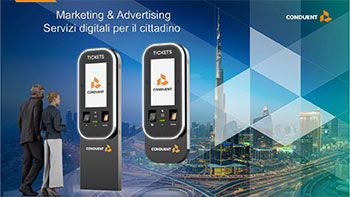
In addition to its primary ABT enabler function, CDP includes modules that enrich its digital service offerings: a Terminal Management System (TMS), a remote Content Management System (CMS), a next-generation Kiosk for diversified digital services, and renewed software for self-service machines with updated features and user interface. These modules, due to their versatility and strategic applicability, have also become corporate products.
CDP also includes modules aimed at integrating with external systems:
• The New Reporting System (NRS): a fundamental pillar for reconciliation and reporting of sales and clearing data across multiple sales channels (including those outside Conduent ecosystem).
• The cross-selling module: enables the sale of third-party products, even those not directly related to public transport.
CONDUENT EMV SYSTEM
The EMV payment solution enables access to public transport via credit and debit cards, facilitating interoperability between services and operators. The system supports flexible ticketing models and encourages integration of payments within multimodal mobility ecosystems.
It is structured in four main modules:
• A sophisticated fare engine capable of managing multiple fare rules;
• A payment gateway that governs the entire transaction flow, from passenger tap to data transmission to the acquirer chosen by the transport operator;
• A tokenizer that enables credit card interoperability across multiple operators, allowing the association of a “token” to taps from different operators according to predefined rules;
• A data orchestrator for managing EMV tickets across operators and collecting data to support Business Intelligence.
FLEET&INFO: COMPANY FLEET AVM MANAGEMENT SYSTEM
Fleet&Info is Conduent Italy’s AVM system for managing and monitoring company fleets. Originally integrated with electronic ticketing, it has evolved into an advanced AVM solution, usable independently of ticketing software and applicable to organizations of various sizes. Its modular architecture allows operators to choose onboard devices with Android OS and the level of integration that best suits their needs.
Fleet&Info enables two-way communication between the operations center and the fleet, offering advanced real-time monitoring tools, including alerts, automatic notifications, and messaging.
Beyond service certification and predictive engine functions, the system allows management of on-demand services and temporary route deviations, providing an increasingly comprehensive suite to support operator control and strategic decision-making.
—
THREE QUESTIONS TO...
Marco Moretti – Managing Director at Conduent Business Solutions Italia S.p.A.

In a rapidly evolving technological context, what strategic choices must public transport operators make today to ensure sustainable, resilient, and future-ready services?
Today, public transport operators face a profound transformation that goes beyond technology, potentially involving the reorganization of operational processes. The first key strategic choice is to invest in open digital architectures capable of evolving over time without needing to be completely redesigned with every technological or regulatory change.
Another crucial element is the centrality of data: modern ITS systems must be able to collect, integrate, and leverage data from various sources—vehicles, infrastructure, payment systems, users— turning it into actionable information to improve service, support operational decisions and future plans.
Finally, resilience comes from the ability to integrate multiple systems and actors in a coherent and secure way. In this regard, adopting shared standards and interoperable solutions is essential to ensure operational continuity, safety, and long-term sustainability, fully aligned with the mission of TTS Italia and ITS development at both national and European levels.
Conduent Italy strongly focuses on hardware-independent solutions and open platforms: how does this approach provide concrete advantages to operators and help reduce technological lock-in risks over the long term?
Hardware independence is one of Conduent Italy’s pillars because it addresses a very practical need of operators: protecting investments and maintaining freedom of choice over time. Using hardware- independent solutions means being able to integrate devices from different vendors, progressively upgrade infrastructure, and adapt to technological evolution without being tied to a single vendor.
This approach drastically reduces the risk of technological lock-in and allows operators to focus on service value rather than managing technical constraints.
Looking ahead, what role will data, digital payments, and integrated platforms play in transforming the passenger experience and making public transport more competitive compared to private cars?
In the coming years, data, digital payments, and integrated platforms will be central to making public transport more attractive, simple, and reliable. From the passenger’s perspective, the goal is to offer a seamless, frictionless experience where access, payment, and information happen naturally and consistently across all channels.
EMV payment systems and digital platforms simplify access to public transport, remove entry barriers, and promote intermodality. At the same time, data analysis enables operators to better understand travel behavior, optimize service offerings, and continuously improve service quality.
In this scenario, integrated platforms like Conduent Digital Platform play a key role by connecting all these elements—AVM, payments, passenger information, data analysis—creating a coherent and scalable ecosystem. It is this integration that can make public transport a real alternative to private cars, contributing to more sustainable, safe, and intelligent mobility, in line with the principles promoted by TTS Italia and the ITS sector. |
|
|
|
|
The OpenMove Olympic MaaS

The Milano–Cortina 2026 Winter Olympics represent an international event of exceptional scale, not only because of the number of spectators and stakeholders involved, but also due to the logistical complexity that comes with it. For the first time in history, these are being described as “distributed Olympics”, because the Games will take place across a wide, fragmented territory, spread between urban hubs and Alpine locations: Milan, Cortina d’Ampezzo, Livigno, and Bormio are just some of the key reference areas.
This unique setup significantly amplifies the impact of mobility on the Olympic experience, because it requires reliable, continuous connections between places that differ greatly in distance, available infrastructure, and seasonality, clearly affecting travel for both spectators and accredited users (athletes, Olympic delegations, journalists).
In this context, mobility becomes a fundamental enabler of the Games: it must operate in a scalable way and be easy to understand for people coming from all over the world, ensuring a seamless experience for the general public while also maintaining high levels of control and security for accredited groups.

Challenge
The main challenge of Milano–Cortina 2026 was, first and foremost, to provide digital services to very different audiences, each with distinct needs and expectations. On the one hand, for spectators, it was necessary to ensure a simple and immediate experience, with consistent, reliable, and real-time updated information, able to support travel between venues that are far apart as if they belonged to a single integrated system, across a multimodal offer that includes buses, trams, metro, shuttles and dedicated services, cars, and trains. On the other hand, for accredited users, in addition to the services described above, it was necessary to enable personalized features such as viewing dedicated transfer services and purchasing travel tickets.
This requirement was shaped by two major, closely interconnected layers of complexity. The first concerned the ecosystem: the Games required integrating, into a single platform, a variety of operators that differ significantly in service models, territorial coverage, and digital maturity, with the goal of ensuring a coherent experience across the entire Alpine macro-region involved. This heterogeneity was not only organizational, but also functional, because it meant bringing together different services and operational logics and making them interoperable with data and standards that were not always uniform, while preserving informational continuity and the quality of the user experience. The second crucial factor was time: the project had a compressed delivery window, with a start date tied to the opening of the Games and therefore effectively non-negotiable.
Further complicating the picture, the availability of “baseline” data was not sufficient: GTFS feeds for planned services alone often do not include essential elements for a complete experience, such as fares to correctly associate a price with the selected route, or shapes and metadata that help improve the quality and accuracy of journey planning. Moreover, in a high-pressure operational event, real-time information and service changes became decisive: disruptions, detours, and updates had to be communicated promptly and consistently across all channels, because any misalignment would immediately translate into impacts on the travel experience and, in turn, on the overall operations of the Games.
Solution
Based on the challenges described, OpenMove designed and implemented, and today delivers and maintains, the mobility management platform for the Milano–Cortina 2026 Olympics. The platform is built to collect, normalize, and enrich data, and then expose it through APIs; in this way, heterogeneous sources are transformed into a single, consistent, reusable information asset that can be leveraged by the different channels and systems involved. This API-first approach is part of OpenMove’s DNA and aligns with the API ecosystem we have long made available at api.openmove.com, designed to enable rapid integration, reuse, and strong governance of mobility data.
The work starts with the acquisition of datasets from operators and event-specific services. The system verifies their quality and consistency and harmonizes them into standard formats, managing GTFS for scheduled services and GTFS-RT for real-time information, as well as shapes and fare information (Fares files) to correctly match routes and prices and improve the journey-planning experience.
On this foundation, OpenMove builds an API-first layer that makes data reliably available to third-party systems and different channels, including:
• Apple and Google: for publishing and displaying transport information in Apple Maps and Google Maps.
• Fondazione Milano Cortina administrative dashboard: designed for monitoring and operational management of services during the Games.
• Dedicated app for accredited users: where, in addition to public mobility options, users can access dedicated services (such as official shuttles and transfers) and use in-app ticketing features for Trenitalia, ATM, and Trenord, ensuring an integrated and consistent experience across information, operations, and service usage.
The platform effectively enables an Olympic MaaS experience, where accredited users can plan multimodal journeys and access multiple services within a single digital experience, without being redirected to third-party solutions.
Innovation
The project’s innovation lies not only in data integration, but in the ability to turn data into an industrialized digital service, delivered with reliability and performance standards suited to a global event.
OpenMove adopts a cloud-native, API-first architecture in which the central backend, OpenMove NUCLEUS, collects, normalizes, and enriches mobility information, exposing it securely and consistently to heterogeneous platforms and applications (see OpenMove’s API page – api.openmove.com). In this model, APIs become critical infrastructure: they are designed to guarantee uptime of up to 99.99%, sustain loads on the order of millions of users per day, and maintain fast, stable response times (under 800 ms) even during peak moments, both for data access and for latency-sensitive services such as the journey-planning algorithm and real-time information updates.
This robustness is complemented by a key element: interoperability speed, i.e., the ability to connect and operationalize third-party systems in a very short time. Thanks to connectors, standardized flows, and structured data-ingestion processes, new sources and new stakeholders can be integrated quickly, drastically reducing timelines and complexity compared to traditional projects.
The result is a backend system that does not simply “publish” data, but makes it reliable, measurable, and scalable, with monitoring and resilience mechanisms designed to ensure operational continuity, informational consistency, and a smooth user experience across the entire digital chain—from journey planning to integrations with third-party systems. |
“Pedala i territori” with Pin Pike

The new year begins with a political and financial signal that deserves attention. For the first time, after eight years of work by TTS Italia ordinary member Pin Bike, we are witnessing a season in which the Italian government is providing municipal public administrations with extensive and structured economic tools, geared not only towards infrastructure but also – and above all – towards measures, services and behavioural changes. It is more of a cultural shift than a technical one.
For those working in the world of sustainable mobility, this scenario represents a concrete opportunity to finally talk about nudging, incentives, promotion and active policies capable of guiding citizens and workers towards more informed choices in their daily travel. Cities do not change only with new cycle paths or electric fleets, but when intelligent mechanisms are activated that make change desirable and convenient.
In this context, Pin Bike offers itself as an operational partner to administrations that intend to seize these opportunities. Its support is not limited to the technological component: the team also helps institutions with project design and technical assistance, bringing its know-how gained through years of concrete implementation in different territories. The results are not mere statements but figures that can be verified in real time through the open data platform: https://web.pin.bike/open/all
Alongside projects designed to improve urban mobility and commuting, 2026 also marks the launch of a new line of action dedicated to promoting tourism and enhancing local attractions. 'Pedala i Territori' (Cycle the Territories) is a light version of the project, which can be activated with small participation fees from the local authorities involved. It involves mapping points of tourist interest and awarding incentives to those who visit them by bicycle. The launch is scheduled for this spring, with 25 local authorities already on board: an initial group that demonstrates interest in slow, measurable and sustainability-oriented models of tourism.
Let’s have a glimpse at Pin Bike. It is a patented, anti-fraud and certifying digital system that monitors and incentivises urban travel and commuting by private bicycle, transforming it into mobility vouchers that can be spent exclusively in local shops, thus supporting local commerce. At the same time, it offers administrations an advanced monitoring and planning tool, with heat maps that can be filtered by time slot, age and time of year, and the possibility of communicating directly with citizens through questionnaires and dedicated messages.
The data updated at the end of 2025 shows the scope of the programme: over 27,000 active users, more than 1.5 million home-to-work sessions tracked, over 11 million kilometres travelled, more than €2.5 million paid out in incentives and over 1.5 million tonnes of CO2 saved. These figures describe a trajectory that is already underway and ready to grow alongside cities that choose to invest not only in infrastructure but also in people.
Useful links:
www.facebook.com/pinbike
www.instagram.com/pin_bike
www.linkedin.com/company/pinbike
www.youtube.com/@pinbike2985
link.pin.bike/spot
info@pin.bike |
Milan-Cortina 2026: Pluservice's management of LTZ access permits

For the Milan-Cortina 2026 Winter Olympic Games, mobility management posed one of the most complex organizational challenges. To respond to an extraordinary influx of visitors without compromising daily life in the areas, an integrated digital platform was introduced, designed to coordinate access, traffic, and travel in a sustainable manner.
In contexts of this magnitude, smart mobility is not just a logistical issue: it becomes a true indicator of a country's organizational capacity. Ensuring orderly flows improves the experience of residents and visitors, but also reduces environmental impact, a key concern for sensitive areas like the Alpine ones. Digital access and monitoring systems help limit congestion and emissions, contributing to a more efficient and responsible management model.
The project
Pluservice's contribution, developed in collaboration with myCicero, involves providing a digital platform used to regulate access to the special restricted traffic zones activated in the main districts affected by the events.
To avoid overloading infrastructure, the territories have been divided into zones with varying levels of restrictions, defined based on proximity to the competition venues and expected traffic pressure.
Unified platform
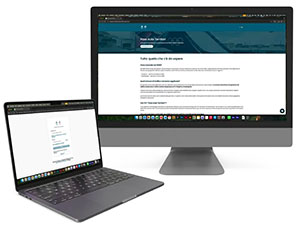
A dedicated public portal allows residents, workers, and visitors to quickly check whether their destination falls within a regulated zone.
The system manages the documentation and data provided (bookings, residence, authorizations) to allow operators to quickly verify access requirements.
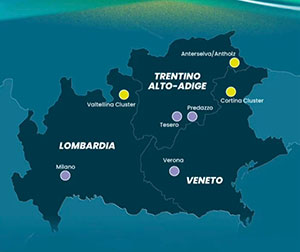
Involved areas
The smart mobility model has been applied to the main mountain clusters, with color-coded divisions to identify the level of permitted access:
• Cortina d'Ampezzo: highly restricted zone around the sports facilities and a larger area for the town center.
• Valtellina (Bormio, Livigno, and neighboring municipalities): subdivision into macro-areas with different levels of filtering to manage tourist flows.
• Rasun-Anterselva: distinction between the Arena area and the valley centers.
Types of LTZ access passes
The system was designed to adapt to different needs, offering two main authorization methods:
• Multi-day passes: intended for residents, workers, hospitality facilities, and all users requiring continuous access throughout the entire game time period, they are issued upon digital approval and associated with the vehicle for quick checks at the gates.
• Digital daily passes: designed for visitors, hospitality guests, and suppliers, they are sent via email with a QR code or PDF document before access.
The infrastructure is sized to handle high peaks in demand, even allowing for last-minute issuance through support points across the territory.
A sustainability-oriented approach
The system's goal is not to limit travel, but to make it more efficient and predictable. Digital access allows for:
• advance estimation of the number of vehicles in different areas
• encourage the use of enhanced public transport
• reduce traffic, travel times, and emissions
• improve safety and emergency management
A smart mobility model for future major events
The 2026 experience represents a concrete example of how technology can transform large-scale flow management. Digitizing permits and authorizations means moving from bureaucratic processes to integrated services where planning and access become part of a single travel experience. |
From Reactive Safety to Intelligent Prevention: The Province of Latina adopts Wetraffic®

Managing provincial road infrastructure today requires balancing regulatory monitoring obligations with limited maintenance budgets. The Province of Latina has addressed this by adopting an integrated, data-driven vision, transforming raw information into strategic decisions through a partnership with our member Trafficlab S.r.l.
Beyond Reaction: A Platform for 7500 Road Segments
Managing a complex network demands tools capable of integrating road geometry, historical crash data, and real-time flows. At the heart of the project is Wetraffic®, an ACN and ISO 27001 certified modular cloud platform. It represents a paradigm shift from fragmented data to systemic orchestration.
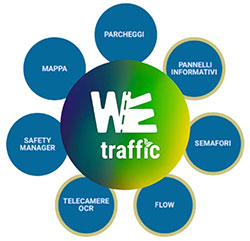
The Four Project Pillars
The initiative is built on four key integrated activities covering the entire safety management cycle:
1. Functional Classification: each network segment is analyzed according to the Highway Code (Codice della Strada – D.M. 2001 and 2006). This creates a structured knowledge base that feeds all subsequent modules.
2. Safety Manager (Accidents Analysis): this module translates ten years of historical ISTAT data into operational intelligence. Accidents are georeferenced and accompanied by all relevant details, allowing precise filtered searches and the identification of the routes at greatest risk based on the social cost, with the aim of guiding infrastructure programming.
3. Risk Analysis (MCDA): using Multi-Criteria Decision Analysis in a GIS environment, the system combines accident rates, traffic volumes (ADT), gradients, barrier conditions as well as other risk factors such as the presence of watercourses or railways. The result is an objective risk index for every 500-meter section, which allows intervention priorities based on scientific criteria.
4. Traffic Monitoring: knowledge of actual road usage is achieved through complementary technologies. Floating Car Data (FCD) provides continuous network coverage, while periodic monitoring sessions using smart cameras with computer vision (utilizing the FLOW module) analyze vehicle trajectories and categories to validate predictive models.
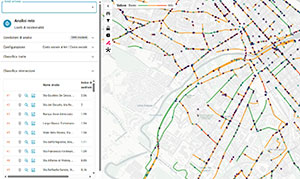
An Integrated Decision-Making Ecosystem
The strength of Wetraffic® lies in its holistic approach, with complementarity and dialogue between modules: functional classification feeds risk analysis, which is then validated by real traffic flows. Trafficlab – a company already partnering with major Italian public administrations such as Turin, Pescara and La Spezia – designed the system to evolve, supporting future integrations and ISO 39001 certification.
With this approach, the Province of Latina becomes a national pioneer, establishing a "digital nervous system" capable of anticipating issues and justifying investments with objective data, ensuring full compliance with Legislative Decree 35/2011 and Directive 2008/96/EC.
For more information: www.wetraffic.eu – francesco.grasso@trafficlab.eu |
|
|
|
|
|
Almaviva partners with the Cortina Foundation for the "Moova High-Altitude Mobility" campaign
In anticipation of the Milan-Cortina 2026 Winter Olympic Games, the Almaviva Group, TTS Italia supporting member, is renewing its partnership with the Cortina Foundation by promoting a program of events aimed at conveying its vision of the future of mobility, public services, and the local area.
This presence translates into a series of events and initiatives in multiple cities and Olympic venues, showcasing the value of technology applied to mobility, infrastructure, and local areas, in the context of one of the largest international sporting events.
The "High-Altitude Mobility" campaign takes shape through five events in five Olympic venues, engaging strategic partners and clients in moments of discussion, networking, and vision.
A journey inspired by the five Olympic rings, a symbol of connection, balance, and collaboration, which becomes a metaphor for the challenges and opportunities of contemporary mobility through three themes with which Almaviva describes the mobility of the future, powered by Moova, the proprietary platform designed to address the complexity of the sector.
A modular and integrated solution that realizes our vision: Mobility for Life enables the intelligent management of infrastructure, services, and security, supporting businesses, communities, and organizations in the digital transformation for a mobility that goes beyond simply moving people and vehicles, but also improves the daily experience, supports mobility operators, and creates value over time.
The first event, the opening, will be held in Milan on January 30th, an initial launch to present the journey, the "High Altitude Mobility" concept, and Moova's role in the Olympic context.
Source: Almaviva |
|
Circle GROUP announces the conclusion of the TRUST project: testing of the cloud-based platform for the digitalization of intermodal logistics has been completed.
CIRCLE Group (“CIRCLE” or the “Company”) – an innovative SME listed on the Euronext Growth Milan market, head of the eponymous Group specializing in process analysis and the development of solutions for the innovation and digitalization of the port and intermodal logistics sectors, as well as international consulting on the Green Deal and energy transition, and TTS Italia ordinary member– announces the conclusion of the TRUST project, an initiative co-financed under the Liguria Region's ERDF 2021-2027 Regional Programme, which saw CIRCLE Group awarded a grant of approximately €110,000.
In addition to CIRCLE and the lead partner Click & Find, an ordinary member of TTS Italia, the project partners include TUIT, Leolabs, Tarros, and the University of Genoa.
TRUST was founded to address some of the key challenges of road and intermodal freight transport, aiming to innovate communication and improve operational efficiency between logistics hubs, road haulage companies, and intermodal and maritime terminals.
Project developments led to the testing of a cloud-based digital platform capable of optimizing the integration, automation, and digitalization of processes along the supply chain.
The solution enables the real-time sharing of critical data and events, such as terminal arrival times and information on dangerous goods, improving operational planning. Furthermore, it has enabled a more advanced digitalization of processes, enabling the structured exchange of information and the introduction of value-added services between the various players in the supply chain, with more continuous and efficient communication.
Specifically, the real-time collection and transmission of vehicle arrival times at intermodal terminals allows for the optimization of import and export operations planning, while improved freight information management has enabled greater operational continuity. The project also introduced advanced logistics flow monitoring, increasing end-to-end visibility and leveraging tracking data for the benefit of the entire supply chain, with positive impacts on efficiency, sustainability, and logistics hub management.
Technologically, the platform is based on standardized APIs, advanced tracking systems, IoT devices, and the application of optimization modeling and artificial intelligence, which can support operational decisions, improve safety, and contribute to transport management, including in light of issues related to the Infrastructure Decree. Building on these activities, Circle has implemented the "Milos® 9.0 Win Win" ecosystem of services, the new digital suite for the management of automated parking and compensation, compliant with the Infrastructure Decree (DL 73/2025).
"The conclusion of the TRUST project represents a further step forward in CIRCLE's strategy aimed at digitalizing and integrating the logistics and transportation supply chain, as per the "Connect 4 Agile Growth" business plan," said Luca Abatello, CEO of Circle Group. "The initiative has strengthened the competitiveness of the companies involved, creating an interconnection hub capable of increasing the availability, accuracy, and usability of data and information on goods movements. The results achieved confirm the value of interoperable, data-driven solutions for increasing process efficiency, safety, and sustainability, creating new development opportunities for all players in the supply chain."
Source: CIRCLE Group |
|
Circle GROUP announces the signing of a new contract with a leading Italian company in the national and international transport and integrated logistics sectors, worth approximately €120,000.
CIRCLE Group (“CIRCLE” or the “Company”) – an innovative SME listed on the Euronext Growth Milan market, head of the eponymous Group specializing in process analysis and the development of solutions for the innovation and digitalization of the port and intermodal logistics sectors, as well as international consulting on the Green Deal and energy transition, and TTS Italia ordinary member– announces the signing of a contract with a leading Italian company in the logistics and transport sector, worth approximately €120,000. The contract is aimed at implementing a structured project for the digitalization and integration of logistics and documentation processes, and improving operational efficiency, system interoperability, and the traceability of information flows along the multimodal transport chain. The project is expected to last approximately 6 months.
The contract falls within the scope of the PNRR - LogIN Business call for proposals from the Ministry of Infrastructure and Transport and is part of Circle Group's broader strategic positioning on PNRR and co-financed projects, supporting the digitalization, interoperability, and sustainability of logistics and multimodal processes. Specifically, the project involves the adoption of Circle Group platforms, with the MILOS® suite playing a central role, integrated with the client's TMS systems and those of the relevant logistics ecosystem. The implemented solutions will enable the end-to-end digitalization of transport orders and related information flows, the dematerialization of operational documentation through tools such as e-CMR and e-DDT, as well as compliance with European regulatory requirements, including the eFTI regulation. The project architecture will also enable structured monitoring of operational performance and sustainability indicators, supporting reporting and logistics process governance.
"The evolution of the European regulatory framework, starting with the eFTI regulation, is structurally accelerating the digitalization and innovation processes in the logistics and transport sector," said Luca Abatello, CEO of Circle Group. "In this context, Circle has proposed, at an unsuspecting time, a roadmap to guide companies along concrete and sustainable digital transformation paths, supporting the change necessary to strengthen the competitiveness of the entire intermodal logistics system and its integration with Mediterranean and European supply chains, with a view to digital evolution consistent with international guidelines and the objectives of our "Connect 4 Agile Growth" industrial plan."
Source: Circle Group |
|
Circle GROUP announces the signing of four new contracts worth €150,000 for customs upgrade projects in the rail and intermodal logistics sector.
CIRCLE Group (“CIRCLE” or the “Company”) – an innovative SME listed on the Euronext Growth Milan market, head of the eponymous Group specializing in process analysis and the development of solutions for the innovation and digitalization of the port and intermodal logistics sectors, as well as international consulting on the Green Deal and energy transition, and TTS Italia ordinary member– announces the signing of four new contracts with leading Italian operators active in rail and multimodal logistics transport, for a total value of over €150,000, aimed at implementing structured upgrade and migration projects for customs processes related to MILOS eCustoms. These initiatives are part of a context of significant regulatory and technological evolution affecting the customs and logistics sector, particularly in light of recent developments related to the MILOS® eCustoms system and the New AIDA 2.0 modules. The project also includes the introduction of IoT identifiers for tracking goods between temporary storage warehouses, ensuring greater operational continuity and the evolution of existing rail traffic. Specifically, Circle will support each operator in migrating their IT flows to the new AIDA architecture, adapting document and operational flows related to train arrivals and departures, managing yard entry, transferring rail missions, and updating process messages and the application front-end. This reengineering will also resolve issues related to batch corrections and cancellations and support more efficient and interoperable management across the entire multimodal transport chain. The four contracts are part of the AIDA 2.0 adaptation process already undertaken by the Group for other application areas and represent a further step in strengthening Circle's digital solutions for rail and customs logistics. The duration of the activities is approximately 6 months.
Some of the orders are also part of the initiatives promoted by the LogIN Business call for proposals from the Ministry of Infrastructure and Transport and confirm Circle Group's strategic positioning in co-financed projects linked to the PNRR, supporting the digitalization, interoperability, and sustainability of logistics and multimodal processes. "The modernization of customs and logistics systems is entering a decisive phase, with significant impacts on the entire rail and intermodal sector," commented Luca Abatello, CEO of Circle Group. "Through these new upgrade and migration projects, we are supporting leading operators in adopting the new AIDA 2.0 architecture, helping to ensure operational continuity, greater traceability, and increasingly integrated management of multimodal flows. This is a further step in the growth path outlined in our "Connect 4 Agile Growth" industrial plan, aimed at supporting the digitalization and sustainability of national logistics with a European focus."
Source: Circle Group |
|
Eviden and Almaviva working together to implement cooperative intelligent transport systems in Italy
Strategic partnership between Almaviva, TTS Italia supporting member, and Eviden, brand of the Atos Group, to advance the nationwide deployment of Cooperative Intelligent Transport Systems (C-ITS) and ensure seamless cross-border interoperability.
The agreement aims to support C-Roads Italy, a national program dedicated to deploying C-ITS technologies in real traffic conditions. A project that aims to increase road safety by enabling vehicles to exchange data with infrastructure and other users, helping to reduce road accidents and congestion, promoting cleaner and more efficient transport, and paving the way for future automated mobility systems in Europe.
Almaviva will distribute Eviden’s national-scale Cooperative Intelligent Transport Systems Public Key Infrastructure (C-ITS PKI) across Italy to strengthen its transport & mobility activities together with MoovA—its integrated, modular and seamless mobility platform designed to connect multiple modes of transport within a unified digital ecosystem.
Dario Ferrillo, Transport Infrastructure & Logistics Director, Almaviva, said: “The collaboration with Eviden represents a fundamental step in Almaviva's journey to accelerate the evolution of smart and cooperative mobility in Italy.
By integrating a PKI C‑ITS solution already recognized at European level into the MOOVA platform, we are providing public and private operators with a reliable, scalable security infrastructure that is fully interoperable with continental standards”.
YANN VINCENT, head of #cybersecurity products, Eviden, Atos Group, said “We look forward to supporting C-ITS projects in Italy alongside Almaviva, the country’s leading information and communications technology group, and to bringing our C-ITS PKI solution—built on decades of expertise in high-assurance cryptographic infrastructures and digital identity—to support Italy’s ambitious plans for the rollout of secure, mobile, and connected road transport.”
Source: Almaviva
|
|
Kentkart named finalist at the 2026 Transport Ticketing Awards
Starting the new year with two nominations is much more than an achievement: it confirms that innovation, when it puts people at the center, can truly make a difference.
Kentkart, TTS Italia ordinary member, is a finalist in two categories at the 2026 Transport Ticketing Awards, thanks to projects that are transforming the way we experience public transport, making it more accessible, inclusive, and intelligent.
The categories, projects, and clients/partners that qualified Kentkart as a finalist are:
⁃ Best Equity & Inclusion Initiative: "Accessible Transit Notification System" – together with the Municipality of Antalya Metropolitan and Antalya Ulaşım, for truly accessible transport for all.
⁃ Best Passenger Experience Initiative:"Online Card Application Platform" – in collaboration with Antalya Metropolitan Municipality and Antalya Ulaşım, to simplify every journey, right from the start.
Source: Kentkart |
|
Targa Telematics dominates European fleet management: leader for the third consecutive year
With approximately 900,000 connected vehicles at the end of 2024, Targa Telematics—a leading global player in the AIoT (Artificial Intelligence of Things) field, developing digital solutions and platforms for connected mobility, and TTS Italia founding member—leads the European market for digital fleet management solutions.
This is according to Berg Insight, a leading international independent analyst, which in its Fleet Management in Europe report ranks the company first overall in Europe by number of vehicles connected to its platform.
According to Berg Insight, the European fleet management market is set for unprecedented growth: active systems will increase from 18.1 million in 2024 to 30.5 million by 2029, with a penetration rate reaching 42.8%. In this rapidly expanding scenario, Targa Telematics has confirmed its position as the European Fleet Management leader for the third consecutive year and a key player in the digital transformation of European mobility.
The Platform Is Its Strength
Targa Telematics' leadership is based on a scalable, open, and hardware-agnostic digital platform, capable of integrating data from various devices, both proprietary and third-party, such as OEMs, and of supporting the management of multi-brand and multi-model fleets.
The report also highlights how the acquisition of the Viasat Group has been a decisive strategic accelerator, further strengthening the company's international presence and bringing the total number of connected assets to over 4 million globally.
Targa Telematics' Fleet Management solutions enable companies to drastically reduce operational inefficiencies, improve driver and vehicle safety, optimize costs, and make rapid, measurable decisions based on reliable data. This approach simplifies fleet managers' work, supporting them in moving from data to action, making corporate mobility more efficient, competitive, and sustainable.
Integrating Agentic AI Models
In this direction, Targa Telematics is integrating Agentic AI models into its platforms, marking an evolution towards Fleet Management solutions in which Artificial Intelligence is not limited to data analysis, but actively intervenes to support operational decisions, anticipating and resolving critical issues and proposing concrete actions to optimize fleet management.
This approach allows fleet managers to move from reactive management to increasingly proactive, automated, and performance-oriented management, focusing on the most critical issues, in line with the needs of ever-changing corporate mobility.
Source: Targa Telematics |
|
Targa Telematics: EcoVadis Gold Medal and ESG Transparency Award for Excellence in Sustainability Reporting
Targa Telematics – a leading global player in the AIoT (Artificial Intelligence of Things) field, developing digital solutions and platforms for connected mobility, and TTS Italia founding member– has climbed the EcoVadis corporate sustainability rating (ESG) and achieved a gold medal. Only 5% of assessed companies achieve this result, which requires achieving top corporate social responsibility scores in the last 12 months and exceeding the 95th percentile: Targa Telematics achieved the 97th percentile. "The EcoVadis recognition represents concrete confirmation of the path Targa Telematics has undertaken to integrate sustainability into all of its activities. Being among the top 5% of assessed companies globally strengthens our role as a reliable partner for clients and large organizations operating in international contexts that are increasingly attentive to ESG criteria." commented Elena Bellini – Head of Marketing at Targa Telematics. EcoVadis is an international platform that provides expert-based corporate sustainability ratings (ESG), analyzing companies' environmental, social, ethical, and sustainable purchasing performance along their supply chains. Its methodology involves a scrupulous and careful analysis of numerous parameters, while its database boasts over 150,000 evaluated companies and over 2 million analyzed external data. Improved all parameters and recognition for reporting transparency. Compared to the last evaluation, Targa Telematics has improved its results in all the categories examined, with particularly significant progress in the area of ethics and sustainable procurement, where it increased its score by over 20 points. This achievement is the fruit of a structured path of continuous improvement, based on the adoption of EcoVadis recommendations and a commitment to promoting concrete, sustainable sustainability practices throughout the value chain, shared with customers and partners. Furthermore, Targa Telematics was awarded the ESG Transparency Award by EUPD Research, an independent market research institute focused on ESG transparency and sustainability reporting. The recognition recognizes the excellence, completeness, and clarity of public ESG reporting, highlighting the company's high level of transparency and accountability towards stakeholders. Commitment to sustainability: Targa Telematics' ESG achievements are also clearly highlighted in the company's third Sustainability Report, published at the end of 2025, which also highlights the most recent initiatives supporting the Action Plan. This path integrates investment decisions and corporate activities with the aim of generating positive, concrete, and measurable impacts over time.
Source: Targa Telematics |
|
Targa Telematics ranks first in Europe in the PTOLEMUS ranking for the development of insurance services based on actual vehicle usage
Targa Telematics – a leading global player in the AIoT (Artificial Intelligence of Things) field, developing digital solutions and platforms for connected mobility, and TTS Italia founding member– has ranked first in the European ranking of Usage-Based Insurance (UBI) service providers for fleets, compiled by PTOLEMUS Consulting Group, a strategic consulting firm dedicated entirely to connected mobility, which conducted the UBI Global Study, the most comprehensive analysis of the global connected car insurance market.
The study, now in its fifth edition, is a benchmark for insurance industry players—from insurers and brokers to OEMs, solution providers, investors, and regulators—and is the result of extensive research and analysis. It provides an overview of trends, technologies, and business models related to UBI services worldwide, and recognizes companies that offer insurers the strongest combination of technology and performance. The study highlights the rapid growth of the digital device-based insurance sector: PTOLEMUS predicts that by 2035, 180 million vehicles worldwide will be insured with policies based on new digital insurance models, generating over €200 billion in premiums for insurers.
Targa Telematics has achieved first place in the ranking of UBI service providers for the fleet insurance sector in Europe, distinguishing itself for its expertise and capacity for innovation in the sector. By developing innovative digital solutions, the company supports insurance companies in developing UBI services based on actual vehicle usage, enabling them to concretely differentiate their offerings, attract new customers, and strengthen the loyalty of existing ones.
"Targa Telematics ranked first in the European category of UBI service providers supporting insurance companies in developing solutions for the corporate fleet market thanks to its extensive experience in insurance telematics, solid track record in implementing large-scale programs, and continuous innovation. It also stood out for the maturity of its accident detection and claims management solutions, which make Targa Telematics an undisputed leader for insurance companies looking to strengthen their capabilities in fleet car insurance and UBI solutions," commented Frederic Bruneteau, CEO of PTOLEMUS Consulting Group.
"Our top spot in the PTOLEMUS ranking of European providers for UBI commercial line services confirms the solidity of our positioning," commented Massimiliano Balbo di Vinadio, Vice President of Sales LA at Targa Telematics. "We have continuously invested in developing technologies to support insurance companies in evolving mobility insurance models. Our insurance offering is based on many years of experience in connected vehicles, AIoT, and data analytics, as well as on partnerships developed with numerous OEMs. This allows us to easily activate solutions on any vehicle and facilitate the implementation of UBI policies, including via smartphone, covering insurance risks associated with new mobility services such as car sharing or peer-to-peer solutions.
This prestigious recognition follows Targa Telematics' 2025 Frost & Sullivan European Market Leadership Award for its digital fleet management and UBI solutions across Europe. Thanks to a modular and scalable platform that seamlessly integrates telematics devices and innovative software, Targa Telematics' portfolio has been rated one of the most comprehensive on the market. Highlighted strengths include proactive 24/7 assistance, a commitment to mobility digitalization and sustainability, and ongoing after-sales support.
Source: Targa Telematics |
|
ToWay: join Turin's MaaS trial!ToWay: join Turin's MaaS trial!
The City of Turin, as part of the ToMove Living Lab, is testing new solutions for urban mobility through a city hub dedicated to the innovation and digitalization of transportation services.
This is the context for ToWay, an experimental app developed by OpenMove (Lucian), with project coordination by 5T, both TTS Italia ordinary member, and in collaboration with Btinkeeng.
ToWay, available for Android and iOS, tracks users' journeys and encourages them to choose more sustainable travel methods through gamification and nudging techniques, based on a points system that can be converted into rewards. Tracking is the core of the initiative: it allows for continuous monitoring of mobility choices and, at the same time, rewards for the most virtuous behaviors, with points accumulated through quizzes, referral programs (invite a friend), and tracking activation.
The trial is part of the national MaaS4Italy program (PNC – Measure 1.4.6), promoted by the Department for Digital Transformation and implemented in Turin with the contribution of a large partnership that includes, among others, GTT, 5T, Polytechnic University of Turin, University of Turin, the LINKS Foundation, and the Piemonte Innova Foundation.
Source: 5T/OpenMove |
|
|
|
|
|
|
The new edition of the Urban Mobility and Logistics Conference takes place in Bologna: TTS Italia among the event's supporters and speakers
The new edition of the Urban Mobility and Logistics Conference took place on February 18, 2026, in Bologna. This day dedicated to the evolution of the transformations that have taken place in urban mobility and public and private transportation over the past five years. TTS Italia was among the event's supporters and speakers!
The conference's key topics included the future of public transportation, the relationship between urban planning and mobility in urban design, the new frontiers of road safety, the development of freight transport, last-mile logistics, home-work travel and the role of the Mobility Manager, digital technologies applied to mobility, intermobility and MaaS projects, and best practices in inclusive mobility.
Diego Galletta, Vice President of TTS Italia, participated in the session dedicated to Road Safety, focusing on telematics systems for the safety of road mobility services. Starting with some quantitative elements relating to mobility and road accidents, the presentation presented how innovation and the application of technological systems (Intelligent Transportation Systems, ITS) enable the evolution of sustainable mobility. This topic is fully recognized by European and national legislation, as well as by numerous initiatives among companies and institutions. |
|
How to Make Urban Logistics Sustainable? A New Stakeholder Meeting with the SPOTLOG Project at TTS Italia
The sixth stakeholder meeting within the Interreg Europe SPOTLOG project, organized by TTS Italia and the Municipality of Rimini, both project partners, was held on February 11, 2026, at the TTS Italia headquarters in Rome. The theme of the meeting was "How to Make Urban Logistics Sustainable: Use Cases in Italy," during which some of the main Italian initiatives in the field of sustainable urban logistics, both private and public, were shared and discussed.
After a round of presentations and an overview of the project, including objectives and results achieved to date, the meeting got down to business.
Donata Bigazzi, Municipality of Rimini, presented the HORECA LAST MILE project, which involves three different companies (Gel Proximity, WIB, URBICO) for the implementation of refrigerated micro-hubs serving last-mile logistics. The project began in June 2025 and concluded in September 2025, with some significant positive results: time savings compared to door-to-door deliveries; and reduction of CO2 emissions (a single trip from the retailer to the micro-hub can replace up to 10 individual deliveries to the end customer). Donata also shared the Emilia-Romagna Region's initiative for urban hubs, of which there are currently 63. A call for proposals was launched on February 2, 2026, to further promote them, and each project can receive a regional grant of up to €400,000 for investments and up to €160,000 for promotion, development, and management activities.
Saverio Lavenuta, Teltonika, explained how to move from pilot models to scalable models in urban logistics: electric mobility can be an enabling factor, requiring measurement, KPIs, monitoring, and comparability. A key aspect is data reliability, which enables evidence-based decisions and improved services.
Marco Surace, Roma Servizi per la Mobilità, explained how Rome's Urban Logistics Plan is supported by several measures: the Intelligent Street Parking System (SOSPAS), which aims to optimize urban space by simplifying monitoring and management procedures for both paid and loading/unloading parking; and the exit gate project, which monitors private vehicle and freight traffic flows through the installation of eight exit gates. For both projects, stakeholders were engaged to understand the main critical issues for delivering/receiving goods for a logistics operator in Rome; whether the current access rules, in terms of time slots or vehicle characteristics, meet the needs of operators; which product categories (supply chains) require a specific delivery/reception time slot, different from those established by current regulations; and what conditions would facilitate cargo bike deliveries in the historic center.
Paolo Gandolfi and Alberto Merigo, of the Municipality of Reggio Emilia, shared a governance model implemented through the Interreg Europe GRETA project. This promoted the use of electric cargo bikes through a shared micro hub for freight transhipment, reducing emissions, noise, and space requirements in the historic center. This focused on the existing cycling culture (23% of daily trips are by bicycle) and dedicated infrastructure. Key to the project's success were stakeholder consultation to better understand the processes and logistics chain, location selection to meet operator needs, and building relationships with operators. The innovation of this governance model lies primarily in the independence of operators, the absence of third-party managers, modular spaces, and minimal shared area. The pilot project, from April to October 2025, resulted in 192 kg of CO2 avoided; it was highly appreciated by residents, merchants, and local media; and satisfied drivers with less stressful work and easier deliveries. The main lessons learned concern the importance of application and operational independence of operators, strategic relationships, and the simplicity and flexibility of spaces/models.
The meeting highlighted issues and challenges that remain common to many Italian contexts. However, the discussion clearly highlighted numerous scalable good practices that, to be effective, require clear and strong policies; public-private partnerships; adequate funding; the active participation of transport and logistics operators; a co-design process; and consultation with all stakeholders. |
|
AI and Cybersecurity: The TTS Italia Working Group Meeting
In December 2025, TTS Italia launched a new Working Group on "AI and Cybersecurity for Passenger and Freight Transport," and the first remote meeting was held on January 29th.
Digital transformation is reshaping mobility. The upcoming decree implementing European Directive 2661/2023 and the integration of Intelligent Transport Systems (ITS) and Artificial Intelligence (AI) promises unprecedented efficiency, safety, and sustainability. However, this profound interconnection exposes the entire ecosystem to exponential cyber risks. "Traditional" cybersecurity is no longer sufficient. An integrated and proactive approach, guided by a rapidly evolving European regulatory framework, is needed to transform vulnerabilities into resilience and ensure trust in the future of mobility.
This is the context in which the Working Group was formed, which is currently gathering feedback and finalizing the structure of the document. The final document will be presented in Rome at a public event on June 10, 2026. The topics covered in the document include: Strategic Scenario for AI in Mobility; Cybersecurity in Connected Mobility: New Risks in a World in Motion; Artificial Intelligence and Cybersecurity in Mobility, as well as the relevant regulatory framework, use cases, and future scenarios. |
|
TTS Italia hosts a new meeting to discuss the future of mobility with the EMBRACER project
On January 28, the 6th Regional Stakeholder Group Meeting of the Interreg Europe EMBRACER project took place at the TTS Italia headquarters in Rome. The meeting was organized by project partner TTS Italia, with the support of the Metropolitan City of Cagliari and CTM SpA. The meeting brought together Italian and Lithuanian stakeholders to share and discuss various experiences on autonomous driving, gamification, and intermodality, with the aim of exploring concrete solutions to improve mobility between urban and low-density communities.
After a round of general presentations, Gennaro Ciccarelli of inBlenda (a consultancy acquired by TTS Italia) provided a comprehensive update on the EMBRACER project, including its objectives of improving regional connectivity by integrating public transport with informal and non-formal modes.
Focusing on the Italian regional context, she emphasized that capacity-building actions are particularly targeted in Lazio and Sardinia, where mobility systems are undergoing major reforms but still face significant structural challenges, such as fragmented responsibilities among operators and institutions, limited technical capacity in smaller municipalities, weak inter-municipal coordination, and persistent risks of social and territorial exclusion in rural and inland areas. She outlined the main strategic directions in both regions. In Lazio, recent reforms include the establishment of the Network Unit coordinated by ASTRAL, integrated fare systems, route rationalization, and significant investments in low-emission vehicle fleets. In Sardinia, the new Regional Transport Plan 2026-2040 promotes an integrated rail-bus system and was developed through a broad territorial consultation process involving local stakeholders. Demand-Based Transport (DRT) was presented as a key operational and capacity-building tool for addressing low-demand environments. Concrete examples were discussed, including the Clic Bus service in Rome, which replaces inefficient fixed routes, the Amico Bus service in Cagliari dedicated to vulnerable users, and the EMBRACER DRT rural pilot project in Quartu, aimed at testing scalable service models in rural and peri-urban contexts. Looking to the future, Ciccarelli emphasized the need to prepare regions for Connected and Automated Mobility (CCAM) and the implementation of smart roads, highlighting the importance of smart infrastructure along strategic corridors, the potential role of autonomous shuttles in filling service gaps, the growing demand for ITS and data management skills, and the strategic contribution of research institutes and universities in supporting innovation and workforce development.
In conclusion, he emphasized that, although several reforms and pilot initiatives are already underway, systemic capacity limitations still hinder large-scale implementation and the replication of successful solutions. He then stressed the need to move from isolated projects to structured and sustained interregional cooperation, including thematic working groups on digital ticketing, DRT, and preparation for the CCAM, joint training programs, exchange visits, and the use of measurable indicators to monitor the impact of policy reforms and pilot actions.
Benas Mazeika, JUDU, shared Vilnius's experience with the autonomous driving pilot project developed as part of EMBRACER. One of the pilot's main objectives was to improve accessibility in areas with limited public transport coverage. The selected route in Užupis and Paupys demonstrated how an autonomous shuttle can serve as a "first-last mile" solution, bridging the gap between residential areas and major transport corridors. Regular operations during working hours demonstrated that even short shuttle connections can significantly improve local accessibility, especially for residents who rely on walking or cycling to reach other means of public transport. The pilot project was developed in accordance with the conditions and procedures for testing and introducing autonomous vehicles into public transport established in 2018. The service served 1,022 passengers on weekday mornings, afternoons, and Saturdays during the month of November 2024. During the pilot project, the autonomous vehicle operated in autonomous mode for 91% of the total route. The vehicle faced challenges due to weather conditions, traffic behavior, and several traffic violations, as well as a less secure operating hub. JUDU also faced several planning challenges, all of which were successfully resolved, such as: bus route creation; integration with the existing transportation system/infrastructure; installation of additional/new temporary stops; and route integration into passenger information systems. An important part of the pilot project was to discover how residents perceive the service, what they expect from it, and whether they would actually use it for their daily commute. Surveys and discussions with the community revealed how willing people were to use the shuttle, what they valued, and what their concerns were. The survey showed that residents were generally open to the idea of autonomous public transportation. Although acceptance levels were high, many residents admitted to having limited knowledge of autonomous technologies.
This presentation sparked an interesting discussion among the invited stakeholders on the real benefits of integrating autonomous driving into existing public transportation services. JUDU explained how the pilot project clearly demonstrated positive socioeconomic impacts and the potential to reduce air pollution. The user survey was considered particularly interesting by participants as a key point for testing innovation and mobility safety.
Daniele Diaz, Trenitalia, focused on intermodality. The event shared Trenitalia's experiences, which can be grouped into two main areas: service connectivity (such as timetable combinations, interchange safety, etc.); and information and sales of intermodal services. Regarding the first area, agreements exist with various transport operators to reach approximately 200 destinations not served by rail (schools, universities, tourist destinations). These are destinations that attract demand, but they can also be temporary services. Regarding sales/services, agreements exist for the cross-selling of tickets with some transport companies; the latter participate in fare integration systems.
This presentation sparked a discussion among participants on key mobility topics such as digital identity, Mobility as a Service (MaaS), and data.
Manola Pallini, Municipia, shared the gamification solution implemented by the city of Brescia: BrESCI is a six-month experimental project to promote sustainable mobility through gamification and rewards. It actively involved a group of citizens in a pilot phase, encouraging virtuous behavior and collecting useful data for urban planning. For Brescia, in a context of ecological and urban transition, the challenge was to incentivize virtuous behavior among citizens and city users, promoting the use of public transportation and bicycles for travel, while testing new engagement methods. The BrESCI app securely and anonymously tracks users' journeys across different modes of transportation, including private vehicles such as bicycles, assigning points based on the sustainability of the means of transport used.
The points, managed through a dedicated back office, can be converted into rewards (travel tickets, discounts) via a digital catalog.
The system also allows for the creation of personalized campaigns and user experiences.
The pilot nature of the project allowed for direct feedback from testers, which was useful for improving and adapting the app before a potential large-scale launch. The project achieved positive results, with user usage at 84%: Friday was the most popular day across all modes; demand decreased on weekends, especially Sundays; and private bicycles and public transport were the primary modes of transportation. Further expansion of the project is currently under discussion.
Silvano Angius, CTM SpA, discussed the pilot project under development within EMBRACER, focusing on a demand-based transport service in low-demand areas of Cagliari's hinterland. Based on local demand, a feasibility study was conducted to implement a demand-based public transport service in underserved areas of Cagliari's hinterland, particularly near the coast. Currently, two bus lines serve the area. However, these regular lines fail to reach all target areas, leaving peripheral areas without adequate transportation. The pilot project will create a network of on-demand shuttles that will connect to the existing bus network. The main objectives are to extend service to currently underserved areas, following existing road networks; and to provide easy connections to major bus routes.
Passengers call to book a pickup in their area. The shuttles pick them up at designated stops and take them to interchange hubs, where they board scheduled city buses to reach their final destination. Passengers reserve shuttles by calling CTM's toll-free reservation number for the following day. After booking, passengers receive the shuttle's arrival time. The shuttle takes them to bus interchange points, where they connect to the main routes. This new network uses on-demand shuttles to serve all currently underserved areas, while also utilizing existing road infrastructure.
The shuttles connect passengers to major bus routes at central interchange points, ensuring comprehensive coverage of the city. CTM is currently designing an on-demand shuttle service for underserved coastal areas (Quartu Sant’Elena and Quartucciu). Activities include planning shuttle routes, developing a telephone reservation system, and setting up pickup points and transfer hubs.
Phase 2 will begin in March 2026 and run until August 2026, and will successfully implement the pilot project. The success of the pilot project will confirm the reliability of the service and its ability to meet user needs.
Alessandro Bordigoni, Metropolitan City of Cagliari, with particular attention to the area covered by the funded pilot project—classified as a peripheral agricultural zone and coastal area within the municipalities of Quartucciu and Quartu Sant’Elena—a project was presented to improve the safety and accessibility of public transport stops along the SP95 Provincial Road. As part of this project, the Metropolitan City of Cagliari funded the construction of shelters and the redesign of the CTM bus stops along Via S’Ecca S’Arrideli. This will allow for safe parking and subsequent boarding and alighting in dedicated areas off the road, also equipped with shelters for safety while waiting for the bus. The final project was approved at the end of 2024, and the contract with the contractor was signed in 2025. Work will begin as soon as the expropriation procedures for the affected areas are completed. Each bus stop will be equipped with a dedicated shelter, composed of prefabricated structures primarily made of steel and tempered glass, secured to the ground with expansion bolts or tie rods. They will also feature a lateral noticeboard for advertising and a bench. LED night lighting will be integrated into the roofing panels and powered by a dedicated photovoltaic system, independent for each shelter, with a battery life of at least five days, even in permanently cloudy conditions. None of the roads affected by the project are equipped with public lighting. The pedestrian crossings introduced at bus stops will be equipped with a dedicated lighting system with LED floodlights powered by photovoltaic panels. The lighting will activate automatically at night and remain on continuously to ensure safety and make the crossing visible to both drivers and pedestrians. Regarding the photovoltaic kit, the battery and charge regulator are integrated into the photovoltaic module, thus eliminating the need for an external cabinet. The peak power is approximately 140 W. To ensure user safety, all areas affected by the project will be designated as new speed-limited zones called “Zone 30,” with specific horizontal and vertical signage indicating the new area and pedestrian crossings. |
|
Driver Coaching: When Data Helps You Drive Better. The New Episode of Truckani Tech Is Online
You can continue to learn something new while driving even after millions of kilometers. How? Thanks to Driver Coaching, a practical tool for improving driving style, safety, and efficiency, starting with the analysis of real vehicle data.
In practice, the system collects information directly from the vehicle's electronic network and analyzes parameters such as acceleration, braking, fuel consumption, gear selected, and speed. The data is then sent to a cloud platform, where dedicated algorithms calculate behavior and efficiency scores. This allows the driver to receive real-time feedback on the on-board display (for example, in the event of excessively sudden acceleration) or periodic reports with personalized suggestions. This approach reduces fuel consumption, increases safety, and enhances the driver's professionalism.
Laura Broglio discusses this in the new episode of Truckani Tech, the UeT reel series that explains technology applied to transport and logistics, in collaboration with Geotab and with the scientific support of TTS Italia and the Freight Leaders Council.
Watch the new episode! |
|
|
|
|
|
• Italy
Public buses
• Italy
Electrical system management
|
• Italy
Parking management services
• Italy
Video cameras
|
|
| Go to the private website |
|
|
|
|
|
|
|
|
|

Intertraffic Amsterdam 2026
10-13 March 2026, Amsterdam, The Netherlands
For further information, click here →
|
|
|
|