N° 5
May 2026
—
TTS Italia is the Italian ITS Association founded with the aim to promote the development and deployment of Intelligent Transport Systems (ITS) in Italy. |
|
|
|
|
| The interview by Morena Pivetti |
|
|

Interview with Salvatore Deidda, Chairman of the Chamber of Deputies' Transport Committee
"AI is essential for passengers and freight, but we must pay attention to the irreplaceable value of workers; the real challenge will be training."
"Cyber resilience is essential: the Agency must collaborate with the entire public administration."
The annual TTS Italia Conference is approaching, this year scheduled for June 17th at Palazzo Rospigliosi in Rome. The conference will focus on "AI and Cybersecurity for the Mobility of People and Goods." The Position Paper on the topic, prepared by the Association's working group coordinated by Fabio Nussio, will be presented.
To introduce the issues addressed in the document, the interview in this latest issue of the newsletter, prior to the conference, features Salvatore Deidda, President of the Chamber of Deputies' Transport Committee, who was invited to the roundtable discussion at the event "Institutions Discuss AI and Cybersecurity for the Mobility of People and Goods."

In recent months, TTS Italia has been working on a document on "AI and Cybersecurity in Intelligent Mobility," which it will present at the Rome conference in mid-June. What's your assessment?
It's always very important to listen to industry associations, and TTS Italia has always contributed to improving the safety and efficiency of the transportation system. For institutions, professionalism, dedication, and a spirit of cooperation are crucial; when associations engage with institutions, they generate value for the local community. I'm sure the document TTS Italia will present will be very interesting.
How do you see AI being used to generate realistic statistics on passenger and freight transport, which would be very useful for planning and scheduling interventions and resources, especially for local public transport and the implementation of Mobility as a Service?
Regarding the use of artificial intelligence, we know that AI can make a significant difference in the daily lives of Italian, European, and global citizens, both positively and negatively. Future prosperity and economic growth for our nation and Europe will be increasingly tied to new technologies, including all those related to AI. Specifically, in our transport sector, regulatory compliance is of great importance, as it must meet the needs of efficiency, safety, and, last but not least, user convenience.
For public transport and urban mobility infrastructure, the transformation is constantly evolving; indeed, we are in the midst of a momentous transformation. The public transport sector is central, employing approximately 124,000 people and generating an estimated annual turnover of €12 billion. It ensures the daily mobility of over 15 million passengers, workers, students, and citizens, who, through the use of public transport, help reduce urban congestion, environmental impact, and harmful emissions. The government's attention has focused on PNRR/PNC investments for fleet renewal. The funds earmarked for local public transport (PTL) are for low-impact buses and the construction of dedicated charging infrastructure. By 2026, approximately 3,360 low-emission buses will be circulating on our roads. The original investment measure, as you may recall (missions M7-I12), envisaged €2.42 billion for purchase, with an additional €626.7 million allocated for charging infrastructure. In January 2026, the Ministry of Transport released €750 million from the second five-year period (2024-2028) of the Strategic Plan, earmarked for the Regions for bus fleet renewal and supporting infrastructure.
Regarding the topic addressed in the last part of your question, which I find highly relevant for all of us who use public transport, I would like to affirm the work undertaken by our Government. The Mobility as a Service for Italy project is a driving force for the modernization of the sector. It is necessary to modernize local public transport; digitalization is one of the key pillars for implementing the evolution of public transport. Convenience and accessibility, environmental sustainability, reduced traffic and costs, and technological innovation are absolutely desirable as soon as possible, because Mobility as a Service positively impacts mobility and the daily lives of all of us. Digital intermediation platforms must guarantee users of all ages, including those less familiar with new technologies, the opportunity for different types of travel, in an intermodal experience. We are well aware of the growing demand for seamless multimodal travel; it is a challenge we are pursuing with significant investments. The National Recovery and Resilience Plan (PNRR) has allocated a portion of the investments, for a total of 40 million euros plus an additional 16.9 million allocated by the Complementary Fund. The Department for Digital Transformation (DTD), with the support of the Ministry of Infrastructure and Transport, has been able to operationalize the project, starting with a pilot city trial, which plans to extend nationwide.
What uses do you see for AI in freight transportation, intermodality and road haulage, warehouse deliveries, and e-commerce?
The data available on this range of AI applications is fascinating; interest is paramount today. Leading companies in the sector, along with their European and non-European clients, are seeing positive effects from the application of AI; it is increasingly seen as an indispensable lever for increasing productivity, reducing costs, and increasing efficiency. This is especially true for real-time optimization of logistics and transportation planning, not to mention the progress being made in predictive analytics and intelligent planning, which naturally leads to demand forecasting. This significant statistic illustrates the imminent and necessary need to improve freight transport systems, intermodality, deliveries, and e-commerce to remain competitive. In this latter area, the online market is growing significantly compared to total retail sales. Logistics services for tracking goods will increasingly rely on AI algorithmic solutions. However, we must always consider maintaining a balance with human resources. The irreplaceable value of the worker certainly cannot be delegated to an algorithm. To be competitive, we need to work hard on training, developing new professionals with specializations in STEM (Science, Technology, Engineering, and Mathematics). This will be the real challenge, which we must all face together in the near future.
Growing digitalization and the expanding use of AI make the simultaneous development of cybersecurity essential. Do you think it would be useful to build a strong collaboration between the Ministry and the National Cybersecurity Agency?
With increasing digitalization, transitions from one type of system to another—and thus, during a given migration transition—inevitably open up vulnerabilities. During transition phases, digital systems are subject to cyber attacks, especially when IT infrastructure is updated and changing from one IT architecture to another. Security can be compromised, and cyber attacks are a serious and persistent threat throughout Europe and Italy. For this reason, defense consists of adopting cyber resilience, that is, accepting risk, preparing for incidents, and ensuring operational continuity. Regarding the last part of the question regarding collaboration between the Ministry and the Agency, it is important to establish close collaboration and agreements between the Agency and not only the Ministry, but all ministries and universities. Memoranda of understanding must be signed, and regional offices developed, which, in addition to research, promote specialized training programs in collaboration with the Agency.
Do you think cybersecurity is now also a factor in business competitiveness? Several contracting companies are already including it in road haulage tenders.
Road haulage is a key component of the country's logistics and production chain. As we know, competitiveness today is closely tied to the security and protection of sensitive data stored online by companies. In addition to regulatory compliance, companies must invest resources in IT security and technical training, with appropriate staff skills: this makes a difference in the "market system" and is essential for competing globally. Contracting companies, including major national and European players, are structuring their tenders by introducing indexing clauses and digitalized bidding tools. As Commission Chair, I have listened to industry professionals and the trade associations that are part of the Register's Central Committee, and I believe that collaboration and jointly addressing critical issues is the best way to address problems and be proactive in finding appropriate solutions for this strategic sector. I would add that the Meloni government has intervened on multiple fronts during this global crisis, including the high fuel prices. For this reason, the road haulage trade associations and the UNATRAS coordination body were officially received at Palazzo Chigi for a summit chaired by Prime Minister Giorgia Meloni and Deputy Prime Minister Matteo Salvini.
The government recently implemented the EU Directive on Intelligent Transport Systems. TTS Italia was commissioned by the Ministry of Infrastructure and Transport to contribute to defining the strategy for the Action Plan that will be presented. As president of the Transport Committee of the Chamber of Deputies, what do you expect to find in the plan's guidelines?
Italy has implemented the European Framework Directive on Intelligent Transport Systems (ITS) through the Decree of January 26, 2026 (published in the Official Journal on February 18, 2026), which implements Directive (EU) 2023/2661. This measure redesigned the national regulatory framework for Intelligent Transport Systems (ITS). It is a highly significant provision, taking into account new technological innovations. As Chair of the Transport Committee, which I have the honor of chairing, I expect the guidelines to provide a technical and strategic document on the deployment of intelligent transport systems, both in the road transport sector and in interfaces with other modes of transport. These systems should primarily have a social impact and benefits for the community, along with a clear timeline for technological implementation that accurately outlines the priorities for the next five years. I believe the implementation of technologies is very important to achieving the objectives of reducing road accidents. I truly expect the plan to help us achieve the goals of digitalization and Smart Roads, modernizing road infrastructure to enable real-time communication between vehicles and infrastructure. Last but not least, the plan must outline and identify a dedicated budget. This is the only way to bridge the infrastructure gap and integrate artificial intelligence and autonomous driving into the national network.
MIT has been working for some time on some aspects of the Highway Code, from the Speed Camera Decree to measures for autonomous driving. Stakeholders in the sector are eagerly awaiting them. What might the timeframe be?
On May 4, 2026, the TRIS (Technical Regulation Information System) consultation concluded. This is the European Union's official system that allows member states to notify their draft technical laws before they are adopted. This step was successfully completed without any objections from the EC. As for the final adoption of the text, following the silence of observation, it will be quite short. It should be noted that the new speed camera regulations, introduced by the Decree of the Ministry of Infrastructure and Transport, impose strict restrictions on the positioning, approval, and use of the devices. The goal is to ensure greater transparency and overcome the problems caused by what were variously labeled "wild fines," "trap fines," and so on, which caused numerous disputes between citizens, drivers, and local administrators. As the Transport Committee, parliamentary work and joint resolutions have focused on reviewing the existing regulatory framework. I have repeatedly reiterated the need for Italy to adopt agile, non-self-referential legislation that is aligned with the needs of our businesses and industry operators, precisely to make it more competitive. There is still much work to be done; we are significantly behind, including in the development of self-driving vehicles compared to other countries, but we will not stop there. I must point out, in a highly complex geopolitical context, that the United States also needs to close the gap with China. In many Chinese cities, Level 4 self-driving robotaxis, so to speak, are fully electric and driverless and can be booked via an app. In Italy, we have begun testing shuttles in limited areas and experimental robotaxis on predefined routes. Making the transport system more accessible and efficient is a priority for us. All political decisions that formulate solutions aimed at redefining the relationship between public and private self-driving transport for the future, especially in urban contexts, are a priority.
What measures will you examine in committee before the summer recess?
Parliamentary work before the summer recess includes an acceleration of important decrees to be converted into law. The port governance reform, which has passed the State General Accounting Office and is currently under discussion in Parliament, provides for the establishment of Porti d'Italia S.p.A. This is a strategic reform, capable of introducing a single entity capable of defining common strategies, coordinating investments, and promoting synergies between the various ports. This will lead to more efficient operations, capable of planning and implementing strategic projects, integrating with the rail and road systems, and the digitalization of innovative technologies—a whole system that will make Italian ports more competitive.
The National Airport Plan 2026-2035 is crucial; it redesigns the national airport network, replacing the current 41 airports with 13 integrated systems. The goal is to manage an estimated growth of up to 305 million passengers by 2035, placing a strong focus on infrastructure specialization and intermodality with the rail system.
Who is Salvatore Deidda. Elected to the Chamber of Deputies in 2022 for the Sardinia constituency, he is Chairman of the 9th Committee on Transport, Post, and Telecommunications. In 2018, he was a member of the 4th Committee on Defense in the Chamber of Deputies, where he served as Group Leader for the Brothers of Italy party. Between 2021 and 2022, he also served on the Parliamentary Commission of Inquiry into the causes of the Moby Prince disaster. |
| |
|
|
|
|
Axis enables a smarter and safer world by improving security, safety, operational efficiency, and business intelligence. As a network technology company and industry leader, Axis offers video surveillance, access control, intercoms, and audio solutions. These are enhanced by intelligent analytics applications and supported by high-quality training.
Axis has around 5,000 dedicated employees in over 50 countries and collaborates with technology and system integration partners worldwide to deliver customer solutions. Axis was founded in 1984, and the headquarters are in Lund, Sweden.
—
PRODUCT IN THE SPOTLIGHT
Multi-layered solutions offer AI-powered classification across large areas
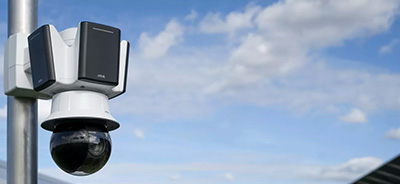
Axis Communications announces the upcoming launch of radar innovativi. Each powerful device delivers 180° or 270° horizontal field of detection with accurate AI-powered classification across large areas in all weather and light conditions, 24/7. Their deep integration with selected Axis PTZ cameras enables radar-video fusion technology, adding an extra layer to strengthen a video surveillance system with enhanced surveillance capabilities and optimal performance.
AXIS D2122-VE Radar offers a wide 180° horizontal field of detection and is ideal for mounting on walls or fence lines. It can recognize humans at a distance up to 140 m (460 ft) in an area of 20,000 m2 (215,300 ft2). The other product, AXIS D2123-VE Radar, offers an astounding 270° horizontal field of detection and can recognize humans in an area of 30,000 m2 (323,000 ft2)*. It’s ideal for mounting on poles or corners. Both radars use unique box-shaped detection and recognition zones to simplify coverage planning and system design.
These radars work either as standalone devices or integrated with selected ARTPEC-9 PTZ cameras, providing seamless operations with accurate visual verification and automatic tracking. This integration also enables radar-video fusion technology, where AI-powered radar analytics are combined with video analytics in the PTZ camera to minimize false alarms. The two devices are integrated through edge-to-edge radar pairing, and all configurations are handled through the PTZ camera. Therefore, only one IP address and one VMS license are needed. It’s also possible to set up double-knock verification, where both radar and video analytics need to confirm the detection and classification before triggering an event. This multi-layered approach results in maximum efficiency with more enriched data and better decision-making tools for security guards and operating personnel.
Key features includes:
- Outstanding 180°/270° horizontal field of detection
- Classify objects over expansive areas
- Box-shaped detection and recognition zones for efficient coverage
- Deep integration with selected PTZ cameras
- Possibility for radar-video fusion technology
These radars offer great flexibility. They’re compatible with various Axis devices, such as panoramic cameras and strobe speakers, making it easy to adapt to changing security requirements. Furthermore, they’re easy to mount, and thanks to their low power consumption and support for PoE out, they’re ideal for mobile surveillance or off-grid installations where power availability is limited.
* For specifications about the detection and recognition of objects, please refer to the products’ datasheets.
—
THREE QUESTIONS TO...
Piergianni Marana, Key Account Manager End Customer Axis

How does multimodal AI improve our understanding of complex urban mobility contexts?
Multimodal AI enables smart cameras to become data-rich platforms capable of interpreting complex environments in real time and over time.
By combining multiple modalities, these systems do more than simply detect events; they enhance accuracy, validation, and contextual interpretation.
In complex urban contexts, such as transportation infrastructure, intermodal hubs, and congested road networks, this approach makes it possible to distinguish routine activities from anomalies or emerging risks, gain greater situational awareness, and support a faster, more informed response.
The value lies not in a single technology, but in the synthesis of a richer, more layered dataset, which reduces the ambiguity typical of urban environments.
Which emerging technologies are most relevant for transportation systems and urban management?
There are several modalities that, when combined, significantly improve the analysis and response capabilities of intelligent systems:
• Integration of radar technology, which provides data on distance, speed, and movement and improves detection when video alone may be less effective, reducing false positives and improving motion tracking.
• Text and license plate recognition (OCR/LPR), which adds semantic context by extracting textual information, useful for access control, logistics tracking, and safety enforcement.
• Environmental sensing via sensors, using integrated or networked sensors that measure air quality, humidity, or pollutants, also supporting environmental assessments in urban settings.
• Temporal and contextual analysis, based on a “timeline-based” reading of events, which allows for observing how situations evolve over time and identifying significant deviations.
These methods, considered individually, provide useful information—combined, they enable a more reliable and contextualized understanding of urban flows.
What is the strategic value of multimodal AI for those who plan and manage urban mobility?
Multimodal AI systems improve decision-making processes and the level of automation, enabling a more effective response across a wide range of complex environments.
By combining different modes of analysis, these systems improve event interpretation, reduce false alarms, and enhance operational response capabilities.
In the context of urban mobility, this approach helps reduce risk, accelerate response times, and support more informed decisions, while building a scalable foundation for the future growth of city and transportation management systems. |
|
|
|
|
|
Circle Group: new contract signed for the activation of integrated digital infrastructure valued at approximately €260,000
CIRCLE Group (“CIRCLE” or the “Company”) – an innovative SME listed on the Euronext Growth Milan market, head of the eponymous Group specializing in process analysis and the development of solutions for the innovation and digitalization of the port and intermodal logistics sectors, as well as international consulting on the Green Deal and energy transition, and TTS Italia ordinary membe– announces the signing of a new contract, through its subsidiary eXyond, with a leading Italian intermodal logistics operator. The contract, valued at approximately €260,000 and lasting 10 months, involves the activation of an advanced digital infrastructure for the operational management, certification, and traceability of logistics flows. The initiative involves the implementation of the proprietary KMASTER® and MILOS® platforms and includes the technological enablement of the fleet, integration with corporate systems, and the implementation of the KMASTER® and MILOS® platform. The contract also includes the activation of advanced services for data certification at source, digital management of document flows in compliance with European eFTI datasets, and integration via interoperable APIs with the client's management and logistics systems. The infrastructure will accelerate the digitalization of logistics processes, improving operational efficiency, traceability, security, and interoperability along the entire transport chain, in line with the latest European guidelines on digital transition and sustainability. To this end, Circle Group will provide its system integration expertise, coordinating the configuration, integration, and delivery activities of the entire suite, with the aim of ensuring full operational availability of the infrastructure and scalability of services over time. The transaction is also part of the strategic path outlined in the "Connect 4 Agile Growth" plan, aimed at strengthening Circle Group's position as an enabler of the digitalization and sustainability of logistics and industrial chains through the development of interoperable platforms, innovative services, and high-value-added technological solutions. "This transaction confirms the market's growing focus on integrated digital solutions capable of supporting the transformation of logistics and document processes. The project represents a further step in consolidating our position as a leading technology partner for sustainable supply chain innovation," said Luca Abatello, CEO of Circle Group. The new contract further strengthens Circle Group's position in the digitalization of logistics processes and data interoperability market, confirming the Group's ability to develop innovative solutions to support the digital and energy transition in the transportation and logistics sector.
Source: Circle Group |
|
Fleet Management: Focus on Artificial Intelligence
Artificial Intelligence systems are becoming increasingly important in fleet management and connected mobility dynamics. This is what emerges from the Fleet Management Watch of Targa Telematics – a global player in the field of AIoT and in the development of digital solutions and platforms for connected mobility, and TTS Italia founding member– with the support of the Connected Vehicle & Mobility Observatory of the Polimi School of Management. The Fleet Management Watch of Targa Telematics is an analysis carried out on a sample of important players in the fleet management market belonging to the Top Thousand and Top Hundred Observatory, who together manage almost 60 thousand vehicles of different types of fleets, including corporate, operational, commercial and fleets dedicated to local services. According to the study, in fact, 73% of the fleet managers interviewed are undergoing a concrete evaluation process to implement AI solutions in fleet management processes, while the remaining 23% completely exclude the hypothesis of exploring this possibility in the future. Among the various functions in which it is considered most strategic to integrate AI are predictive maintenance systems (38%), followed by anomaly detection (24%), predictive analytics dashboards (19%) and consumption analysis and optimization (14%). The Polimi research also investigated company vehicle users' perceptions of the benefits offered by telematics, with 46% of the panel citing the vehicle's ease of use, while another 23% focused on aspects such as operational support and assistance. "Artificial Intelligence today represents the main driver of evolution in fleet management, enabling an approach increasingly geared towards anticipating problems and supporting operational decisions," commented Michele Cipullo, Go To Market Manager at Targa Telematics. "The Observatory's data confirm that the market is ready for this leap: it's no longer a matter of experimentation, but a concrete path to adoption." In this scenario, the value lies not only in data collection, but in the ability to interpret it and transform it into operational decisions that improve efficiency, safety, and sustainability.
Source: Targa Telematics |
|
GreenShare joins Flosslab: Net Service Group expands its presence in Sardinia and strengthens its regional development model
Flosslab, a Sardinian ICT company controlled by Net Service Group (NSG), completed its acquisition of a stake in GreenShare on March 6th. GreenShare, a company that also represents the local context and grew out of university research, is now active in the development of digital solutions for sustainable mobility with clients nationwide, and TTS Italia ordinary member.
The transaction was officially presented on April 27th in Cagliari, during a press conference that emphasized not only the industrial value of the acquisition, but also its significance for the region: a process that originated in Sardinia, enhances local entrepreneurial skills, and strengthens a regional innovation ecosystem capable of competing on a national scale.
With GreenShare's entry into Flosslab, Net Service Group further consolidates its presence on the island, exceeding €5 million in annual revenue and 50 employees, with growth forecasts that aim to reach €6 million in revenue and over 60 people by 2027.
What makes this acquisition distinctive is the parent company's decision not to intervene directly, but to support a process that enhances two locally rooted companies, their expertise, and the role of the managers involved, including as shareholders. Within this framework of continuity and strengthening, Giuseppe Colistra remains CEO of GreenShare, Chicco Porcu, former President of Flosslab, assumes the presidency, while Daniele Sanna, former COO of Flosslab, joins the new Board of Directors as a Director.
The transaction involved the initial acquisition of 51% of Greenshare by Flosslab, with a call option for 100% of the shares to be exercised under certain conditions.
During the meeting, the strong synergies between the two companies also emerged: both were founded as spin-offs of the University of Cagliari, both grew through research and development, and both are active in enabling technologies, from artificial intelligence to blockchain, from IoT to Big Data. The integration of their teams and expertise now strengthens their ability to offer services to local public administration, local public transport, and, more generally, the development of smart cities.
"This operation fully represents Net Service Group's growth vision: building a network of specialized companies capable of collaborating synergistically and generating greater value for customers and the local communities," commented Gianluca Ortolani, CEO of Net Service Group. "The addition of GreenShare, following that of Oikos Area at the end of 2025, further strengthens the Group's multidisciplinary profile and expands our ability to support public and private organizations in their digital transition. In this strategy, Sardinia represents a region rich in expertise, vision, and potential for us."
"This acquisition is paradigmatic, demonstrating that Sardinia can launch and grow operations capable of generating development by harnessing the local energy," says Chicco Porcu, President of Flosslab and GreenShare. "We wanted to build a path that strengthens the Group's presence on the island while also focusing on the growth of a local innovation ecosystem. In a region that has historically distinguished itself for its pioneering digital presence, this transaction is part of a broader vision: to help make innovation a concrete lever for competitiveness, attractiveness, and development for Sardinia."
"For our company, this transaction represents a significant acceleration," says Giuseppe Colistra, CEO of GreenShare. Joining a group like Net Service through Flosslab means being able to count on greater industrial synergies, improved economies of scale, and greater opportunities to evolve our solutions. We maintain our identity and specialization in the field of intelligent mobility, but with a strengthened ability to address broader markets and increasingly challenging, robust, and integrated projects for our clients.
The transaction was supported by Big Partners—with a team led by Senior Partner Maurizio Baldassarini—as advisor, by Studio Legale Eruzzi for legal aspects, and by Banco di Sardegna – BPER as Partner Bank.
Source: GreenShare |
|
MaaS ToMove Today and Tomorrow – Results and Future Prospects
The final event of the MaaS ToMove project took place on April 28th in Dorado (Turin). This event brought together institutions, operators, and stakeholders to share the results of the trial and discuss the future prospects of mobility as a service. After welcoming guests from the City of Turin and CinqueT, TTS Italia ordinary member, the project's main results were presented, followed by an in-depth roundtable discussion and two international keynotes that offered insights into European experiences and the challenges associated with the development of MaaS models. The morning concluded with a collaborative workshop that actively involved participants in co-designing future scenarios for digital mobility in Turin. Launch of the Turin MaaS Office
The City of Turin and CinqueT have established a MaaS Office with the aim of continuing the work begun during the MaaS for Italy pilot and supporting the governance of the MaaS (and MaaF) ecosystem, digital mobility, and multimodality in Turin and Piedmont. The workshop confirmed a high level of interest in integrated, sustainable, and data-driven mobility models. All discussions highlighted the need to simplify access to services, increase intermodality, build sustainable economic models, and enhance the role of territorial partnerships. Furthermore, a widespread willingness to engage in discussion and co-planning between public and private entities emerged, a key prerequisite for moving from the experimental phase to structural and ongoing initiatives. The MaaS Office will serve as a stable coordination hub to transform these findings into concrete projects, activating in-depth vertical discussions, targeted experiments, and new collaborations to benefit mobility in Turin and Piedmont. For any questions, please write to the dedicated email address: maas.office@cinquet.it.
Source: CinqueT |
|
OCTO and Sedgwick Announce Strategic Telematics Partnership
OCTO, a global leader in telematics and data analytics, and TTS Italia ordinary member, has announced a strategic partnership with Sedgwick, a global leader in claims and risk management solutions. Together, the two companies will redefine the future of insurance and mobility by combining advanced telematics and claims management services.
The collaboration aims to create a new model where telematics and efficiency come together to transform the customer experience.
By integrating OCTO's cutting-edge telematics insights with Sedgwick's global claims management expertise, the partnership will deliver a range of tangible benefits: increased speed and accuracy in incident detection and claims collection, faster and more consistent liability assessments, fraud validation and reduction, alert optimization to improve driver safety, and a significant reduction in overall costs and the lifecycle of claims. The joint solution is telematics-agnostic, capable of acquiring data from connected vehicles, fleet management systems, or OCTO's proprietary on-board sensors, ensuring flexibility and scalability. Combined with OCTO's leadership in insurance telematics and Sedgwick's reputation as the leading global third-party administrator (TPA), this collaboration offers a measurable return on investment, supported by customized SLAs.
"This partnership with Sedgwick represents a significant step towards a more transparent, efficient, and sustainable claims management model," said Pedro Bernardo Santos, Chief Business Development Officer at OCTO. "We see telematics as a key enabler for improving the customer experience and creating lasting value for the entire industry."
"Leaders across multiple industries, including automotive, fleet, and transportation, will see immediate value from this partnership," said James Norman, Head of International Business Development at Sedgwick. "Our expertise at Sedgwick, combined with OCTO's telematics capabilities, will further strengthen our commitment to continuous innovation and market leadership."
This alliance will help deliver faster, more equitable, and sustainable outcomes for all stakeholders.
Source: Octo Telematics |
|
OPEN on the ROAD: Axis's traveling event
OPEN on the ROAD is the traveling event that brings you closer to Axis, TTS Italia ordinary member, stopping in various cities to demonstrate how technology can create a simpler, safer, and more connected world. Join us to discover the latest innovations, meet the local Axis team, and experience firsthand how intelligent sensor technologies, combined with the power of data and metadata, can be applied to real-world challenges. Axis is on the road to meet the entire ecosystem: distributors, partners, consultants, and end customers. Why participate?
Gain valuable insights: Learn directly from the Axis team and receive practical tips and best practices to apply to your projects.
Discover innovative solutions: Explore the future of network technologies, from artificial intelligence and image quality to cybersecurity and data analytics, all the way to complete end-to-end solutions.
Connect with industry peers: Build relationships with experts and other industry professionals.
Attend live demos: See intelligent technologies in action and learn how they work in real-world scenarios.
For more details and to participate, click here.
Source: Axis |
|
Targa Telematics: Agentic AI supports long-term rental companies in optimizing vehicle delivery services
The "NLT Workers" study, conducted by Centro Studi Fleet&Mobility on industry operators and promoted by Targa Telematics, a founding member of TTS Italia, and Escargo*, highlighted how the outsourcing of certain services to third parties (brokers, repair shops, logistics companies) by long-term rental companies (NLTs), and the resulting fragmentation of the players involved in delivery, is negatively impacting the perception of the service offered, particularly its quality and customer satisfaction. The loss of the direct rental company/driver relationship in favor of intermediaries leads interviewees to complain about a deterioration in their understanding of their actual needs and the alignment of services with their requirements, as well as several critical issues regarding delivery times and service costs. One example above all is the vehicle delivery process, which in the context of long-term rentals represents one of the most important moments in a driver's customer journey: according to interviewees, rental companies are on average poorly or only partially informed about almost all aspects of the process, citing "explanation of how the vehicle works", "quality of customer service" and "satisfaction with the overall service" as the areas where rental companies are mostly "little" or "not at all" informed. And it is to offer NLTs a solution to address the issues related to the involvement of multiple third parties in their business model that Targa Telematics has developed Vehicle Delivery Monitoring, a solution based on Agentic AI designed to bring visibility, control and measurability throughout all phases of vehicle delivery – from production at the car manufacturer to transport, up to preparation at the delivery centre – optimising all aspects and increasing the operational efficiency of long-term rental companies. A complex process, finally under control. The Vehicle Delivery Monitoring solution is made up of several software modules with agentic functionality, designed to support rental companies in controlling The entire delivery process, made increasingly complex by the presence of multiple stakeholders (car makers, carriers, delivery centers, rental companies, and customers). Traditional management of this flow is based on administrative steps and declarations that aren't always completed in real time, generating inefficiencies, delays, disputes, and additional costs. Targa Telematics' solution brings clarity and timeliness to the most critical phases, offering a view based on reliable and dynamic data. The system integrates rental companies' administrative data with information collected from vehicle devices. Agentic AI identifies the actual status of the vehicle—whether it is at the car maker's premises, en route, at the delivery center, or already in circulation—and reports any discrepancies with the declared process. Prompt reporting of any anomalies encountered—such as delivery to a different center than expected; vehicles that appear to be in circulation but are actually still waiting for delivery, or vice versa; delays in compliance, car wash, or telematics installation—is key to ensuring the smooth operation of the vehicle. This eliminates the criticality of transmitting the documents required to activate the contract – allowing the rental company's internal teams to intervene promptly and in a targeted manner, moving from a declarative process to one based on objective data. "It's a paradigm shift," said Alberto Falcione, VP Sales at Targa Telematics. "A solution that doesn't simply describe a process, but enables more efficient and informed management based on reliable, real-time data, independent of the human intervention of individual stakeholders. Even small delays or shortcomings in one part of the process can have a significant impact on the quality of service offered and, therefore, on the rental company's customer satisfaction. Telematics, enhanced by intelligent systems, thus becomes a strategic ally for rental companies, contributing to a more effective and transparent operating model." More specifically, Targa Telematics' solution, which can be fully integrated into NLT management systems, reduces delays and inefficiencies in delivery centers, accelerates contract activation thanks to greater visibility into the actual condition of vehicles, prevents insurance risks by preventing vehicles from being left uncovered in circulation, optimizes costs, and automates critical activities (e.g., reminders or document checks).
A constantly evolving platform
Targa Telematics' Vehicle Delivery Monitoring solution is constantly evolving thanks to the introduction of new functions and insights, such as the implementation of predictive models to provide forecasts on monthly contract activations, based on the historical performance of each delivery center. *Survey "NLT Workers" carried out by the Fleet & Mobility Study Center promoted by Escargo and Targa Telematics to which over 120 operators in the sector responded.
Source: Targa Telematics |
|
|
|
|
|
|
Artificial Intelligence and Mobility: An Interview with the President of TTS Italia
The adoption of digital technologies in the infrastructure and logistics sectors is set to profoundly impact the design, construction, management, and maintenance of public works and mobility hubs. At the same time, Artificial Intelligence has become a part of our daily lives. But what are the uses and impact of Artificial Intelligence systems in the passenger and freight mobility sector? TTS Italia President Rossella Panero discusses this in the latest issue of Mobility Magazine, focusing on the risks and vulnerabilities of Artificial Intelligence in transportation, not to mention the importance of regulatory aspects.
During the TTS Italia Conference on June 17 in Rome, "AI and Cybersecurity for the Mobility of People and Freight," the Association will share proposals and recommendations for improving coordination between institutions and businesses in defending against hybrid threats in the transportation sector.
Read the interview! (available in Italian) |
|
TTS Italia at ITS Australia Mobility 2026 in Brisbane
TTS Italia Secretary General Olga Landolfi and Leonardo Domanico, Head of Activities and Membership, attended ITS Australia Mobility 2026 on May 27 and 28 in Brisbane, Australia.
Themed "Powering Seamless Mobility," the conference explored how technology, collaboration, and bold thinking are enabling more connected, accessible, and sustainable transportation systems. Over two intense and dynamic days, the conference explored concrete insights and emerging solutions ranging from sustainable and active transportation, on-demand mobility, smart payments and ticketing, the energy transition, inclusive design, and next-generation mobility technologies.
On May 27, Olga Landolfi and Leonardo Domanico were among the speakers at the "AV Pilots, CAV Operations, and Positioning" session, which explores the future of connected and automated mobility through pilot projects of real-world autonomous vehicles, positioning technologies, the digitalization of freight transport, and data-driven transportation planning. TTS Italia focused on Turin's experience in autonomous and connected mobility. |
|
TTS Italia at Platmosphere 2026: Master the Vibe!
On May 26, TTS Italia, represented by Fabio Nussio, participated in Platmosphere, the event organized by MIA-Platform, a full member of TTS Italia.
Under the motto "Master the Vibe," the event explored how AI-native workflows and development platforms create a new pace for engineering: from ideas to production, with built-in security, compliance, and governance.
Platmosphere brings together the people who make this balance possible, moving from an infrastructure-centric approach to the entire development lifecycle. The tracks range from business and ROI to real-world cases and hands-on labs. The common thread: speed through AI, trust through security mechanisms.
Fabio Nussio, in particular, moderated the session "Mobility 5.0: The Future of Intelligent Transportation Systems, Balancing AI & Cyber Risks," which highlighted the role of technology platforms as essential enablers for governance, compliance, and data protection within an increasingly interconnected and data-driven ecosystem. |
|
TTS Italia at the Rome Smart City Lab Assembly
On May 25, TTS Italia participated in the assembly of the Rome Smart City Lab, of which it is a member. This assembly is a tool for the active participation of institutions and stakeholders in the digital transition process toward achieving the goals of the Rome Smart City Plan. The Assembly represents a concrete implementation tool for a full Open Government approach based on the creation of effective collaboration and sharing tools, even beyond the limited availability of open data. The Consulta also provides full support and ongoing stimulation for the work of the governance bodies of the Rome Smart City Plan. TTS Italia had the opportunity to give a brief presentation on the development of connected and autonomous mobility: there is a real paradigm shift, with the mandatory provision of mobility data and the new services that will arise, and with an eye toward connected and autonomous mobility, which, however, requires regulatory adjustments for its real development in Italy. With the Decree of January 26, 2026, published in the Official Journal on February 18, 2026, Italy implemented Directive 2023/2661/EU of November 22, 2023, updating ITS Directive 2010/40/EU. Article Article 12 of the decree requires the Ministry of Infrastructure and Transport (MIT) to adopt the "National ITS Plan," and TTS Italia is supporting the MIT in its preparation. Future mobility is closely linked to the development of smart cities, with integrated infrastructures that promote a greener and more intelligent use of transportation. Among the new mobility trends identified in Directive 2661/2023 is connected and autonomous mobility. Consideration should be given to:
- Updating and simplifying the current regulatory framework (Smart Road Decree and/or the Italian Experimentation Law) to enable faster trials, streamlining bureaucracy, and also to take advantage of EC funding opportunities that would otherwise be unavailable.
- Promoting both pilot testing phases and nationwide implementation of successfully tested technological innovations.
- Developing the new ITS Directive 2661/2023 to contribute to the development of autonomous mobility, including support for connected and autonomous vehicles and multimodal integration.
- Amending the Highway Code, which currently only covers the use of human-driven vehicles. |
|
Mobility Hub: where the mobility of the future is born. TTS Italia-ACI Radio Live Talk launched
The collaboration between TTS Italia and ACI Radio began in May 20: the Live Talk "MOBILITY HUB: WHERE THE MOBILITY OF THE FUTURE IS BORN," a new event dedicated to smart mobility.
The first Live Talk featured Olga Landolfi, Secretary General of TTS Italia, and Luigi Di Matteo, Central Technical Area Coordinator of ACI, TTS Italia founding member.
The goal of the talk was to present in a simple and clear way what TTS Italia is, what activities it carries out in the field of smart mobility, and the role ACI plays as a founding member. Through dialogue with guests, the talk aimed to explain to citizens, in accessible language, how ITS technologies are improving the safety, sustainability, and quality of travel.
Olga Landolfi focused on TTS Italia's mission in the field of intelligent mobility, the activities carried out to support organizations, companies, and citizens in the development of intelligent transport systems, as well as the ITS technologies currently having the most concrete impact on citizens' daily mobility, and the importance of collaboration between all stakeholders in the sector, both public and private. |
|
TTS Italia at the Almaviva Group event on the future of mobility and the supply chain
On May 15th, at the headquarters of Almaviva Group, a supporting member of TTS Italia, a P2P event promoted by the Moova Faculty was held. The event focused on an increasingly central topic for the future of mobility and the supply chain: "Is the logistics of the future for everyone? Technology, innovation, and the digital divide." TTS Italia also participated in the event.
Bice Dellarciprete opened the meeting, introducing an overview of the transformations redefining the logistics sector and the relationship between technological innovation, infrastructure, and social inclusion.
Francesca Bove explored the strategic role of maritime logistics and port evolution, retracing the historical transition towards the standardization of containerized freight transport, a revolution that has made global trade more efficient and secure. His presentation also focused on the concept of Smart Ports: infrastructures increasingly integrated with the urban fabric, geared towards process optimization, sustainability, and waterfront enhancement. This perspective spanned international scenarios such as Rotterdam, Singapore, and Genoa, highlighting how innovation and environmental awareness are redefining the role of ports in contemporary cities.
In his presentation, Lorenzo Valletta, TTS Italia, focused on the human and social implications of automation in logistics processes. Amidst algorithms, robotization, and staff shortages in the sector, a reflection emerged on the digital divide and the impact technological transformations are having on work: from the reduction of physical effort to the increase in mental workload, to discontent and the new challenges related to inclusion and skills development.
Particularly central was the discussion on the strategies organizations can adopt to reduce anxiety and fears related to technological replacement, building more sustainable transformation paths through three fundamental dimensions: language, identity, and people involvement.
The meeting concluded with a moment of open dialogue and discussion, confirming the value of the MoovA community as a space for merging research, innovation, and a humanistic vision of mobility. |
|
TTS Italia in Milan to discuss mobility and major events
The collaboration between the IoMOBILITY Awards, of which TTS Italia is a Networking Partner, and the Next Mobility Exhibition at Fiera Milano, also included the organization of exclusive, free conferences during the event. On May 15, TTS Italia was in Milan to participate in "RECORD MOBILITY: OLYMPICS AND MAJOR EVENTS," represented by Bruno Pezzuto, Head of Mobility Management Service, Municipality of Verona, a full member of TTS Italia, and Vice President of TTS Italia.
Bruno Pezzuto, in particular, took part in the ROUND TABLE – Moving Millions: providing efficient mobility and integrated logistics: after working at the Fondazione Milano Cortina 2026 at the Transport Operation Center during the games, he shared with the other speakers some insights from his unique perspective as a mobility official at the Municipality of Verona and Vice President of TTS Italia.
Other TTS Italia members also attended the event as speakers: Circle Group, ESRI Italia, and OpenMove. |
|
GIS – Integrating Everything, Everywhere: the Esri Italia 2026 Conference. TTS Italia was also present!
The Esri Italia 2026 Conference, organized by ESRI Italia, a full member of TTS Italia, took place on May 13 and 14 in Rome. The two-day event, dedicated to innovation and sharing, was the largest national event on Geographic Information Science, an event that for over 20 years has given voice to those who use GIS to understand, design, and transform landscapes. Olga Landolfi, Secretary General of TTS Italia, moderated the Thematic Panel & Round Table – New Frontiers of GIS for the Management of Road Assets and Transportation Networks. The session explored how next-generation GIS is transforming the management of road assets and transportation systems by integrating data, processes, and technologies into a single operational vision. |
|
|
|
|
|
• Italy
Road traffic control equipment
• Italy
IT software packages
• Italy
Parking management services |
|
| Go to the private website |
|
|
|
|
|
|
|
|
|

10° Conferenza internazionale su Road Safety & Simulation
23-26 June 2026, Naples
For further information, click here →
Security Summit Roma 2026
23 June 2026, Rome
For further information, click here →
|
|

ITS America Annual Meeting 2026
9-12 June 2026, Detroit, USA
For further information, click here →
|
|
|
|