N° 9
October 2026
—
TTS Italia is the Italian ITS Association founded with the aim to promote the development and deployment of Intelligent Transport Systems (ITS) in Italy. |
|
|
|
|
| The point of view by Morena Pivetti |
|
|

TTS Italia, MOST, and PAVE Europe take stock of autonomous driving in Italy and Europe
“Binding EU regulations and dedicated funding are needed. The Highway Code must be amended.”
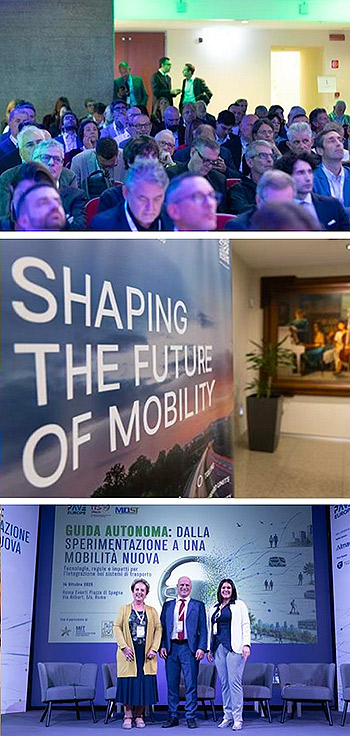
Europe can still succeed; it can compete in the race toward autonomous and connected driving against American and Chinese giants—who are currently sprinting ahead and leading the pack. However, there is no time to waste; the outcome will be decided in the coming months. The European Union must act decisively to make up for lost ground and maintain technological and territorial sovereignty over a revolution set to transform public and private mobility, the layout of our cities, and, ultimately, our very lives. Italy faces even greater risks—the danger of falling to the very back of the pack compared to other European nations. This is despite the country’s academic excellence—seen in institutions like the Polytechnic University of Milan and the University of Modena and Reggio Emilia—and its cutting-edge experimental projects. The new Highway Code is proving to be an insurmountable obstacle for innovative start-ups and spin-offs emerging from engineering faculties. Faced with regulations that severely hinder the progress of research, these entities may have no choice but to seek more fertile, open ground—migrating beyond the Alps to countries where conditions are more favorable. Such an outcome would represent a clear-cut loss for the Italian automotive industry and for the economic system as a whole.
“Autonomous Driving: From Experimentation to a New Era of Mobility – Technologies, Regulations, and Impacts for Integration into Transport Systems” was the title of a forum held in Rome on October 14th, dedicated to discussing the conditions required to transform technological innovation into safe, sustainable, and accessible mobility services. The event was organized by TTS Italia in collaboration with two co-organizers—PAVE Europe (Partners for Automated Vehicle Education Europe) and MOST (National Center for Sustainable Mobility)—who joined forces to bring together national and European institutions, local government officials, universities, infrastructure operators, industry representatives, and technology providers to take stock of the current landscape. The conference had a strong European focus, featuring speakers from Germany, Spain, Switzerland, and Norway. They shared their expertise and detailed various pilot projects currently underway across Europe—from Hamburg and Oslo to Geneva and Zurich—as well as in Italy, including initiatives in Turin, Milan, and Rome.
The reaction to the regulations on autonomous driving included in the new Highway Code—submitted to Parliament that very same day—was a “veritable cry of distress,” to borrow the famous phrase used by King Victor Emmanuel II in his Speech from the Throne on January 10, 1859. It was a unanimous outcry from members of parliament, representatives of local institutions, automakers, the electric mobility sector, and infrastructure operators. They all agreed in criticizing the requirement for a human to be present on board autonomous vehicles during road testing, arguing that it hinders the necessary progress toward developing Level 4 technologies. This alarm was raised, in particular, during the concluding round-table discussion titled “From Testing to Adoption,” which featured contributions from Member of the European Parliament Pierfrancesco Maran; Stefano Giovenali, President of the Order of Engineers of the Province of Rome; Giada Maio, Head of Energy, Air Quality, Sustainable Mobility, and Local Public Transport at ANCI (National Association of Italian Municipalities); Alessandro Musmeci, Head of the Technical Department at AISCAT (Italian Association of Toll Motorway Concessionaires); Francesco Naso, Secretary General of E-Motus; Fabrizia Vigo, Director of Institutional Relations and Legal Affairs at ANFIA (Italian Association of the Automotive Industry); and Andrea Casu, Vice President of the IX Transport Commission of the Chamber of Deputies.
Let’s take things in order and begin with the official remarks from Eugenio Patanè, Rome’s Councilor for Mobility, who immediately addressed the core subject of the conference. “Rome is ready to play its part. We have already issued a public call, inviting all relevant stakeholders to come forward and help develop autonomous driving within the city. Furthermore, the Rome-Fiumicino route has already been designated as a ‘smart road.’ The technology exists and it works; now it is up to Europe—and Italy—to define the rules and create an intelligent ecosystem, encompassing network coverage, the development of an open ‘digital twin,’ public governance, and data interoperability. Autonomous vehicles must be integrated with local public transport—not only to improve road safety but also to ensure service for the most vulnerable individuals and those living in underserved peripheral areas.” Patanè concluded by calling for cities to be included at the institutional table where these decisions will be made.
Giacomo Lozzi, a Policy Officer at the European Commission’s DG MOVE, then outlined the framework for autonomous driving at the EU level. “We have launched a call for proposals worth 100 million euros for the validation of Level 3 and 4 technologies,” he noted. “Regulatory alignment is required, bringing cities and regions to the table alongside Member States when decisions are made. DG MOVE views autonomous driving as a tool to achieve mobility sustainability goals—integrating local public transport and encompassing freight transport—as well as a means to support the European market for cars, buses, shuttles, and robotaxis.”
From research to industry and the market: this was the subject of a keynote speech by Professor Sergio Matteo Savaresi, a tenured professor of automatic control at the Polytechnic University of Milan, who has long advocated for a vision based on the sharing of autonomous vehicles. “During peak usage periods for private cars, only 8% of the total fleet is in use in Milan, and 13% in Rome. We have 45 million private cars, 22,000 taxis, and 8,000 vehicles in traditional car-sharing services. We must shift from a model where the customer goes to pick up the vehicle—the current approach to sharing—to one where the vehicle comes to pick up the customer, which is the future of sharing,” Savaresi explained. “Such a vehicle must necessarily be electric, as its batteries have a useful life of up to 1 million kilometers.”
However, as of today, European car manufacturers do not have a platform ready for testing Level 4 autonomous driving—unlike their American counterparts, where the market and private capital drive development, or the Chinese, where the state takes the lead through public subsidies. “Europe is at a crossroads,” warned Savaresi. “It must either become a market for others or take control of its own technologies, thereby maintaining territorial sovereignty. This is an industrial revolution; there will be winners and losers. If Italy insists on having a human on board, then France, Germany, and Croatia—which already permit testing with remote control—will emerge as the winners.”
Luca Foresti, CEO and founder of Niulinx—a spin-off of the AIDA (Artificial Intelligence Driving Autonomous) project at the Polytechnic University of Milan, which has conducted several trials on public roads—was even more blunt: “The provisions in the new Highway Code are killing the industry. Our only alternative will be to move abroad.” Foresti announced that Niulinx intends to seek type-approval for autonomous vehicles in Europe; the technology is mature, and within a couple of years, autonomous fleets will be on the roads—a point echoed by Vibeke Harlem, Director of Radical Innovation at Ruter in Oslo. “We could organize public transport services in areas where they are currently not cost-effective,” Foresti concluded. “Policymakers need to show some courage. Europe should establish a single, EU-wide authority for the type-approval of autonomous vehicles—including buses and trucks—rather than leaving it to individual countries, given the current regulatory fragmentation. Furthermore, it should fund a 10-billion-euro investment vehicle.”
In the final round-table discussion, Stefano Giovenali focused on the new form of mobility that autonomous driving will bring to cities, and how urban landscapes will be transformed—freed from the blanket of stationary, parked cars—thereby offering citizens new spaces for living. Vigo confirmed that manufacturers are prepared to invest, but pointed out that their concerns have once again been ignored in the Highway Code. Alessandro Musmeci—who remarked, “We’ve set ourselves back ten years”—and Francesco Naso shared this assessment. Giada Maio emphasized the need to involve cities in the decision-making process.
“This issue must be addressed at a European level, with Italy pursuing its own specific objectives—namely, reducing the number of vehicles on the road and ensuring that local transport reaches underserved inland areas,” agreed Pierfrancesco Maran. “Meanwhile, the newly approved Highway Code is not aligned with EU regulations; we cannot have different rules every time we cross a border.” This critical assessment was echoed by Andrea Casu, Vice President of the Chamber of Deputies’ Transport Commission: “This new Code is heading in the wrong direction—it represents a failure to make real decisions and betrays the spirit of the motion previously supported by both the majority and the opposition. We must listen to mayors and involve trade unions and workers. We need a national plan that moves beyond mere experimentation toward the industrial implementation of autonomous vehicles. We cannot afford to see those currently at the forefront of testing and technological development pack their bags and emigrate. During the parliamentary process, we will do everything in our power to amend these regulations, which currently stifle Italian creativity and industry.”
In their closing remarks at the conference, Rossella Panero, President of TTS Italia, and Olga Landolfi, Secretary General, reiterated the need to involve cities and to work toward amending the provisions of the Highway Code regarding autonomous driving. They also reaffirmed their commitment to contributing to the National ITS Plan, which will be a strategic element for the development of autonomous driving.
Go to the photo gallery
The conference was organized with the support of
|
| |
|
|
Trafficlab is an innovative SME in the ICT sector, founded in 2021 by engineer Andrea Marella after many years spent designing systems for traffic management, road safety and smart mobility. Its goal is to improve the efficiency and sustainability of urban, motorway and corporate environments.
With offices in Alba (CN) and Milan, its team of professionals, with specialist skills and long experience in computer vision and artificial intelligence, designs and implements smart mobility systems. These systems help turn the concepts of smart city and smart road into reality. The work starts from a qualitative analysis of traffic data and leads to a safer, more reliable and more sustainable system.
Trafficlab keeps developing new expertise in ITS (Intelligent Transport Systems) solutions, software platforms and strategic consultancy, to respond ever more effectively to the everyday needs of public bodies and private companies. By positioning a camera, a traffic light or a variable message sign, a monitoring system on roads and car parks can, for example, tackle issues such as road accidents, congestion near bottlenecks and roundabouts, wrong-way driving, illegal parking, traffic light timings that exceed actual needs, and the impact of public works on traffic, and much more.
Trafficlab's current figures reflect the steady growth and success the company is enjoying: constantly growing turnover, more than 250 public and private clients, and a team of 10. Above all, two major organisations hold a stake in the company: MOST – National Centre for Sustainable Mobility (founding body: Politecnico di Milano) and Magic Spectrum (Cassa Depositi e Prestiti, Zest Investment and Fondazione Compagnia di San Paolo).
Trafficlab builds a systemic strategy for managing traffic, roads and shared spaces. Its starting point is the collection, organisation and analysis of millions of data points gathered from connected vehicles and infrastructure. This first phase is followed by the development of proposed solutions that take into account the client's objectives and their time and budget constraints, and then by the actual implementation of the system. A specialist team carries out this work: traffic engineers, software developers for any customisation, qualified installation technicians and others, together with experienced, accredited partner companies where needed.
Trafficlab's service is unique in Italy: a tailored solution guided by the analysis of professionals with years of experience, built on a standardised, secure and modular software platform that already has hundreds of references. In a nutshell, “the reliability of a product for the uniqueness of every project”.
—
PRODUCT IN THE SPOTLIGHT
THE WETRAFFIC® CLOUD PLATFORM
It all starts with mobility problems. Some are temporary, such as a road closed for works, a demonstration, or a large event that brings half the city to a standstill. Others are structural and have persisted for years, such as the need for a roundabout or traffic lights at a dangerous junction, or the parking spaces residents of a neighbourhood need.
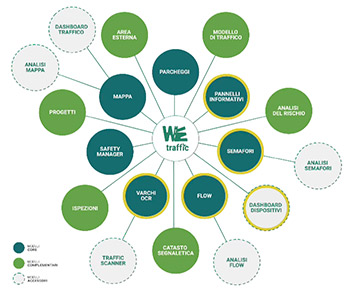
These situations, and many others, are where Wetraffic comes in: a fully cloud-based suite that helps public administrations, mobility operators and traffic managers make decisions every day. Some are planning decisions whose impact will last for years. Others are immediate decisions with real-time effects. Its modular structure means that the functions needed straight away are activated and made available to those who have to decide and act. These are the core modules: map, safety manager, parking, information panels, traffic lights, flow and OCR gates. Other modules can be activated later as local needs change. These are the complementary modules: projects, inspections, road sign inventory, risk analysis, traffic model and external area. Then there are the accessory modules: traffic light analysis, flow analysis, map analysis, traffic dashboard, device dashboard and traffic scanner.
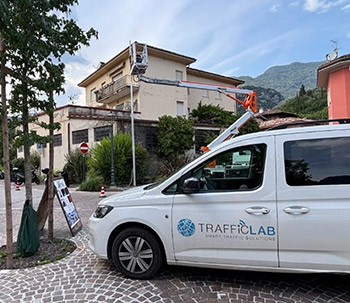
Wetraffic draws on data from a range of sources, including connected vehicles, sensors such as cameras and radar, historical and statistical databases, and on-site surveys. It turns that data into intelligent, understandable and practical information, providing an effective response to a wide range of knowledge, analysis and management needs. The benefits of the solution include optimised traffic flows and less congestion, fewer queues and shorter searches for parking, with a corresponding impact on emissions. The ultimate, overarching goal is a better quality of urban life.
—
THREE QUESTIONS FOR..
Andrea Marella – Founder and Managing Director of Trafficlab

Which sectors are Trafficlab's products and services aimed at?
Trafficlab's activities, products and services are aimed at potential beneficiaries in both the public and the private sector.
The first category includes municipalities and police forces, which can help improve traffic safety and ensure more efficient, smoother mobility. It also includes road network operators, such as regions, provinces, metropolitan cities and concession companies. Then there are mobility and traffic agencies, which support the sustainable development of local areas by planning efficient solutions to improve public transport, reduce congestion and promote safer, more accessible mobility. Finally, there are universities and training institutions, which offer an extraordinary opportunity to build professional networks, explore new ideas and promote new solutions.
In the private sector, I'm thinking of manufacturing, logistics and large-scale retail companies. They often handle significant vehicle flows and need to optimise logistics and safety, cutting costs and travel times, with economic benefits for both the company and the areas involved. Construction companies (roads and infrastructure) are also part of this group. Trafficlab provides them with consultancy and installs traffic control devices. It also develops innovative solutions for managing roadworks that may require monitoring traffic flows, identifying vehicle categories and controlling traffic light phases dynamically. This covers roadwork traffic management, alternating one-way systems, bottlenecks, diversions, water levels and other operational issues. These private sectors are joined by traffic technology and ITS integrators, and by consulting and auditing firms.
What did it mean for Trafficlab to take part as a speaker at the two recent international trade fairs, Asphaltica and Traffic?
Our presence at Asphaltica, the leading international exhibition for the road sector in Italy and Europe, and our recent entry into SITEB are both functional and strategic for our sector. Trafficlab has been a member of SITEB (Strade Italiane e Bitumi) for a few months, in the “Products and technologies for road safety” category, where it is so far the only software house. The association brings together the entire road supply chain, from asphalt producers to machinery and plant manufacturers, from road signs and barriers to smart roads. For the company, joining the association and attending the exhibition are two steps along the same path into the supply chain.
At Traffic, the event dedicated to traffic management, road infrastructure, smart roads, safety, parking, public transport and smart mobility, we shared our success story directly with the people who work every day for more liveable mobility. Whether they are large cities or small towns, local authorities need tools to manage traffic better and improve citizens’ lives. Wetraffic, already chosen by more than 200 public and private clients, grows thanks to requests coming from the field, and we want to bring it even closer to drivers, cyclists and pedestrians.
Which of the projects you have completed so far is the most rewarding or best represents you?
Picking just one is difficult, and it wouldn't capture the commitment and passion we put into all our projects. Every day we deal with mobility problems. Some are temporary, such as a road closed for works, a demonstration, or a large event that brings half the city to a standstill. Others are structural and have persisted for years, such as the need for a roundabout or traffic lights at a dangerous junction, or the parking spaces residents of a neighbourhood need. These are complex situations, challenges that we at Trafficlab seek to analyse and manage, including through the innovative Wetraffic platform.
Today we can count a great many success stories, cases where we have had a positive and decisive impact on mobility and traffic across almost the whole of Italy. In the public sector, these include the Metropolitan City of Turin and the Province of Latina, and the municipalities of Cuneo, Vigevano, Pescara, La Spezia, Imperia, Arcore, Chieri and many more. They also include the operators of the Milano-Serravalle motorway, RAV (Aosta Valley) and TECNE (Autostrade per l'Italia Group). In the private sector, they include Campari, Orogel, Acciaierie Beltrame, Acque Sant'Anna Spa and VICO Valdostana Impresa Costruzioni.
Contacts:
Trafficlab Head Office
Corso Piave, 30 – Alba (CN), Italy
Tel: +39 0173 471157. E-mail: info@trafficlab.eu
Press Office::
Cow – Creative communication agency
Claudio Zitoli – claudiozi@hotmail.com - Mob. +39 333 4998968
Web and social:
Website: https://trafficlab.eu/
LinkedIn: https://www.linkedin.com/company/trafficlab/ |
|
|
|
|
AI-POWERED VIDEO TELEMATICS BY TELTONIKA
European telematics industry already made the transition from simple tracking to vehicle data analytics. Now it’s time to make the next leap forward and embrace a new way to address accidents and security risks – AI-powered video telematics. In response to a growing market demand for real-time driver assistance, behaviour monitoring, and coaching, Teltonika presents KeepCam and ProCam, vehicle dashcams with edge AI support.

The new video devices are designed not just for video recording, although it is supported too. They are created to help those who need it most – the drivers. The person behind the wheel requires timely alerts about the risks on the road and vital reminders to keep focus on driving.
Suitable for long haul transportation, construction, delivery, and many other industries, KeepCam and ProCam use edge AI to analyse vehicle surroundings in real time and provide crucial collision, lane departure, or driver distraction warnings. To fit different project requirements, Teltonika chose modular approach – dashcams can be enhanced with additional camera modules to assure multi-angle view and avoid blind spots.
Discover AI-powered dashcams by Teltonika:
https://www.teltonika-gps.com/newsroom/brand-new-video-telematics-teltonika-keepcam-procam-with-edge-ai |
|
|
|
|
In Rome, a new limited-traffic zone (ZTLT) on the Appia Antica promotes sustainable mobility and the preservation of heritage
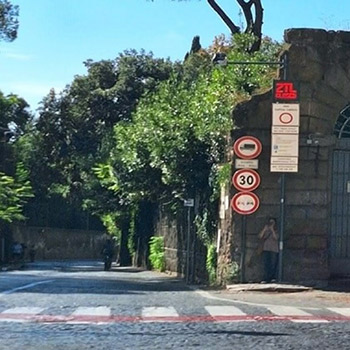
Safeguarding the Appian Way, the so-called Regina Viarum from the siege of cars. Freeing it from the (completely undeserved) role of an urban shortcut, restoring it to its status as an invaluable UNESCO heritage site. This is the goal of the new territorial limited traffic zone (LTZT) that has just come into force, active on Saturdays and Sundays from 7:00 AM to 7:00 PM.
A measure that some non-Romans might struggle to fully understand but has a very precise rationale behind. As is well known, the inhabitants of the Eternal City are accustomed with beauty. Yet this familiarity can sometimes lead to taking for granted the extraordinary monuments and cultural treasures that attract visitors from all over the world.
Just as happened with the Colosseum—used until a few years ago as a roundabout by cars driving around it—the Regina Viarum was also (though no longer) used by motorists to "cut through" from one quadrant to another of the city. The Appian Way was frequently seen, albeit not solely, as a convenient traffic corridor, a shortcut for bypassing congestion and reaching one's destination more quickly. Its protection relied almost entirely on a general Sunday traffic restriction, supervised by the local police. Far too little to shield it from the uniquely Roman siege of four-wheeled vehicles.
Since September, however, thanks to new technologies, the rule has been clear, certain, and efficient throughout the weekend: access to homes, businesses, and the beauties of the Park is safeguarded, while purely cut-through traffic is definitively banned.
Those who need to access the area may do so, provided that but they exit through the same gate they used to enter.
A measure of civility, environmental protection, and safety that restores the Appian Way to citizens, walkers, and tourists from all over the world. With the activation of electronic camera gates, traffic flow is organized and managed according to a precise criterion: guaranteeing real usability for those who live, work, or intend to visit the Appian Park.
Crucially, the intervention answers the need to protect the "Via Appia - Regina Viarum" UNESCO site, drastically reducing polluting emissions and vibrations that damage delicate archaeological heritage.
It is precisely the UNESCO site status granted to the area that enabled the application—achieved through dialogue with the Ministry of Infrastructure and Transport by the Mobility Department of Roma Capitale and Roma Servizi per la Mobilità—of a specific type of Limited Traffic Zone (LTZ) provided for by the Highway Code: the so-called LTZT, where the extra "T" stands for "territorial."
The regulation allows for the introduction of targeted restrictions on private vehicle traffic to protect sites of cultural, scenic, or environmental significance, precisely as was done on the Appian Way.
In addition, the measure aims also to maximize the safety of pedestrians and cyclists by establishing a speed limit of 30 km/h across the entire road area.
The measure also complements the future development of the GRAB, the cycling corridor conceived by Roma Servizi per la Mobilità to foster sustainable mobility and urban regeneration, which will traverse the Appian Way between the Mausoleum of Caecilia Metella and the Almone Bridge, reinforcing the area's accessibility, sustainability, and cultural preservation.
Moreover, just a few weeks of implementation have been enough to demonstrate the effectiveness of the measure in concrete numbers. Data collected by the electronic gates, providing an objective and indisputable measure of traffic flows, showed an average reduction of 21%, with peak decreases of up to 29%.
The core element of the new regulation is the single-gate rule: vehicles accessing internal properties or commercial premises within the LTZ must leave the zone on the same day through the very gate by which they entered.
This technological mechanism prevents the Appian Way from being used as a thoroughfare between different neighborhoods, while allowing those who need to access internal facilities to do so completely lawfully.
Meanwhile, unrestricted transit during operational hours (entering and exiting through different gates) is guaranteed for public transport, AMA sanitation vehicles, emergency services, bicycles, tour buses, and vehicles serving people with disabilities. Free access, subject to prior application for a free permit, is also granted to residents, local domiciliaries, business owners and workers in the area, and maintenance vehicles of the municipal administration.
Regular through-traffic is diverted onto the surrounding primary road network: Piazzale Numa Pompilio – Colombo – Piazza dei Navigatori – Via delle Sette Chiese; Piazzale Numa Pompilio – Via Druso – Porta Metronia; Via Appia Pignatelli – Via delle Sette Chiese – Colombo.
The electronic gates are located at the entrance to Via Appia Antica (from Via delle Mura Latine), at the intersection of Via Appia Antica and Via Appia Pignatelli, and at the entrance to Via Ardeatina (from Via delle Sette Chiese). They operate year-round, except during August.
To the benefit of both the monuments and the Park, once the trial phase for the gates is complete and the cameras become fully operational with penalties issued for violations—the measure’s deterrent effect will be tangible, with the ultimate goal of permanently reducing traffic flows.


As usual, extensive work went into communicating the change to citizens. During the standard trial period of the electronic gates, before the enforcement stated, Roma Servizi per la Mobilità utilized its many channels: starting with dedicated articles in the Transportation & Mobility section of the free daily newspaper Leggo, articles on the Romamobilita.it website, dedicated ad spaces in local daily newspapers, flyer distribution in neighboring areas, and information checkpoints at intersections in collaboration with local police. |
|
|
|
|
|
Circle Group: €737,000 from the EU EXITO project for the digitalization and interoperability of logistics
CIRCLE Group (“CIRCLE” or the “Company”)—an innovative SME listed on the Euronext Growth Milan market and head of the group of the same name—specializes in process analysis and the development of solutions for innovation and digitalization within the port and intermodal logistics sectors. It also provides international consultancy on the Green Deal and energy transition and a TTS Italia ordinary member. The Group announces its participation in the European project EXITO (EXpanding future-ready transport and logistics digital InnovaTiOn), funded under the Horizon Europe program. In this project, Magellan Circle Italy S.r.l. serves as the coordinator for the entire consortium, while CIRCLE S.p.A. acts as a partner and Work Package Leader. The project provides for a total contribution of €737,000 from the European Commission to the two Group companies—€423,000 for Magellan Circle Italy and €314,000 for CIRCLE—covering 70% of eligible costs. The activities will span 36 months, from October 1, 2026, to September 30, 2029, involving an international consortium of 30 partners, including private companies and research institutions. EXITO aims to accelerate the digital transformation of the transport and logistics sector by expanding the capabilities of platforms that comply with the European eFTI (Electronic Freight Transport Information) regulation. The project aims to extend the use of such platforms beyond the regulatory requirements for submitting information to competent authorities, by fostering the digital exchange of data between companies and the development of innovative, value-added services. Specifically, EXITO will focus on strategic areas such as emissions reporting, collaborative logistics, and secure data sharing, contributing to the creation of an interoperable digital ecosystem that connects operators, authorities, and SMEs throughout the entire logistics supply chain. The solutions developed will be tested in real-world, multimodal, and cross-border operational environments, with the goal of enhancing efficiency, sustainability, and process integration. Within the project, Magellan Circle Italy will be responsible for the overall coordination of the consortium, overseeing the management and progress of project activities and ensuring alignment among the various partners involved. Meanwhile, CIRCLE will serve as the leader for Work Package 1, guiding efforts to define a framework for expanded digital connectivity within the logistics sector. The Company will also contribute to the technical and practical aspects related to the eFTI Regulation, as well as to the testing and integration of the solutions developed within digital platforms, by leveraging its expertise in interoperability and supply chain digitalization. “Participation in the EXITO project—coordinated by Magellan Circle Italy, with CIRCLE playing a leading technical role—represents another opportunity to showcase the Group’s expertise in the digitalization and interoperability of logistics systems. The project aligns with the ongoing evolution of the European regulatory framework, in which eFTI serves as a key enabler for the digital exchange of information. Through EXITO, we aim to contribute to the development of solutions that extend the benefits of digitalization to the entire supply chain ecosystem, fostering processes that are increasingly integrated, efficient, and sustainable,” commented Luca Abatello, CEO of CIRCLE Group. The operational launch of the project will be marked by a kick-off meeting, taking place today at the Blue District in Genoa, which will bring together the consortium partners to discuss the project’s objectives, activities, and key development milestones.
Source: Circle Group |
|
CIRCLE Group presents “Connected Logistics Showcase”: on November 10 in Milan, the logistics supply chain will discuss the future of digitalization and work together to define the next steps
CIRCLE Group—an innovative SME listed on the Euronext Growth Milan market and TTS Italia ordinary member—is organizing the “Connected Logistics Showcase.” This workshop will take place on November 10, 2026, from 9:15 AM to 6:00 PM, at the Hotel Nhow in Milan, and will focus on new prospects for digitalization and interoperability within the logistics supply chain.
The initiative aims to foster dialogue among key supply chain stakeholders, translating the outcomes of innovations, regulatory developments, and European pilot projects into concrete solutions and initiatives. It seeks to promote a shared vision regarding the sector’s technological and operational priorities. The event is designed for managers, executives, and supply chain leads, as well as logistics and intermodal operators, freight forwarders, industrial firms, and managers of logistics hubs—all of whom are invited to explore the opportunities presented by digital innovation and the challenges associated with its adoption. Reflecting the strong interest and engagement across various segments of the logistics sector, representatives from major industry organizations—including ANITA, Assiterminal, Fedespedi, FIAP, RAM/MIT, SEA, and UIR—have already confirmed their participation, alongside representatives from several Italian Port System Authorities. This diverse participation will enrich the discussion by bringing together complementary experiences and perspectives, helping to identify common needs and new opportunities for collaboration. Drawing on insights gained from a wide range of real-world experiences—as well as from the European projects eFTI4EU, eFTI4LIVE, eFTI4ALL, and EXITO—this workshop will provide an opportunity for in-depth discussion and collaboration. The goal is to identify shared needs, leverage existing solutions, and foster their practical implementation on a broader scale.
The discussion will be further enriched by three industry experts, who will offer complementary perspectives on the evolution of logistics—covering everything from broad geopolitical and infrastructural landscapes to the operational implications of digital transformation:
Alessandro Panaro, Head of Infrastructure, Public Finance and Utilities at SRM, will examine key geopolitical macro-trends and their implications for the evolution of global trade flows and logistics chains.
Fabrizio Vettosi, Managing Director of VSL Investment & Advisory S.p.A., will provide a comparative analysis of infrastructure development and value-creation models in Italy and Europe, with a specific focus on the impact of digitalization on port logistics.
Massimo Marciani, President of the Freight Leaders Council, will offer insights into the challenges and opportunities associated with integrating new technologies into the daily operational processes of the logistics supply chain.
The primary objective of the day is to define an operational roadmap for the next six to eight months by identifying shared priorities, potential areas for collaboration, and concrete initiatives to accelerate the digital transformation of the supply chain. Particular attention will be given to data interoperability—the ability of digital systems to exchange information in an integrated manner—as well as the eFTI (electronic Freight Transport Information) framework, the European regulatory structure for the electronic exchange of freight transport data, and the adoption of shared (federated) digital models designed to enhance the efficiency and competitiveness of the entire logistics ecosystem.
“The value of innovation is measured by its ability to generate a real and lasting impact, which, first and foremost, requires collaboration and a common strategic vision,” comments Luca Abatello, CEO of CIRCLE Group. “With the Connected Logistics Showcase, we aim to foster a concrete dialogue among key players in the supply chain, bringing together diverse skills, experiences, and perspectives to identify new development opportunities. Our goal goes beyond simply outlining future scenarios for logistics; it is about translating existing experiences and achievements into a shared action plan—one built on clear priorities, measurable initiatives, and replicable solutions capable of generating value and strengthening the competitiveness of the entire supply chain.”
FROM STRATEGIC VISION TO CONCRETE APPLICATIONS: THE MORNING PROGRAM
The program will feature a mix of in-depth thematic sessions, expert presentations, discussions, and demonstrations focused on the application of digital technologies throughout the supply chain.
The morning will begin with a session on the "Federated Ecosystem," exploring the role of interoperability and data sharing in developing a more connected, integrated, and efficient logistics sector.
This will be followed by expert presentations offering insights into major geopolitical, industrial, and market shifts, highlighting their implications for the evolution of the logistics and port sectors.
The morning session will conclude with an immersive, experiential journey into the future of logistics, featuring projections and demonstrations of real-world use cases. Participants will have the opportunity to explore the potential of digital technologies and interoperability models, observing how information sharing and system integration can help transform operational processes within the supply chain.
FROM DISCUSSION TO OPERATIONAL PROPOSALS: AFTERNOON WORKING GROUPS
In the afternoon, the workshop will continue with six thematic working groups, designed to foster direct dialogue among industry stakeholders and translate the ideas that emerged during the morning into concrete proposals and shared priorities.
The first session will focus on analyzing the key challenges and priorities across different segments of the logistics supply chain, with the goal of identifying common needs, operational pain points, and potential opportunities for collaboration.
1 – Industry and Supply Chain: towards increasingly connected and predictive logistics
2 – The Evolution of Multimodal Transport: interoperability between operators and modes
3 – Intelligent Logistics Hubs: innovation serving ports, terminals, freight villages, and airports.
The second session will focus on prospects for innovation and digital development, analyzing currently available technological solutions, the results of European pilot projects, and the factors that can foster wider adoption among operators. A – Digital Corridors & IFSTL (Integrated Freight and Supply Chain Logistics): interoperability, simplification, and continuity throughout the logistics chain
B – AI & Data Intelligence: orchestrating the supply chain through data, automation, and decision support systems
C – Interoperability Standards & Digital Documents. Public Administration and Compliance: the future and ongoing developments. The day will conclude with a plenary session to present and share the findings from the working groups, aimed at identifying priority initiatives, best practices, and replicable models that will serve as the foundation for defining a common operational roadmap.
TOWARDS TRANSPORT LOGISTIC 2027: FROM EUROPEAN PILOT PROJECTS TO SUPPLY CHAIN INITIATIVES
The Connected Logistics Showcase is a milestone in an initiative promoted by the CIRCLE Group to highlight the results of European projects focused on the digitalization of transport and logistics, facilitating their transition into practical applications and market-ready initiatives.
The priorities and proposals emerging from the workshop will help shape discussions with international stakeholders ahead of Transport Logistic 2027—scheduled to take place in Munich from April 26 to 29, 2027—providing a further opportunity to share experiences, innovation models, and collaborative prospects at a European level.
The goal is to solidify a shared path that, building upon existing pilot projects and established expertise, fosters the adoption of interoperable digital solutions and contributes to the development of a more efficient, integrated, and competitive logistics supply chain.
Participation in the event is free of charge, subject to registration; please note that space is limited.
To register, click here.
Source: Circle Group |
|
OpenMove and Vifram secure the concession for the new Trentino Transport Platform (NPTT)
A consortium led by OpenMove (Lucian S.r.l.) and including Vifram S.r.l.—both TTS Italia ordinary members —has been awarded the concession to design, implement, and manage the New Trentino Transport Platform (NPTT). The tender was issued by the Autonomous Province of Trento through its Provincial Agency for Procurement and Contracts (APAC). The procedure, structured as a project finance initiative, originated from a proposal submitted by Almaviva and AEP Ticketing Solutions, the long-standing operators of the ticketing and fleet-monitoring systems in Trentino. The contract was awarded based on the "most economically advantageous tender" criterion; in this assessment, the OpenMove–Vifram bid received the maximum possible technical score from the evaluation committee.
It was precisely the superior technical evaluation of the OpenMove proposal that proved decisive in securing the contract.
The committee awarded the bid top marks across all technical categories subject to discretionary assessment. Key improvements highlighted by the committee included: the implementation of EMV contactless payment across the entire fleet; an account-based ticketing system integrated into a Mobility-as-a-Service (MaaS) platform; and innovative sales channels such as Chat&Go® and Scan&Go.
The NPTT will manage ticketing, fare structures, multi-channel sales, and validation—both on board vehicles and at stations—while also handling service scheduling (shifts and timetables) and fleet monitoring (AVM). It will gradually replace the systems currently in use. This is the digital infrastructure for public transport in Trentino: it enables passengers to purchase and validate travel tickets, while allowing the operator to plan services, manage fares and sales channels, and track vehicles in real time.
In terms of scale and scope, this is one of the largest tenders issued in Italy in recent years for a public transport ticketing and management platform. The system will serve one of the country’s most extensive and diverse fleets—comprising over 700 buses, 25 trains, and 200 station validation units—all managed by Trentino Trasporti.
In addition to designing and developing the platform, the consortium will oversee its installation and maintenance throughout the entire duration of the concession, covering on-board and station hardware, software, and the phased replacement of existing systems.
“The NPTT project is an opportunity to provide Trentino with an open, modern ticketing system—featuring contactless payments for everyone, an account-based structure, and a platform that integrates sales, validation, and data. We will ensure that the transition from the current systems is gradual and free of service disruptions,” states Lorenzo Modena, CEO of OpenMove.
Source: OpenMove |
|
Safety21 and Displaid: a strategic partnership for intelligent road infrastructure monitoring
Safety21—a leading Italian GovTech platform for end-to-end traffic enforcement and road safety services, and an ordinary member of TTS Italia—has announced a strategic partnership for the Italian market with Displaid, an innovative startup founded in Milan in 2023 that specializes in monitoring bridges and viaducts using artificial intelligence and smart sensors.
This collaboration will allow structural data collected by Displaid’s solutions to be integrated into Safety21’s TitanO® ecosystem—a premier SaaS platform for road safety, traffic enforcement, and smart mobility. This integration further enhances the platform’s ability to assist public authorities and administrations in the advanced management of their territory and infrastructure.
“Our partnership with Displaid marks another milestone in Safety21’s innovation journey toward increasingly safe and connected mobility. By continuously integrating data on the condition of infrastructure into our cloud-based TitanO ecosystem—used for monitoring roads and vehicle traffic—we are strengthening our capacity to support public administration in territorial oversight. Through the effective use of data, this support becomes not just digital, but increasingly intelligent and focused on prevention,” says Gianluca Longo, CEO of the Safety21 Group.
“We share a common vision with Safety21: to leverage IoT technology, AI, and algorithms to make infrastructure safer and more efficient. This collaboration combines two complementary approaches to deliver a tangible impact: technical innovation, backed by scientific rigor, and an established, widespread presence in the field.” Lorenzo Benedetti, CEO of Displaid, states:
Displaid’s technology enables the continuous monitoring of structures, allowing for the collection of objective and reliable data on a large scale—a key element for the comprehensive management of infrastructure assets. The solution relies on wireless sensors that gather data continuously, alongside innovative algorithms that analyze this information to detect potential structural anomalies, which are then promptly reported to the managing authority via an early-warning system.
The Safety21 Group is dedicated to developing projects focused on enforcement, road safety, and smart mobility, utilizing advanced technologies for monitoring roads and the surrounding territory. Their solutions leverage artificial intelligence and machine learning to analyze images and traffic data in real time, identify high-risk situations, and support the implementation of preventive measures aimed at reducing accidents and traffic violations.
Through this partnership, Safety21 and Displaid combine their expertise, technologies, and strategic vision to help create safer, more resilient, and digital infrastructure—aligning with the innovation and sustainability goals of the public entities that own or manage road infrastructure. This initiative is rooted in the value of data, technology, and collaboration as catalysts for regional development.
Source: Safety21 |
|
Targa Telematics accelerates its AI initiatives by integrating an on-premise software development environment—based on open-weight models—into its infrastructure
Targa Telematics, a leading global player in the field of AIoT and the development of digital solutions and platforms for connected mobility—and TTS Italia founding member —has successfully deployed an on-premise software development environment powered by generative artificial intelligence (LLMs). Built using open-weight models, this environment is designed to support the company’s development teams and accelerate internal innovation.
The project, developed on a Hewlett Packard Enterprise (HPE) platform in collaboration with Gruppo Zenit—a Managed Service Provider specializing in the design and management of high-performance data center and networking infrastructure—has resulted in an enterprise-grade AI platform tailored for approximately 150 engineers. The objective was to create a development environment that combines high performance, complete data control, robust security, and the flexibility for future technological evolution.
The platform leverages open-weight AI models, enabling inference to take place entirely within the company’s own infrastructure. This ensures that development data and proprietary information never leave the organization to reach public clouds or third-party services. This approach allows Targa Telematics to harness the rapid innovation of the open-source ecosystem while maintaining full control over its own data assets and model governance, with the added ability to customize models to meet specific business requirements.
At a time when organizations must balance the growing adoption of generative or agentic AI with the critical need to protect their proprietary information, Targa Telematics has opted for a fully on-premise solution, ensuring that no corporate data is transmitted to external infrastructure or public cloud environments. The LLM—primarily used as an aid for coding, but also as an AI assistant—operates entirely within the company’s own infrastructure, ensuring that information remains under Targa Telematics’ full control at every stage of use. This approach addresses growing regulatory and market demands regarding data sovereignty, cybersecurity, and compliance, while maintaining the flexibility needed to experiment with new AI models.
For Targa Telematics, this experimentation stems from a clear objective: “Generative AI is increasingly becoming an everyday tool for our developers. We wanted to create a fully on-premise development environment, retaining total control over our code, our data, and our technological know-how,” stated Carlo Stefanelli, CTO of Targa Telematics. “Opting for an on-premise approach, based on ‘open-weight’ models, allows us to ensure that all information remains strictly within the company’s perimeter—an innovation environment where security and data control are non-negotiable.”
Gruppo Zenit contributed to the design of a robust infrastructure capable of ensuring security, operational continuity, and long-term data governance. The solution utilizes Hewlett Packard Enterprise (HPE) technologies, which provide the computing power required for AI inference, as well as the tools to ensure reliability, scalability, and secure management of the entire on-premise environment.
“AI only creates value when it is built upon infrastructure designed to be secure, scalable, and governable. Our role is to guide companies in building ecosystems where innovation and data protection grow hand in hand. The project carried out with Targa Telematics demonstrates how an AI experiment can be transformed into a platform ready to support the evolution of the business,” said Giuseppe Barbera, CEO of Gruppo Zenit. The results of the trial have confirmed the value of the approach chosen by Targa Telematics: in the first seven weeks of use, the platform handled nearly 30,000 requests from developers, processing over 3.4 billion tokens and generating 65 million tokens in response. This high level of usage testifies not only to the robustness of the on-premises infrastructure but also to the rapid adoption of the solution within software development processes.
This experience is enabling Targa Telematics to consolidate internal expertise in generative AI and to validate an on-premises infrastructural model that can be replicated for future corporate use cases.
Source: Targa Telematics |
|
Targa Telematics confirmed as European leader in telematics for rental and leasing in Berg Insight Report
Targa Telematics—a major global player in the field of AIoT and the development of digital solutions and platforms for connected mobility, and TTS Italia founding member—has been confirmed as the undisputed leader in Europe in the market for telematics systems for rental and leasing, according to the new report "Telematics for Rental and Leasing Fleets, 4th Edition" by Berg Insight.
The analysis, which examines the European and North American markets as of the end of 2025, shows that Targa Telematics has 979,000 active telematics systems in the rental and leasing segment. This figure places the company just behind the industry’s top player—which is focused primarily on the North American market—and more than 380,000 systems ahead of the third-ranked provider. This confirms the strength of Targa Telematics’ competitive position in Europe, where it is recognized as the industry benchmark.
Market Context
The report highlights sustained growth in the relevant market: the total number of active telematics systems in Europe is projected to rise from 4.65 million at the end of 2025 to 8.96 million by 2030, representing a compound annual growth rate (CAGR) of 14%. In the leasing segment alone, the number of telematics systems in use is expected to grow from 3.48 million to 6.82 million over the same period (a CAGR of 14.4%), with the penetration rate increasing from 46% to 77.7%. Within this landscape, Italy stands out as the most advanced market in Europe in both the rental and leasing segments. By the end of 2025, the penetration rate of telematics in the rental sector reached 90%—a figure bolstered by a regulatory environment that encourages the adoption of telematics systems for insurance purposes.
“This new recognition from Berg Insight confirms the validity of the strategy we have chosen to pursue, which rests on three fundamental pillars: a technology platform capable of transforming data from connected vehicles into tangible value for our clients; an ever-expanding ecosystem of partnerships with major automotive manufacturers; and a service model that supports the client at every stage, from installation to the day-to-day management of their fleet. In a European market that continues to see double-digit growth, our goal is to consolidate this leadership by continuing to innovate—with a particular focus on artificial intelligence applied to practical processes, such as fleet management and vehicle safety,” stated Massimiliano Balbo di Vinadio, VP of Sales at Targa Telematics.
Targa Telematics’ Key Strengths
Among Targa Telematics’ primary strengths, Berg Insight highlights the breadth of services offered—which positions the company as a technology solution provider, delivering end-to-end solutions ranging from on-board hardware to software management—as well as its software modules, which integrate into clients’ IT infrastructure to drive the digital transformation of their operations. Also noted is the "Targa Platform," a proprietary, cloud-based, and hardware-agnostic platform powered by Artificial Intelligence—including "agentic AI"—designed for the proactive detection of anomalies and risks. Concrete applications of this approach include the new "Vehicle Delivery Monitoring" solution, which enables real-time, data-driven oversight of the entire vehicle delivery process for long-term leasing companies, and "Maintenance Excellence," which leverages agentic AI to transform maintenance from a collection of disparate tasks into an intelligent, coordinated process.
Expanding OEM Integrations and Partnerships
The report further underscores how the integration of Viasat Group in May 2023 has enabled the company to further consolidate its leadership in insurance telematics and fleet management, while simultaneously expanding its footprint across the continent and broadening its technological offering. Another key element that has helped define Targa Telematics’ positioning in Europe is its network of partnerships with vehicle manufacturers for the integration of native vehicle data streams. This network includes over 45 automotive brands—such as Audi, BMW, Ford, Mercedes-Benz, Renault, Stellantis, Tesla, Toyota, Volkswagen, and Volvo—with Hyundai being the most recent addition. This partnership will allow access to native data from Hyundai vehicles in Europe without the need for any additional hardware installation, enabling advanced services such as vehicle maintenance, stolen vehicle recovery, claims management, and EV management.
Managed services to support the client
To round out its offering for rental companies, Targa Telematics provides a range of managed services, including hardware logistics, installation, field support, a network of Stolen Vehicle Recovery (SVR) control rooms, and 24/7 help desks—all supported by an ecosystem of over 100 partners already integrated into the platform. The report also highlights the agility of the company’s development model, which is capable of delivering bespoke solutions with an implementation cycle that often takes no longer than three months. Furthermore, the report underscores how Targa Telematics actively supports rental and leasing clients in launching and scaling new mobility products based on its proprietary keyless technology.
Source: Targa Telematics |
|
Turin connects data for a smarter city through the Mobility Data Space
From parking and traffic to variable-message signs and other mobility-related information, the goal is to network data from diverse sources, making it usable for new services. This is the vision behind the Mobility Data Space (MDS), recently presented to the City of Turin’s Urban Planning Commission, chaired by Toni Ledda. Developed by CinqueT—TTS Italia ordinary member—as part of the "Mobility as a Service for Italy" program, the project aims to evolve the city’s Mobility Control Center into a federated data ecosystem. Within this framework, various entities and platforms can exchange information based on shared rules, ensuring security, quality, and traceability. This is not merely a future prospect: the "ToMove" Digital Twin serves as the first use case for Turin’s Mobility Data Space. As a federated participant in the ecosystem, this digital twin provides real-time data on parking availability, content from variable-message signs, and traffic monitoring. The objective is to break down traditional information "silos," reuse existing data and services, and accelerate the development of new applications. The MDS seeks to strengthen governance by defining roles, responsibilities, access conditions, and protocols for information sharing.
Source: Ferpress |
|
|
|
|
|
|
Save the date: the final event of the EMBRACER project is taking place in Rome on November 17th!
Join us in Rome on November 17th for the final event of the Interreg Europe EMBRACER project!
Join us in Rome on November 17th for the final event of the Interreg Europe EMBRACER project! This journey, which began in 2023, delves into the heart of smart mobility—bringing together people, solutions, proposals, and dialogue focused on facilitating and promoting seamless mobility, capable of improving connectivity in underserved areas.
Project partner TTS Italia is organizing the final event. Here’s what you can expect:
• A keynote speech from the Interreg Europe Secretariat
• A keynote speech from IMT Portugal
• A keynote speech from Roma Tre University
• A presentation of the project’s results, with a focus on: pilot actions, the improvement of policy instruments, and action plans for the future of mobility.
Check out the agenda and register! |
|
Save the date! The final event of the SPOTLOG project is taking place in Rome on November 19th!
Join us in Rome on November 19th for the final event of the Interreg Europe project, SPOTLOG!
This journey, which began in 2023, has taken us to the heart of last-mile logistics—a space for meetings, solutions, proposals, and dialogue focused on green, sustainable, and smart management.
Project partner TTS Italia is organizing this final event; here’s what you can look forward to:
• A keynote speech from the Interreg Europe Secretariat
• A keynote speech from IMT Portugal
• A keynote speech from the Research Centre for Transport and Logistics at Sapienza University of Rome
• A presentation of the project’s results, with a focus on: planning and regulation; data, governance, and funding; and scalability and transferability.
Check out the agenda and register! |
|
Italy and China in dialogue on smart mobility: a webinar by TTS Italia
On October 27, TTS Italia hosted an exclusive, members-only webinar titled “Italy-China exchange on innovation and technology for smart mobility.” The event provided a platform for Italian and Chinese organizations to engage in discussions on key topics within the realm of technology and innovation for smart mobility.
Following an introduction by Olga Landolfi, Secretary General of TTS Italia, and Xuehong Ji—Director of the Automotive Industry Innovation Research Center at the North China University of Technology and Chair of the Digital Intelligent Mobility Committee of the Internet Society of China—representatives from TTS Italia member companies (Fit Consulting, Kentkart, Movyon, and PTV Group) delivered presentations. Their contributions focused on autonomous and connected mobility, as well as technologies for motorway transport and public transit.
Representing China, a delegate from Southeast University discussed Chinese legislation regarding autonomous driving, while Xuehong Ji addressed the development of new types of industries for urban mobility. |
|
Rome hosts the event “The Future of Italian Infrastructure, Transport, and Logistics After the PNRR”; TTS Italia among the speakers
On October 21 and 22, Rossella Panero, President of TTS Italia, was a key participant in the event titled “The Future of Italian Infrastructure, Transport, and Logistics After the PNRR: An Analysis of Achieved Goals, Methodology, Reforms, and Investments—The Way Forward.” The event was organized by *Economia Pulita – Futuro, Impresa e Sostenibilità* and held under the patronage of TTS Italia.
The discussion focused on the transition from physical networks to digital infrastructure, exploring how AI is transforming passenger and freight mobility. This included a roundtable—featuring the President of TTS Italia—that brought together perspectives from businesses, associations, and technology providers.
Participants also examined industry proposals for concrete steps and necessary investments, incorporating insights from infrastructure managers as well as operators in the passenger transport and logistics sectors.
The event was supported by, among others, Almaviva—a sustaining member of TTS Italia—and Circle Group, an ordinary member of TTS Italia. |
|
TTS Italia among the speakers at Urban Tech 2026
Held from October 7th to 9th, Urban Tech is an umbrella event hosted at the Bologna Exhibition Centre, encompassing four specialized conference tracks, a dedicated special event, and two guest exhibitions. The conference tracks include: eCharge, focused on public and private electric vehicle charging; Wireless & Towers, covering the wireless communications market and technologies; Traffic—sponsored by TTS Italia—which addresses traffic management and planning, smart roads, cybersecurity, and AI; and eTech, dedicated to innovations and components for electric vehicles. The special event is "Battery Day."
Represented by Project Manager Lorenzo Valletta, TTS Italia was among the speakers for the session titled "Data Fusion and AI for Urban Decision-Making Support."
Today, urban mobility—both public and private—is a challenge increasingly defined by data and software, alongside physical infrastructure. Through data fusion and the latest artificial intelligence applications, public authorities can access advanced tools to analyze, forecast, and manage traffic flows. This enables the optimization of urban space and supports more effective, sustainable decision-making tailored to the needs of citizens, businesses, and mobility operators. TTS Italia’s presentation focused on the role of artificial intelligence, data, and Intelligent Transport Systems (ITS) in facilitating decisions for a more efficient, safe, and sustainable urban mobility landscape. A key theme was the integration of technologies, connectivity, and cybersecurity within an interoperable digital ecosystem—all while considering the European and national regulatory frameworks established by the ITS Directive. The presentation also highlighted TTS Italia’s recommendations for an integrated strategy combining ITS, AI, and cybersecurity. Trafficlab, an ordinary member of TTS Italia, is also among the session’s speakers. |
|
Join the GOLIA project community!
GOLIA Governing, Optimizing and Leveraging Innovations proActively) is a Horizon Europe project—with TTS Italia as a partner—that helps cities create more inclusive, resilient, and sustainable mobility systems.
By combining data-driven tools, stakeholder engagement, and innovative governance approaches, GOLIA supports cities in improving their transport planning and decision-making processes. Through pilot activities in Antwerp, Florence, and Pilsen, the project develops practical solutions to make urban mobility more accessible, equitable, and eco-friendly.
Although digitalization holds great promise, it has yet to lead to a full-scale transformation toward sustainability. Across Europe, many smart city initiatives already use technology to reduce environmental impact; however, governance systems often struggle to keep pace with rapid technological change, creating a gap between innovation and implementation. GOLIA works to bridge this gap by developing truly transformative approaches that leverage digital tools to foster sustainability in mobility.
GOLIA is now seeking cities interested in following the project’s journey and participating in knowledge-sharing, capacity-building, and feedback-gathering activities!
Would you like to get involved? Click here by October 31st! |
|
|
|
|
|
• Italy
Electric buses
• Italy
Maintenance of public lighting systems and traffic lights
• Italy
Data processing services |
• Italy
Tax collection services
• Italy
Technical services |
|
| Go to the private website |
|
|
|
|
|
|
|
|
|
|

IBE Intermobility
24-26 November 2026, Rimini
For further information, click here →
|
| |
|

Smart City Expo World Congress
3-5 November 2026, Barcelona, Spain
For further information, click here →
|
|
|
|