N° 8
September 2026
—
TTS Italia is the Italian ITS Association founded with the aim to promote the development and deployment of Intelligent Transport Systems (ITS) in Italy. |
|
|
|
|
| The interview by Morena Pivetti |
|
|

“We need a plan for autonomous driving; we want to build major European champions”.
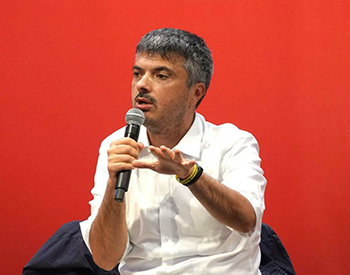
An interview with Andrea Casu, Vice-Chair of the Chamber of Deputies’ Transport Committee
“Autonomous driving: from testing to a new form of mobility. Technologies, regulations, and impacts for the integration of transport systems”: this is the title of the upcoming event organized by TTS Italia, in collaboration with PAVE Europe and MOST. It will take place in Rome on October 14, starting at 9:30 AM, at the Roma Eventi venue in Piazza di Spagna.
Autonomous driving is one of the innovative technologies TTS Italia has been working on for many years, with the contribution of its members and in cooperation with relevant institutions and bodies. The conference will provide an opportunity to take stock of both the progress of trials and the regulations currently awaiting approval within the new Highway Code, which is set to be examined by Parliament in October.
As an introduction to the topics to be addressed on October 14, this issue of the TTS Italia newsletter features an interview with Andrea Casu, Vice-Chair of the Chamber of Deputies’ 9th Committee (Transport, Posts, and Telecommunications). Casu has been a key figure in the parliamentary debate. Regulatory frameworks to ensure a leading role in Europe, the ability to attract public and private investment for the creation of European autonomous driving technologies, the use of innovations to foster more efficient public mobility that serves citizens, and the involvement of trade unions and workers—these were the themes explored in the conversation with Vice-Chair Casu.
Let’s start with the delegated authority to revise the Highway Code—the legislative vehicle you worked on in the Committee to implement measures such as autonomous driving trials. What is the current status?
The government has asked Parliament for yet another one-month extension of the mandate—which must now be completed by October 14—an extension that the political force I represent, the Democratic Party, did not vote for. We opposed it because, two years after its approval—in the Chamber in March 2024 and the Senate in November 2024—the government kept the mandate on the back burner. It only resurfaced between July and August with a new 1,075-page text—which, incidentally, has not yet been delivered to us. However, based on what we know from those who have examined the draft, it risks eliminating sustainable mobility as a fundamental principle.
What did the resolutions you voted on in the Committee regarding autonomous driving entail?
After a long process and intense discussion, we reached an agreement with other political forces on a series of resolutions. These addressed not only the need to incorporate autonomous vehicles into the provisions of the new Highway Code but also the necessity of launching a National Autonomous Driving Plan. The goal was to forge a European path for this new technology—creating an autonomous platform independent of the United States and China, the two nations projected to possess the largest fleets of this kind by 2035. We certainly do not lack scientific and academic expertise; the plan must support the leading Italian universities spearheading this testing and foster the growth of European champions capable of competing in the future automotive market. It is a strategic industrial choice, as well as a technological one.
So, a collaborative effort within the Commission, then?
As a party, we had called for Italy to position itself as a leading player—rather than a mere spectator—in a revolution that is transforming the concept of mobility (both public and private, for passengers and freight) worldwide, and which will have a massive impact on employment.
What happened next?
From what we know—since, I repeat, we have not yet received the official text, though a draft is circulating among industry players—Article 46, which governs this area, mandates the presence of a driver on board every vehicle approved for autonomous driving. According to experts, this provision represents a step backward rather than a step forward regarding current testing capabilities. Addressing the issues of control and liability for autonomous vehicles is one thing; mandating a physical presence on board is quite another. Italy is already lagging behind Germany (which legislated in 2021), France (same year), and the UK (which took action in 2024); let us draw inspiration from the regulations already adopted and try to build a harmonized European legal framework.
Are we risking a standstill in technological evolution and experimental trials?
We have excellent universities and technical institutes demonstrating great potential—not only on the technological front but also in their ability to mobilize capital for public and private investment in the sector. With these legislative constraints, we risk tying their hands and stifling the progress of trials. We are forcing those who wish to continue their research to move to other countries. We are jeopardizing the Italian automotive sector’s chance—as a long-standing industry leader—to remain competitive in the global market.
Why are you proposing a national plan for autonomous driving?
As the Democratic Party, we believe that advanced trials conducted by our universities can enable Italy to take a major leap forward—rallying investors to build, I repeat, major European champions so that we can play a leading role on the global stage rather than trailing behind. Let us avoid handing over our academic and scientific excellence to other European countries.
In your address to the Chamber, you placed great emphasis on the need to guarantee the right to mobility and to support sustainable mobility. How does this issue intersect with autonomous driving?
The exercise of a fundamental right—the right to the mobility of people and goods—depends on the rules we draft. Italy holds two unenviable records: it has the highest number of cars per 100 inhabitants (over 70), yet nearly 70% of Italians never use public transport, and less than 10% of journeys are made via public transit. Those most disadvantaged are residents of the suburbs and inland areas, where the only services available are school transport—which shuts down for the summer holidays—and tourist services, which go into hibernation during the winter. I believe that autonomous vehicle technology can be harnessed to finally ensure more efficient "mobility as a service" and serve as an additional tool to tackle challenges such as the "last mile," accessibility in inland areas, and the integration of rail and road transport. It could make car-sharing more accessible and structurally viable by resolving the issues that have held it back until now. It could be a true game-changer—a genuine revolution.
Another aspect you have consistently emphasized is the involvement of trade unions and workers.
This is a key element of the position the Democratic Party articulated in Parliament as early as November 2025. We call for the full involvement of all trade unions—representing the workforce—to ensure that the benefits of these new technologies also extend to them, particularly regarding safety and job quality. The wealth generated must be redistributed: not merely to Big Tech companies, as often happens, but also to the human element—to the people employed in this sector.
Who is Andrea Casu. Andrea Casu is a Member of Parliament, elected in Rome on the Democratic Party (PD) ticket. He serves as the PD parliamentary group’s Secretary for Chamber Affairs and as Vice-Chair of the 9th Committee (Transport, Post, and Telecommunications). Elected during both the 18th and 19th legislatures, he focuses his parliamentary work on mobility and innovation as essential drivers for simultaneously promoting social and environmental justice, sustainable development, the protection of rights, and the fight against inequality. He holds a degree with honors in Administrative Sciences and has gained professional experience working with local authorities and public administration bodies. Elected as a councilor for Rome’s 1st Municipality at the age of 19, he was subsequently re-elected, serving as group leader and later as an executive councilor in Rome’s 4th Municipality. He was a founding member of the Young Democrats, President of the European Democratic Party Youth, and served as Secretary of the Democratic Party in Rome from 2017 to 2023. He is the author of the book *Fare meglio con meno. Nudge per l'amministrazione digitale* (FrancoAngeli). |
| |
|
|
Octave is a global software company specializing in helping public and private organizations manage complex processes, critical infrastructure and strategic assets through the advanced use of data. Formed from the spin-off of Hexagon’s Asset Lifecycle Intelligence and Safety, Infrastructure & Geospatial divisions, along with the Bricsys, ETQ and Projectmates businesses, Octave is now an independent company focused on digital innovation and large-scale operational intelligence. With over 7,000 employees in more than 45 countries, the company combines decades of industry experience with advanced software technologies, artificial intelligence and data integration capabilities. As an independent entity, it brings together a portfolio of digital, geospatial and operational intelligence solutions designed to transform complex data into actionable insights that support faster, safer and more effective decisions. With an international presence and expertise ranging from design to operational management and infrastructure protection, Octave supports public and private organizations in addressing the challenges of digitalization, sustainability and resilience.
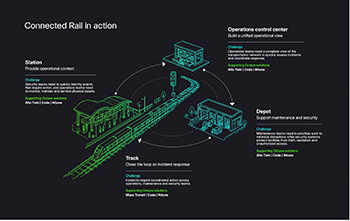
In this context, the transportation sector represents one of the strategic areas where the company applies its vision of “intelligence at scale,” helping operators and authorities improve network efficiency, safety and the user experience through integrated data and operations management. The transportation sector is facing increasing complexity due to rising demand for mobility, the need to modernize often outdated infrastructure, sustainability goals and the requirement to ensure ever-higher levels of safety and reliability. In response to these challenges, Octave offers an approach that integrates operational, geospatial and infrastructure data into a single, contextualized view, enabling operators to make informed decisions throughout the entire lifecycle of transportation networks: Octave 360 Transportation.
The 360 Transportation ecosystem enables, through a holistic approach, the real-time monitoring, protection and management of mobility infrastructure and systems, improving situational awareness, investment planning and the ability to respond to critical events. Using technologies such as digital twins, advanced analytics, automation and artificial intelligence, the company helps infrastructure managers, concessionaires, rail and airport operators and transportation authorities optimize the performance of their networks, increase operational efficiency and support long-term sustainability goals.
—
PRODUCT IN THE SPOTLIGHT Octave Alto Mass Transit
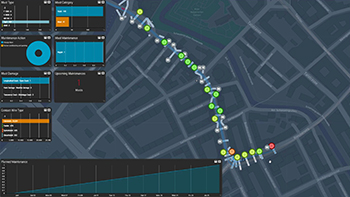
Public transport networks are among the most complex infrastructure environments in the world. Routes interconnect, assets span vast geographies and different teams need to work from the same understanding of the network to keep services running reliably. Yet in most agencies, the data that describes this infrastructure is fragmented across systems that don't connect to each other, and rarely connects connect to the actual physical structure of the network it's meant to represent. The result is a gap between what the network actually looks like and what any single team can see at any given moment. And that gap is where coordination breaks down, decisions slow and disruptions happen.
Octave Alto Mass Transit is a topology-based infrastructure mapping and management solution purpose-built for public transportation agencies. At its foundation is a GIS and Linear Referencing System (LRS) engine that models the entire transit network - tracks, routes, stations, switches, electrification, construction – spatially and linearly, referenced to the real geometry of the infrastructure. Every asset, every network element, every change in the field is anchored to its exact position on a live, connected network model that every team across the organisation works from simultaneously.
This shared foundation changes how transit agencies operate. Engineering, operations, maintenance and planning teams no longer work from different versions of the network, they work from one authoritative picture, updated in real time. Field teams capture and update asset data directly from mobile devices, feeding a live 2D and 3D digital twin of the network. When something changes – a track condition, a station asset, a construction update – everyone sees it immediately, in context, with the spatial relationships around it already visible. Coordination that previously required meetings and email chains happens naturally, because the network itself becomes the communication layer.
Alto Mass Transit is organised into dedicated modules – Network Management, Track Characteristics, Station Management, Electrification and Construction – each built around the shared LRS-accurate network model and configurable to the specific operational needs of the agency. Unlike generic GIS platforms that require heavy configuration and specialist resource to support transit use cases, Alto Mass Transit is purpose-built for public transportation, with dedicated data models and workflows tailored to linear, network-centric transit environments.
For agencies that require deeper asset lifecycle governance like procurement, compliance, work order management and audit trails at enterprise scale, Alto Mass Transit integrates with Octave Attune EAM, connecting the spatial network intelligence layer with full enterprise asset management in one seamless solution.
—
THREE QUESTIONS TO...
Giovanni Fumia - Sales Manager Italy

Why does the transportation sector need a more integrated approach to infrastructure management today?
In recent years, the transportation sector has become much more complex. Transportation networks must manage growing demand for mobility, often outdated infrastructure, increasingly stringent regulatory requirements, new physical and cyber threats and ever-more-ambitious sustainability goals. These challenges can no longer be addressed with isolated systems or separate initiatives.
The real challenge today is connecting people, processes and data from different domains, transforming them into shared operational knowledge. This is why we’re seeing a growing shift toward models based on operational intelligence and digital twins, which help overcome information fragmentation and provide a comprehensive view of the network and its performance. Octave has built its strategy precisely around this need: to enable operators to make faster, more informed decisions thanks to contextualized information updated in real time. This ability to transform complex data into concrete actions is now one of the most important factors in ensuring resilience, service continuity and the quality of the passenger experience.
What role will the digital twin play in the evolution of transportation systems in the coming years?
The digital twin is rapidly becoming one of the most important tools for managing critical infrastructure. It is not simply a graphical representation of the network, but a continuously updated digital copy that integrates data from assets, sensors, operating systems, maintenance and security.
For rail and public transit operators, this means being able to better understand what is happening on the network, simulate future scenarios, assess the impact of investments or operational changes, and take preventive action before critical issues arise. The value of the digital twin increases even further when it is used as a collaborative platform capable of providing consistent information to all stakeholders, from operations managers to maintenance teams to security personnel. Octave considers the digital twin one of the pillars of the sector’s digital transformation because it enables the creation of a unified decision-making environment where data and context are always linked. This vision is perfectly aligned with the market’s growing shift toward intelligent, interoperable and data-driven systems.
What concrete benefits can a transit operator gain from adopting Alto Mass Transit?
One of the main benefits of Alto Mass Transit is its ability to create a “single source of truth” for all network infrastructure information. In transportation organizations, data related to tracks, stations, facilities, maintenance and operational activities is often scattered across different applications and difficult to correlate, making it hard to obtain a complete picture of the situation.
With Alto Mass Transit, all these elements are organized within a single geospatial model that allows users to immediately understand how an asset is connected to the rest of the network and what the potential effects of a malfunction or a scheduled intervention might be. This approach improves the quality of available information, accelerates maintenance activities and supports more effective decision making during the planning and investment phases.
However, the platform’s value extends far beyond simple map visualization. Using GIS technologies, topological models and linear referencing, each asset is represented within its operational context, highlighting its relationships with the rest of the network. This allows for an immediate understanding of the impact of failure, a maintenance intervention or an infrastructure modification on the overall service.
|
|
|
|
|
Traffic Signal Priority: the green light that saves time... and perhaps lives

Since 2007, Trafficlab has been dedicated to traffic management, road safety and smart mobility, with solutions distinguished by their accuracy, reliability and seamless integration with existing infrastructure. Drawing on its expertise in computer vision and artificial intelligence, the company provides high-quality traffic data and designs mobility systems that turn the concepts of Smart City and Smart Road into concrete reality.
In emergencies, every second counts. For an emergency vehicle, the first moments after a call are often the most critical: leaving the depot and merging into city traffic safely, without delays or the risk of conflicting with other vehicles. It is from this need that the new Traffic Signal Priority module was born, part of Trafficlab's Wetraffic suite — a cloud platform already used by numerous municipalities, provinces and private companies, and ACN-certified for use within the Italian Public Administration. The application is now live in Imperia, Arco (TN) and Darfo Boario Terme (BS), municipalities that already rely on several other modules of the suite for the integrated management of traffic, traffic lights and mobility data, also thanks to the collaboration with technology partner R.C.T. Regolazione Controllo Traffico of Cantù (CO).
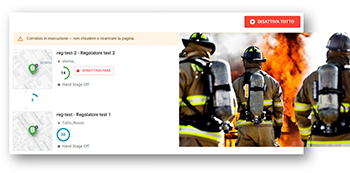
The module puts control directly in the hands of emergency vehicle crews — fire brigades, ambulances, police forces, civil protection — with no intermediaries: no phone calls or requests to relay through a control centre, steps that in an emergency would only waste precious time. It is the crew itself, at the moment of departure, that activates the service from its dedicated dashboard, securing a green light at the intersections the vehicle must cross to enter the urban road network — traffic lights already under Wetraffic's control — while conflicting traffic flows are held at red, eliminating the risk of interference during the most critical phase of departure. In Imperia, for example, the module has been operational since 2026 at two strategic junctions, supporting fire crews on emergency departures — a targeted intervention, designed to act where the risk of delay is highest.
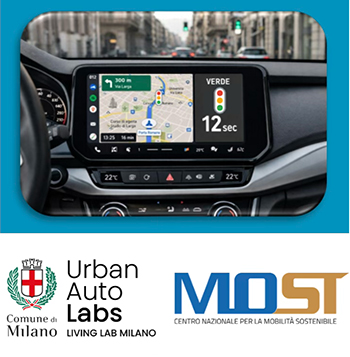
Trafficlab plans to further develop the module in the coming months, combining vehicle geolocation — already available — with the sending of virtual messages to vehicles (IVI, in-vehicle information, and IVS, in-vehicle signage technologies) to enable traffic signal priority along the entire route, not just at the initial intersections. Among the other valuable applications this extension will enable is the "Wetraffic Greenlink" virtual green wave concept, currently under study, which won last June's "Smart Traffic Lights & Connected Traffic Optimization" challenge at Urban Auto Labs in Milan – an initiative also backed by MOST, Italy's National Centre for Sustainable Mobility, which recently became a shareholder in Trafficlab.
"With this module, we're giving fire crews and other emergency response teams a simple yet effective tool: the seconds saved on departure can make all the difference in an emergency response," said Andrea Marella, CEO of Trafficlab. "This is only the first step: we're already working to extend this priority logic along the entire route of the emergency vehicle, making emergency mobility ever more connected and safer."
Contact:
Francesco Grasso, Business Development Manager – Trafficlab
E-mail: francesco.grasso@trafficlab.eu |
|
|
|
|
|
CIRCLE Group: new contract worth approximately €230,000 for digital platforms supporting rail and intermodal port logistics
CIRCLE Group (“CIRCLE” or the “Company”) – an Innovative SME listed on the Euronext Growth Milan market, heading the group of the same name specializing in process analysis and the development of innovation and digitalization solutions for the port and intermodal logistics sectors, as well as international consultancy on Green Deal and energy transition issues, and TTS Italia ordinary member – announces that it has secured a new contract from a leading entity operating at a Mediterranean port hub in the field of rail and port logistics management. The signed contract covers maintenance and application support services for proprietary solutions developed by CIRCLE within its PCS digital suite and MILOS® modules, which are dedicated to managing rail and intermodal processes. The 30-month contract has a fixed value of approximately €230,000, with a potential expansion of up to an additional €500,000 for complementary projects.
The work will cover the following modules and components:
• Rail Management Platform (RMP): the rail module of the Port Community System (PCS) that digitizes the planning and management of rail operations within the port environment, integrating customs checks for goods departing by rail (I-RAIL services provided by the Customs and Monopolies Agency – ADM) and ensuring interoperability with RFI’s Integrated Traffic Platform (PIC) for real-time train monitoring across the national network;
• Shunting Optimisation Module: dedicated to optimizing rail shunting operations, supporting train assembly and disassembly as well as wagon handling; • eFTI/e-CMR Connector, enabling the digitization of transport documentation and compliance with the European eFTI (electronic Freight Transport Information) Regulation, including the management of electronic waybills (e-CMR/e-DDT);
• Other enhancements related to the three aforementioned modules.
This assignment is part of a collaborative effort aimed at ensuring operational continuity and streamlining activities related to rail and intermodal traffic.
The planned activities include system maintenance and minor enhancements, a help desk service, and application support for users, alongside proactive operating system management—including updates and security patches. These services aim to guarantee the operational continuity of platforms used to manage rail, intermodal, and customs processes, ensuring their proper functioning and ongoing updates. Additionally, further ad-hoc projects are planned to expand upon the scope described above.
“Securing this new contract confirms the value of our solutions for digitizing rail and intermodal logistics at port hubs, as well as the strength of our established partnership. We continue to invest in process integration and the leveraging of operational data, providing increasingly effective tools to enhance efficiency, traceability, and operational continuity,” stated Luca Abatello, President and CEO of CIRCLE Group.
With this new contract, and in line with its “Connect 4 Agile Growth” plan, Circle reinforces its role in supporting the digitization of port operations and intermodal logistics, underscoring the pivotal importance of modular, interoperable solutions in driving the evolution of supply chains and logistics corridors.
Source: CIRCLE Group |
|
Circle Group presents MILOS® Synapse for digital interoperability and AI integration
CIRCLE Group (“CIRCLE” or the “Company”)—an innovative SME listed on the Euronext Growth Milan market, heading a group specializing in process analysis and the development of innovation and digitalization solutions for the port and intermodal logistics sectors, as well as international consultancy on the Green Deal and energy transition, and TTS Italia ordinary member—announces the development of MILOS® Synapse. This new integrated orchestration platform is designed to make interaction between applications, microservices, legacy systems, third-party solutions, and new AI-based tools simpler, more flexible, and scalable. MILOS® Synapse aims to enable a unified, governed interoperability model, moving beyond point-to-point integration logic and allowing various software components to communicate via a modular, open, and extensible architecture. The system supports various deployment modes and incorporates built-in tools for security, monitoring, auditing, and interaction control. A central element of the platform is the new MILOS® Synapse orchestrator, which coordinates data flows between different systems—defining interaction methods, contracts, versions, application contexts, and policies—while ensuring operational traceability. The solution also introduces a low-code, visual approach to building integrations through configurable pipelines composed of reusable nodes and functionalities. The goal is to significantly reduce the time required to connect heterogeneous systems while enhancing standardization, reusability, and process visibility. Particular attention is paid to the specific needs of the logistics and transport sectors: MILOS® Synapse offers pre-configured models for standards such as containers, RoRo, e-CMR, and eFTI, alongside native connectors for the Group’s proprietary solutions—most notably MILOS® TOS, MILOS® TFP, MILOS® MTO, MasterSped, and KMaster—as well as standard APIs for third-party TMS and ERP systems. Another key evolution involves Artificial Intelligence; the architecture is designed to enable the progressive, controlled interaction of both internal AI agents (MILOS® Intelligence) and external agents through specific mechanisms for discovery, context management, policy application, and task execution. The goal is to manage an ecosystem where agents from different systems can cooperate while maintaining governance, control, and operational traceability. Luca Abatello, President and CEO of CIRCLE Group, stated: “With MILOS® Synapse, we are building a new enabling layer for the evolution of our solutions: not merely an integration tool, but an environment capable of orchestrating systems, data, services, and—progressively—Artificial Intelligence agents based on open, governed, and scalable principles. We aim to simplify the connection of diverse supply chain applications and stakeholders, leveraging existing technology investments and accelerating the rollout of new features. This path aligns perfectly with the ‘Connect 4 Agile Growth’ plan, which identifies interoperability, digitalization, and technological innovation as key drivers of the Group’s future growth.” The project has reached the completion of its architectural design, defining the microservices architecture, data models, and core logic for authentication, deployment, and monitoring. The initial development phases—designated “Ground 0”—schedule the creation of the architecture’s foundational elements, the initial core of the orchestrator, and specific Proofs of Concept for integrating heterogeneous systems (some of which are already underway) for 2026. This will be followed by the progressive evolution of the platform’s core, the expansion of integrations, and the development of native applications based on the MILOS® Synapse paradigm.
Source: Circle Group |
|
Join the Axis webinar on October 1st to discover integrated access control solutions
Following the summer break, Axis—a full member of TTS Italia—is back with a technology-focused event dedicated to a cornerstone of modern security: access control.
Many companies still manage entry points using standalone systems, which limits scalability and efficiency. On October 1st at 11:00 AM (a 45-minute webinar), broadcasting live from the Axis Experience Centre in Milan, Axis will demonstrate how to turn these challenges into opportunities through seamless, unified management.
What can you expect from this live session?
Together with Axis experts Claudio Crippa and Sylvain Trompette, we will explore the solutions that are redefining industry standards:
• Beyond Standalone: Why switch to a scalable, "all-in-one" solution.
• AXIS Camera Station Secure Entry: Unified video and access management within a single interface.
• The Partner Ecosystem: Discover the power of integrations with Genetec and Milestone Systems.
• Selection Guide: How to identify the perfect solution based on your facility's complexity.
Why attend this session?
This won't be just a standard product presentation; it will be a practical session featuring:
• Live demos from the Axis Experience Centre in Milan.
• Real-world use cases to optimize your projects.
• Real-time Q&A to address your technical or commercial questions.
Register now!
Source: Axis |
|
Kentkart and Sherpa.ai Partner to Bring Artificial Intelligence to Public Transport Fare Systems
The Spanish business and financial daily *El Economista* has reported on the strategic partnership signed by Kentkart—TTS Italia ordinary member—and Sherpa.ai. The collaboration aims to develop a new generation of AI-based smart fare systems for public transport.
The agreement combines Kentkart’s expertise in ticketing systems and digital mobility solutions with Sherpa.ai’s artificial intelligence technology. Together, they aim to create tools capable of analyzing mobility data and assisting transport operators and authorities in optimizing fare policies.
Artificial intelligence will help forecast demand, simulate the impact of fare strategies, and identify more effective ways to encourage public transport usage, thereby enabling more efficient and flexible network management.
A key feature of this collaboration is the use of privacy-preserving and federated AI technologies, which allow value to be derived from data distributed across various operators without the need to centralize or transfer sensitive information. With this approach, the artificial intelligence "travels to the data" rather than requiring the data to be transferred to a central system.
The partnership is launching in Spain, with the ambition of subsequently developing new applications and business opportunities in other European and international markets.
This agreement marks a step toward a public transport model that is increasingly data-driven, predictive, and personalized—one where technology serves as a strategic lever to simultaneously improve the passenger experience and operational efficiency.
Source: Kentkart |
|
Launch of the “Roma Corre in Bici” (Rome Rides a Bike) cycling incentive campaign
Starting Friday, September 18, 2026, cycling in Rome offers the chance to turn kilometers traveled into a financial incentive. Launched during European Mobility Week, “Roma Corre in Bici” is a cycling incentive campaign promoted by Roma Capitale—through Roma Servizi per la Mobilità TTS Italia ordinary member—and implemented with the technological support of Wecity, an Italian sustainable mobility platform. The initiative is funded by the “Bici in Comune” project.
How it works
The mechanism is simple: for every kilometer cycled, a €0.30 incentive is awarded, subject to a maximum cap of €10 per day and €30 per month. The campaign will remain active until available funds are exhausted.
Target audience
“Roma Corre in Bici” is aimed at employees of companies and organizations belonging to Roma Capitale’s Mobility Management network, as well as adult students from schools and universities that have appointed a Mobility Manager accredited by the network. Incentives are not limited to home-to-work or home-to-school commutes; the rules also cover general bicycle trips, provided the distance is at least one kilometer and the route falls—at least partially—within the territory of Roma Capitale.
How to participate
To participate, one must belong to a company, organization, school, or university accredited by Roma Capitale’s Mobility Management network. The entity must first join the project and receive a Company Code (CA) from Roma Servizi per la Mobilità; employees or students then use this code to register on the Wecity app. Accrued incentives are tallied monthly and paid out via bank transfer the following month, provided a minimum threshold of €1 is reached. The project also includes checks to ensure proper participation.
Privacy and the objectives of “Roma Corre in bici”
Movement tracking is an integral part of the campaign’s operation: personal and geolocation data are processed in accordance with the GDPR and the principles of Privacy by Design and Privacy by Default, and are used exclusively for the project's management, scientific validation, and environmental impact calculation.
With “Roma Corre in Bici,” Roma Capitale brings the concept of per-kilometer incentives to an urban scale: the aim is not only to promote cycling but also to measure trips, reward those who choose to cycle, and gather data useful for understanding the evolution of urban mobility.
Source: Roma Servizi per la Mobilità |
|
Mobility powered by Data: in Milan, the second edition of “Data-Driven Mobility,” organized by Insurance Connect with OCTO
The second edition of Data-Driven Mobility, organised by Insurance Connect in partnership with OCTO, TTS Italia ordinary member, took place in Milan on 16 September. The event brought together insurers, technology companies and service providers to chart the course for the future: moving beyond the mere collection of data to create tangible value for users and the wider ecosystem.
Two round-table discussions enlivened the event. The first panel discussion, "How to Evolve the Mobility System: Experiences Compared", highlighted the transition towards increasingly connected mobility, in which data must translate into useful, lawful and sustainable services. The second panel discussion, "Data and Value Creation in Mobility: Efficiency, Safety, Cost Reduction and Customer Centricity" showed that the value of data lies not only in setting prices, but also in the ability to turn data into practical services.
The common thread running through the day was encapsulated in a strategic neologism: coopetition. In a complex and fragmented ecosystem, organisations must cooperate and compete at the same time. Data is no longer an exclusive domain to be guarded in separate silos, but a set of essential building blocks for developing shared services. The real challenge today is not owning raw data, but governing it, making it interoperable and turning it into an asset capable of building trust. All of this must be done ethically and in compliance with the European Data Act and the new rules governing artificial intelligence.
Read the full press release.
Source: Octo |
|
Results of Korean Smart Mobility research project presented in Verona
On September 4, the results of the study "Improving Smart City Mobility in Verona, Italy" were presented. The study was conducted by a delegation of Korean researchers under the Knowledge Sharing Program (KSP) 2025/2026—a technical cooperation initiative promoted by the Republic of Korea that shares the country's expertise in urban development and smart infrastructure with partner administrations.
The project, carried out in collaboration with the Municipality of Verona, TTs Italia ordinary member built upon the city's existing experience—specifically the installation of smart sensors at four signalized intersections during 2024–2025. It spanned nine months of activity divided into three phases: analyzing Verona’s current mobility situation; comparing ITS and C-ITS technologies applied in Verona with Korean best practices; and formulating proposals to enhance the city's transport system.
"This synergy enables us to collaborate," noted Tommaso Ferrari, Councilor for the Environment, "on innovating Verona’s traffic system and engaging with technologically advanced counterparts. We are investing in new infrastructure to address key issues such as road safety, cycling, the speed and punctuality of local public transport, and technological upgrades to traffic light systems. The analysis we conducted encourages us to continue implementing safe and efficient mobility alternatives. In this context, technological innovation is a crucial element in developing a city that is more efficient, modern, and safe." For the initial assessment phase, the research team reviewed available documentation—including the 2020 Sustainable Urban Mobility Plan (PUMS)—and conducted interviews with municipal mobility officials and the local transit operator (ATV). Fieldwork included site visits (on foot and by car) and aerial drone surveys at nine intersections along the T4 and T9 corridors, alongside a questionnaire-based survey involving 621 residents and tourists at city bus stops.
The analysis revealed a city heavily reliant on private cars, which account for approximately 65% of trips, despite physical constraints on road network expansion due to the city's historical heritage and UNESCO status. Key topics examined included the competitiveness of public transport, on-street parking management, and the effectiveness of bicycle lanes—benchmarked against Barcelona’s experience as an international reference. Also addressed were development prospects for ITS and C-ITS technologies; in this regard, Verona is already one of Italy’s most advanced cities within the C-Roads project framework.
Based on these findings, the Korean delegation presented a strategic proposal for Verona structured around the acronym VERONA, outlining six lines of action:
• Virtual solutions – virtual mobility management solutions developed across four dimensions: point (e.g., smart intersections and parking), line (urban mobility corridors), area (limited traffic and low-emission zones), and time (demand management during events and peak tourist periods);
• Establish smart mobility governance and framework – establishing dedicated governance and an organizational framework for smart mobility;
• Reflect citizens’ needs – incorporating citizens' actual needs—identified through the study's field surveys—into decision-making; • Optimize traffic flow – optimize traffic flows using technologies based on artificial intelligence and big data analysis;
• N (networked mobility via an integrated information platform) – develop a unified data collection and sharing system, extending to neighboring municipalities such as San Martino Buon Albergo;
• Assess progress – continuously evaluate results achieved using performance indicators (KPIs).
The project was coordinated by Professor Eui Young S. Hon, Professor Emeritus in the Department of Transportation Engineering at the University of Seoul, together with Professor Dong Min Lee from the University of Seoul’s Department of Transportation Engineering and Department of Smart Cities. It was introduced by the head of the delegation and senior consultant Hyoung Kwon Ko—a former ambassador, former Permanent Representative of Korea to the OECD, and former Minister of Finance of Korea.
Source: Municipality of Verona |
|
Targa Telematics receives Frost & Sullivan’s “2026 Europe Competitive Strategy Leadership” award for excellence in fleet management and insurtech
Targa Telematics—a leading global player in AIoT and the development of digital solutions and platforms for connected mobility, and TTS Italia founding member —has received the prestigious “2026 Europe Competitive Strategy Leadership” award from Frost & Sullivan in the fleet management and insurance-sector digital solutions category. Specifically, the company’s performance in innovation, strategic execution, and customer-centric digital transformation was rated as excellent. This recognition confirms Targa Telematics' leadership in strengthening its market position and generating tangible, measurable value for clients through the strategic use of data within a constantly evolving mobility ecosystem. Each year, Frost & Sullivan evaluates companies using a rigorous benchmarking process based on two key dimensions: strategy effectiveness and execution capability. Targa Telematics achieved excellent results in both areas, demonstrating its ability to translate its strategic vision into initiatives aligned with emerging market needs, while implementing them efficiently, consistently, and with the capacity to scale over time. According to Frost & Sullivan analysts, Targa Telematics’ platform architecture enables integration with existing IT infrastructures and third-party systems via standardized APIs, thereby safeguarding clients' technology investments and accelerating their digital transformation journeys. Analysts also highlight the high level of integration with OEM ecosystems, the company’s consultative approach, and its ability to develop solutions that deliver concrete, measurable benefits for customers. Furthermore, Targa Telematics’ long-term growth strategy—focused on AI-enabled mobility, ecosystem integration, and international expansion—has enabled the company to demonstrate strong adaptability within the highly competitive European market. This has been complemented by targeted acquisitions, such as that of Viasat Group, which have expanded and strengthened the company’s European footprint. “Our technology enables customers to fully harness the potential of AIoT in their daily operations. By combining Artificial Intelligence, the Internet of Things, and a composable cloud-native platform, we provide our customers with the tools needed to optimize products and business processes, transforming data into concrete, measurable results within just a few months,” stated Carlo Stefanelli, Chief Technology Officer at Targa Telematics. Targa Telematics’ commitment to customer experience has also helped reinforce its leadership position; through 24/7 operational support and highly configurable solutions, the company ensures seamless onboarding and continuous value generation for its customers.
Source: Targa Telematics |
|
|
|
|
|
|
TTS Italia Attends the “Local Police and Urban Security Days” in Riccione
From September 17 to 19, TTS Italia participated in the “Local Police and Urban Security Days” (*Le Giornate di Polizia Locale e Sicurezza Urbana*) in Riccione. Now in its 45th edition, the event was organized by the Maggioli Group, a full member of TTS Italia.
The three-day event featured meetings, workshops, and training sessions designed to provide updates on regulatory changes, facilitate dialogue among professionals and experts, debate urban security issues, and offer hands-on testing of the latest equipment and technologies for local police forces. Participants included local police commanders and officers from across Italy, legal experts, trainers, executives and officials from local and state government bodies, and representatives from national and local institutions.
Leonardo Domanico, Head of Member Relations and Funded Projects at TTS Italia, gave a presentation titled “Road Safety and Smart Mobility: Opportunities Offered by the Ministry of Infrastructure and Transport (MIT) Decree Transposing European Directive 2661/2023 on Intelligent Transport Systems.” His talk provided an overview of the ITS Directive 2661/2023 and the MIT Decree of January 26, 2026 (published in the Official Gazette No. 40 on February 18, 2026), which transposed the directive into Italian law. He highlighted the reasons behind the new ITS Directive, the priority sectors, and the deadlines applicable to Italy—particularly regarding static and dynamic data relevant to infrastructure operators. Finally, the presentation focused on Priority Sector III of the Ministerial Decree, which specifically addresses road safety. |
|
|
|
|
|
• Italy
Control, safety, signalling and lighting equipment
• Italy
Public buses |
• Italy
Software supply services
• Italy
IT services: consulting, software development, Internet and support
|
|
| Go to the private website |
|
|
|
|
|
|
|
|
|
|

TRAFFIC 2026
7-9 October 2026, Bologna
For further information, click here →
Green Logistics Expo
14-16 October 2026, Padua
For further information, click here → |
| |
|

EUCAD Symposium 2026
8-9 October 2026, Geneva, Switzerland
For further information, click here →
ITS World Congress
19-23 October 2026, Gangneung, South Korea
For further information, click here → |
|
|
|