"ITS are essential for road safety. Collaboration with TTS Italia to draft the new National Action Plan."
Paolo Sangiorgio, MIT director at the helm of the CCISS, speaks.
In this issue of the TTS Italia newsletter, we return to the implementation of the EU ITS Directive, one of the main themes shaping the Association's activities in 2026. This will include its impact on the evolution of the use of Intelligent Transport Systems and the requirements it has set in motion. This focus is particularly relevant to road safety. In this interview with Paolo Sangiorgio, a director at the Ministry of Infrastructure and Transport since 1999 and currently head of Division 4 of the Directorate General for Road Safety and Road Transport (CCISS), we delved into this aspect in greater depth.

Dr. Sangiorgio, let's start with the CCISS. What are the main activities of the Road Safety Information Coordination Center today?
The CCISS's primary function is to provide public service related to traffic and mobility information, a service provided 24/7, 365 days a year, thanks to the now well-established collaboration with various partners: the Italian State Police, the Carabinieri, ANAS, ACI, AISCAT, ASPI, and RAI Public Utility.
You are also the National Access Point for ITS systems required by EU Directive 40/2010.
Yes, we are also the National Access Point, the NAP, for ITS systems required by the EU Directive and the various resulting EU delegated regulations. This Directive was recently amended by Directive 2361/2023, implemented in Italy with the Interministerial Decree for Transport – Internal Affairs – University and Research No. 11 of January 28, 2026. We also support European projects that fall within the aforementioned delegated regulations, specifically: the NAPCORE X (National Access Point Coordination Organization for Europe) project, which aims to coordinate NAP activities at the European level for almost all the information and specifications required by the ITS Directive, and the FENIX (European Federation of Information eXchange in Logistics) project for the European coordination of freight traffic information, which recently concluded successfully.
What are the main aspects arising from the implementation of the new ITS Directive?
Preliminarily and from a methodological standpoint, in implementing the new EU ITS Directive, the preferred approach was to rewrite the decree rather than amend the previous implementing measure. This has provided a more direct and effective understanding, especially given the complexity of the subject matter and its predominantly technical nature. Generally speaking, the new decree defines the actions for adapting information and communication technologies applied to transport systems, infrastructure, vehicles, traffic management, and mobility, identifying four priority areas for intervention: 1) ITS services for information and mobility; 2) ITS services for travel, transport, and traffic management; 3) ITS services for road and transport safety; 4) ITS services for cooperative, connected, and automated mobility.
Who are the stakeholders in these priority sectors?
The ITS sector involves a wide range of public and private entities. For example, in addition to the various structures of the MIT and other Ministries (Interior, Enterprise, and Made in Italy), the regions and local authorities, the managers of road, highway, and railway networks, the regional and local companies that manage transport services, and, in general, all the partners with an interest in the sector.
The adoption of an Action Plan is also envisaged.
Of course. To ensure the effectiveness of the developments defined by the European directive, the adoption of the new National Action Plan on ITS is envisaged. The MIT will prepare it over a five-year timeframe, with the aim of implementing the measures adopted based on the decree and the results of the European Commission's work. To this end, the establishment of an Observatory for ITS projects, both European and national, is also envisaged. This Observatory will be responsible for evaluating the interventions and ensuring coordination among the stakeholders involved.”
What is Italy's strategy for the National ITS Action Plan?
From a strategic perspective, the National Action Plan must define the requirements and principles for the design and implementation of ITS, following the criteria set forth in the directive, which are numerous. I will try to list them: they must be effective, ensure intermodality and interoperability for maximum information and data sharing, promote equal access for all users, offer proportional quality levels and deployment based on the geographic context of each country, ensure quality data synchronization and positioning, and be cost-effective.
What actions are you considering to achieve these results?
Actions to promote the development of ITS across the country must be inspired by principles—also set forth in the directive—which can be summarized as follows: development and use of reference models and technical standards for design; introduction of a road classification model based on existing ITS technologies and services; improved use of on-board vehicle technologies to facilitate vehicle-to-vehicle and vehicle-to-infrastructure communication; integration of freight transport platforms; availability of data corresponding to existing, created, or updated basic information; and use of artificial intelligence techniques.
What are the main pillars?
The main pillars of the new National Action Plan must address each of the priority sectors set out in the Directive. Therefore, for priority sector 1, it is essentially necessary to define the specifications for digital multimodal mobility services and for navigation and road traffic information services, specifications defined at the European level. For priority sector 2, the identification of specifications specifically concerns the following aspects: enhanced traffic and incident management services; mobility management services; architecture of various ITS systems; ITS applications for freight transport logistics. For priority sector 3: information and reservation services for safe parking spaces for heavy goods vehicles and commercial vehicles; universal minimum traffic information related to road safety. Finally, for priority sector 4: measures necessary to continue the development and implementation of C-ITS (vehicle-to-vehicle, vehicle-to-infrastructure, and infrastructure-to-infrastructure), e.g., the "smart road" project; C-ITS services, for example, for autonomous driving.
What role can ITS play in increasing road safety?
All ITS systems are designed to ensure the protection of this primary public asset, especially by informing and raising awareness of traffic and road conditions through increasingly timely and effective tools. Furthermore, some ITS systems are designed with a close, if not exclusive, focus on road safety: consider the e-call system for the single emergency number. Data collection and reporting systems on intermodal traveler mobility, parking areas for commercial vehicles, and smart roads also contribute significantly to road safety by ensuring a more intelligent use of road infrastructure. All of this translates into a reduction in accident rates and social costs for the community.
What type of collaboration do you have with TTS Italia?
The framework I have outlined reveals the structural complexity of the entire ITS system, which therefore requires interinstitutional coordination. TTS Italia is a strategic partner for the activities of the CCISS, which—through ongoing, fruitful, and consolidated collaboration—has ensured the achievement of various strategic objectives, thanks to its institutional spirit, significant professional experience, and in-depth knowledge of the sector, as was also the case during the preparation of the draft decree implementing the new ITS Directive. It is precisely for these reasons that the Association was also asked to collaborate in drafting the new National Action Plan for ITS.
Who is Paolo Sangiorgio. Born in Rome on November 18, 1959, he graduated in law from La Sapienza University of Rome. He attended the specialization course at the Higher School of Public Administration. Since 1999, he has been a director of the Ministry of Infrastructure and Transport, where he has headed the following offices: Passenger Road Transport Division; Goods Road Transport and Road Transport Controls Division; and Division 4 of the General Directorate for Road Safety and Road Transport (CCISS). |
| |
|
More Efficient and Sustainable Tram Networks: NEXT’s Role in 2026

2026 is proving to be a decisive year for the development of tram systems in Italy. Cities are investing in modern, sustainable, and integrated networks, while operators are looking for technological solutions capable of ensuring reliability, regularity, and service quality. In this scenario, SWARCO presents NEXT, its fleet management platform designed also to meet the operational needs of contemporary tram systems.
Urban tram networks are now facing increasingly complex challenges: growing demand, the need to maintain regular spacing between services, energy management, integration with heterogeneous systems, and rising passenger expectations. NEXT is positioned precisely to address these elements, evolving from a simple localization system into a true operational intelligence layer for the entire network.
At the core of the solution is a modern architecture based on microservices, MQTT communication, and distributed processing. The onboard unit is no longer just a simple device, but an intelligent edge node. It combines hybrid localization (GNSS, odometry, map matching), manages local operational logic, integrates subsystems such as PIS, APC, ticketing, and CCTV, and ensures continuity even under unstable connectivity conditions. The result is a robust, scalable platform ready for future developments such as integration with ATO.
One of the most innovative elements is the new Traindescriber, developed for Bologna’s Red Line: a module that makes it possible to identify and track vehicles accurately along the infrastructure, improving operational management and data quality. Alongside this, SWARCO is introducing the new regulation interface called Monilinea, which introduces a unified operating environment combining map view and linear view, offering dispatchers complete line control and more immediate management of communications with drivers. Thanks to its integrated macro-regulation functions, it becomes a tool designed to make supervision more intuitive, responsive, and focused on preventing service irregularities.
NEXT also integrates features dedicated to energy sustainability: speed profile analysis, coasting recommendations, optimization of running times, and support for eco-driving strategies. In a context where energy represents one of the main cost items for tram systems, these tools become essential for improving operational efficiency.
The evolution of NEXT is the result of joint work among SWARCO teams, with cross-functional contributions and a growing spirit of collaboration. This path confirms the company’s intention to position itself as a leading technology partner for the tram mobility of the future, with open, scalable solutions focused on service quality. |
Tattile’s Comark+ Laser: combining technology and expertise

Tattile has significantly strengthened its technology portfolio by combining Comark’s decades-long expertise in laser and radar technologies with Tattile’s well-established excellence and market leadership in ANPR solutions. This integration brings together complementary know-how, creating a solid foundation for the development of increasingly advanced and reliable traffic monitoring systems.
Following this strategic integration, Tattile developed Comark+ Laser, a new-generation high-precision laser specifically engineered for advanced intelligent transport system applications. Building on the heritage of both companies, Comark+ Laser represents a major step forward in terms of accuracy, flexibility, and overall system performance.
Comark+ Laser is designed to ensure highly accurate transit detection, reliable triggering, vehicle classification, and precise measurement capabilities. Thanks to its innovative 210° aperture angle, it can reliably detect vehicles traveling at speeds of up to 250 km/h, while covering up to two lanes simultaneously. Its revolutionary fog-proof engine effectively prevents interference in harsh weather conditions, ensuring consistent performance and maximizing data reliability even in challenging environments.
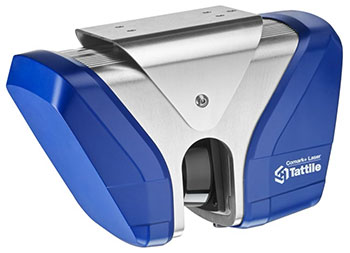
The device features a compact, all-in-one design that requires no external PC, significantly simplifying installation and reducing overall system complexity. With a laser frequency of 100 Hz, it delivers an exceptionally high level of detail, ensuring outstanding accuracy and consistently high performance across a wide range of applications.
Comark+ Laser is also available with an optional radar module, further enhancing its capabilities. The radar can be used to determine vehicle speed and direction, as well as to estimate vehicle length. In addition, with upcoming updates, it will be possible to combine multiple lasers to support different applications and handle various types of data, increasing the system’s versatility and adaptability.
As with all Tattile devices, Comark+ Laser is based on the Stark platform, ensuring seamless and effortless integration into existing systems. Moreover, Tattile’s Stark is the first software platform that is secure by design, specifically developed to withstand even the most sophisticated cyberattacks, while fully complying with IEC 62443 standards.
To support every project, Tattile provides a dedicated team capable of designing the best-fitting solution for each specific requirement, along with skilled engineers who deliver comprehensive 360° technical support throughout all project phases.
For more information, please contact us at infomobility@tattile.com.
|
|
|
|
CinqueT – Intelligent Mobility renews its face
5T, TTS Italia ordinary member o, is rebranding as CinqueT: a new image to accompany the transition to even more intelligent, sustainable, and inclusive mobility. This new image symbolizes the evolution of the public company that has been creating and managing intelligent mobility solutions for over thirty years, making individual and collective mobility more sustainable.
CinqueT operates primarily on behalf of its three partners (the City of Turin, the Piedmont Region, and the Metropolitan City of Turin), but also offers its services to organizations and businesses interested in a new type of mobility that benefits people and respects the environment.
This rebranding stems from the precise desire to more clearly convey the company's evolution: from a company deeply rooted in the local community to a true mobility expertise center, capable of engaging with new national and international contexts. The new image thus becomes a tool to promote CinqueT as a player capable of strategically responding to the growing demand for integrated, intelligent, and sustainable mobility—communicating its expertise, vision, and role in the transportation ecosystem in a new way.
A story in a sign
The new pictogram is born from the intersection of the number 5 and the letter T, giving shape to five curved, vertical lines representing different mobility paths. A symbol of integration between infrastructure, data, and technology: these are the elements that allow us to coordinate and streamline our travel.
This renewal is made even more evident by the redefinition of the company's mission, vision, and values. CinqueT believes in easy, intelligent, and sustainable mobility and offers innovative solutions that are beneficial for people and respectful of the environment.
These principles are summarized in a single tagline, which describes the company's current and future commitment: "Tomorrow's mobility, today."
Towards a new, challenging future
As General Manager Rossella Panero states: "With CinqueT, we're narrating an evolution that involves more than just our visual identity, but also the growth path the company has built over time and the long-term vision we want to make even more explicit today. Over the years, we've consolidated skills, tools, and relationships that allow us to integrate technology, data, and strategic vision to support institutions and local communities in mobility governance. This rebranding stems from this journey and represents a natural evolution: the goal is to strengthen CinqueT over time as a center of expertise capable of supporting mobility transformations, promoting innovative, sustainable solutions that are truly tailored to the needs of individuals and communities."
Giuseppe Pezzetto, President of CinqueT, adds: "The rebranding of CinqueT is not just a change of name or logo, but a concrete sign of the growth path the company has built over time and the potential we recognized from the very beginning. Together with the Board of Directors, we felt it was important to leverage this wealth of expertise and experience, guiding the company through an evolutionary transition capable of best expressing the role it can play today and in the coming years. CinqueT is a company with solid roots and great prospects: this new identity represents the desire to support its development and strengthen its contribution to supporting its members and communities, at a time when innovation, sustainability, and vision are increasingly crucial."
The rebranding therefore does not simply represent a change of image, but rather conveys the direction CinqueT intends to take: to consolidate itself as a technological partner for a new form of mobility, capable of changing behaviors and generating a positive impact on the quality of life today and tomorrow.
Source: CinqueT |
|
Circle Group and Dario Perioli Group: Digital logistics corridors between Italy and Tunisia advance with the IFSTL project
CIRCLE Group (“CIRCLE” or the “Company”) – an innovative SME listed on Euronext Growth Milan, head of the eponymous Group specializing in process analysis and the development of solutions for the innovation and digitalization of the port and intermodal logistics sectors, as well as international consulting on the Green Deal and energy transition, and TTS Italia ordinary member– and Dario Perioli Group, an international logistics and maritime operator, are continuing to develop the IFSTL – International Fast & Secure Trade Lanes – project, an initiative aimed at strengthening and streamlining logistics corridors between Italy and North Africa, with an operational focus on the Italy-Tunisia connection.
The IFSTL Italy-Tunisia project was created with the aim of developing international logistics flows through an approach based on digitalization and interoperability, promoting more efficient, secure, and sustainable supply chain management. The initiative's key distinguishing features include the adoption of an interoperable digital platform, advance data and document sharing along the supply chain, integration between logistics operators, terminals, and competent authorities, as well as real-time cargo monitoring via IoT technologies.
The initiative involves a broad ecosystem of stakeholders, including Italian and Tunisian ports, particularly Sfax and Sousse, customs authorities, terminal operators, shipping companies, and freight forwarders, including the Dario Perioli Group, which currently offers the only regular, fortnightly connection between Marina di Carrara and Sousse for containerized, rolling, and bulk cargo. This creates a concrete model of international collaboration, aimed at simplifying logistics processes and improving operational efficiency along the Euro-Mediterranean corridors.
IFSTL has already completed an initial feasibility analysis, which included mapping the institutional and operational stakeholders involved, analyzing import/export flows and the main product categories, and initiating discussions with the relevant authorities, including the Customs and Monopolies Agency and the Eastern Ligurian Sea Port System Authority.
The project is currently focused on defining a data-driven digital pilot, initially oriented towards document interoperability and the early exchange of manifests. Subsequent developments include the extension to physical flow control and the adoption of advanced technologies, such as IoT and electronic seals, with the aim of enabling a scalable model that can be replicated on other international corridors.
The project's progress was recently shared at "A Bridge to Africa," an international event dedicated to the development of economic and logistical relations between Europe and Africa, held in La Spezia Marina di Carrara from April 8th to April 10th, confirming the initiative's strategic importance in strengthening connections between the two shores of the Mediterranean.
Bruno Pisano, President of the Eastern Ligurian Sea Port Authority, stated: "The Port Authority stands out, on the one hand, for its investments in digitalization and intermodality, and on the other, for its approach based on listening to the operational needs of operators and building synergies between public and private entities. This approach has found concrete application in the IFSTL project, born within the European FENIX project, aimed at simplifying and digitizing document exchange between the ports of La Spezia and Casablanca. This successful experience has improved the efficiency of logistics and customs procedures and is now being replicated in other North African countries, as the Dario Perioli Group is doing with the Port of Marina di Carrara."
Luca Abatello, President & CEO of Circle Group, commented: "Participation in A Bridge to Africa confirms our commitment to developing digital and interoperable logistics corridors. The IFSTL project represents a concrete step toward an increasingly connected supply chain, where data sharing and the adoption of innovative technologies enable greater efficiency, safety, and sustainability."
Michele Giromini, CEO of Dario Perioli Group, added: "Dario Perioli Group brings to this project a wealth of experience built over decades: in-depth knowledge of North African markets, a network of relationships rooted in origin and destination, and the ability to offer integrated solutions that support our clients along every segment of the logistics chain—from direct lines to Tunisia and Algeria to customs, maritime agency, terminal, brokerage, transport, and warehousing services. We consider ourselves specialists in developing trade between Italy and North Africa for a variety of goods, both containerized and bulk, for both import and export. Our solutions are built on continuity, flexibility, and resilience, with a constant focus on economic competitiveness. Marina di Carrara is an important physical point of contact, but our ambition is to expand into ever-widening corridors, towards new geographic areas and new opportunities. For us, the IFSTL project represents an ideal context in which to bring together digital innovation and operational expertise, to the benefit of Italian shippers and forwarders who wish to seize the potential of these rapidly expanding and increasingly competitive markets." more strategic."
The IFSTL project is part of a broader development of innovative and sustainable logistics corridors between Europe and Africa, helping to foster trade growth and greater economic integration in the Euro-Mediterranean area.
Source: Circle Group |
|
Circle Group and Setramar Group accelerate digital transformation of logistics
CIRCLE Group (“CIRCLE” or the “Company”) – an innovative SME listed on Euronext Growth Milan, head of the eponymous Group specializing in process analysis and the development of solutions for the innovation and digitalization of the port and intermodal logistics sectors, as well as international consulting on the Green Deal and energy transition, and TTS Italia ordinary member– and Setramar Group, a leading terminal operator in the dry bulk and logistics sector, operating in the port of Ravenna – announce the launch of a collaboration aimed at digitalizing the operational and document processes of the group's companies operating in terminal management and shipping services.
The initiative is part of the group's ongoing innovation and modernization of information and operational systems. It includes an analysis of operational processes and software systems used in terminal operations (TOS) and logistics operations (TMS), with the aim of improving operational efficiency, process security, and the speed of managing information and document flows.
Within the project, particular attention will be paid to the digitization of transport documents, through the introduction of solutions for the electronic management of e-CMRs and e-DDTs, in line with evolving European regulations and the innovation processes currently affecting the transport and logistics sector. The initiative is also part of the LogIN Business program, aimed at promoting the digitization and interoperability of systems in the logistics supply chain.
Circle will support the Setramar Group as a technology and consulting partner, providing specialized expertise in the port and logistics sectors. The goal is to support the group in reviewing processes and introducing digital tools to make operations increasingly efficient and integrated. Furthermore, this project is part of one of the hubs and Port Authorities (AdSPs) (Central-Northern Adriatic Sea) most focused on digitalization and strong multimodal integration, thanks to the expert guidance of President Francesco Benevolo.
"We are delighted to support the Setramar Group on this innovation journey," said Luca Abatello, CEO of Circle Group. This collaboration stems from a shared desire to leverage digitalization as a strategic lever to improve logistics processes and foster greater integration between the various players in the supply chain. In this sense, the partnership takes on even greater significance considering the local context in which Setramar operates: Ravenna, recently proclaimed Italian Capital of the Sea 2026, is one of the main hubs of the blue economy and port logistics in the Adriatic. Working alongside an operator active in such a dynamic and strategic ecosystem for the national port and logistics system is of great value to us. Through an in-depth analysis of operational flows and the implementation of advanced digital solutions, we are supporting Setramar in strengthening competitiveness, efficiency, and sustainability, contributing to the development of an increasingly connected and interoperable logistics ecosystem, as per the "Connect 4 Agile Growth" business plan.
Source: Circle Group |
|
CIRCLE Group: eXyond completes the acquisition of QMAP, a technology company active in infomobility and ITS systems with revenues of approximately €1.4 million and EBITDA of 21%
CIRCLE Group (“CIRCLE” or the “Company”) – an innovative SME listed on Euronext Growth Milan, head of the CIRCLE Group specializing in process analysis and the development of solutions for the innovation and digitalization of the port and intermodal logistics sectors, as well as international consulting on the Green Deal and energy transition, and TTS Italia ordinary member– announces that its subsidiary eXyond has completed an acquisition of 100% of the share capital of QMAP, an Italian company active in the development of advanced technological solutions in the GIS (Geographic Information System) and Intelligent Transport Systems (ITS) sectors, and TTS Italia ordinary member too.
The company involved in the transaction develops IoT products and services, creating solutions for both businesses and public administrations, available on-premises and as-a-service. It is a highly specialized operator in infomobility and analytics applied to the transportation and logistics sectors.
The company recorded revenues of approximately €1.4 million for the financial year ended December 31, 2025, up approximately 17% compared to the previous year, EBITDA of approximately €0.3 million (EBITDA margin approximately 21%), net profit of approximately €140,000, and a substantially neutral net financial position at March 31, 2026.
The transaction provides for a total cash consideration divided into three tranches: a first tranche of approximately €0.86 million paid today, a second tranche of €0.29 million to be paid by September 30, 2026, following the close of the first half of 2026, and a third tranche, to be paid by April 2027, of up to approximately €0.36 million, comprising a fixed component and a variable component (earn-out) tied to the achievement of specific economic and financial objectives over the 12-month period in question (and with partial payment in Circle Spa shares).
From a strategic perspective, the acquisition further strengthens eXyond's position in advanced infomobility services and telematics solutions, leveraging the existing industrial and commercial synergies between the two companies and expanding the Group's offerings in advanced real-time infomobility models, advanced analytics applied to the ports, transportation, and logistics sectors, and the development of new markets with high technological potential.
The integration of the acquired company will also accelerate the development of innovative solutions based on data, interoperability, and digital platforms, contributing to the evolution of the services offered by the Group across the entire logistics chain.
"This transaction is a natural step in eXyond's industrial development plan, allowing us to integrate highly specialized skills and already comprehensive technologies into our ecosystem. Strengthening our infomobility and analytics capabilities will enable us to develop increasingly advanced and data-driven solutions to support the digital transformation of transportation and logistics systems," commented Alexio Picco, Managing Director of Circle and eXyond Board Member.
"This agreement represents a further step in the Group's growth journey, strengthening its expertise in infomobility and analytics and consolidating an already established industrial integration. The acquisition is fully aligned with the development strategy outlined in the Connect 4 Agile Growth industrial plan, with the aim of creating increasingly connected, scalable, and innovation-driven digital ecosystems," stated Luca Abatello, President & CEO of Circle Group.
With this transaction, CIRCLE Group and eXyond confirm their role as leading technology partners for the digitalization of transportation systems and the supply chain, strengthening their presence in the fastest-growing and most innovative segments, in line with the strategic guidelines of the Connect 4 Agile Growth plan.
Based on the available information, the transaction is not considered significant pursuant to the Euronext Growth Milan Issuers' Regulation, as the relevant indices are below the required relevance thresholds (25%).
Source: Circle Group |
|
Clever Devices announces an agreement to be acquired by Hitachi Rail, opening a new chapter in the development of intelligent and connected solutions for public transport
Clever Devices has signed a definitive agreement to be acquired by Hitachi Rail. The transaction brings together two companies with a strong commitment to supporting local public transport agencies, entities, and operators in improving efficiency, sustainability, and the quality of service offered to passengers.
For over 30 years, Clever Devices has collaborated with public transport agencies, entities, and operators, listening to their needs, addressing operational challenges together, and developing technologies that make services more reliable and enhance the passenger experience. Thanks to a highly qualified global team, the company has grown while maintaining a strong mission based on service, trust, and long-term relationships with its customers. In 2017, M.A.I.O.R., TTS Italia ordinary member, became part of the Clever Devices Group as a wholly owned subsidiary.
Clever Devices' entry into Hitachi Rail expands this mission on a global scale. Hitachi Rail's international presence, its expertise in digital mobility, and its commitment to developing sustainable transportation systems will enable Clever Devices and M.A.I.O.R. to further expand their innovations, reach new markets, and accelerate the growth of next-generation multimodal solutions for current and future customers.
This acquisition represents much more than a strategic step. It expresses a shared vision: local public transportation is a fundamental service for cities and their passengers, and technology must support agencies, organizations, and operators, improve the passenger experience, and make mobility safer and more connected.
The integration of Clever Devices' ITS (Intelligent Transportation System) technologies and M.A.I.O.R.'s planning and scheduling solutions with Hitachi Rail's HMAX for Mobility platform will create a unified ecosystem of real-time data, fleet intelligence, operations management, and passenger-centric tools. This combination will offer agencies and operators the ability to manage road, rail, and multimodal networks in a truly integrated manner, with greater control, transparency, and safety.
"Joining an international group like Hitachi Rail allows us to expand our MAIOR Suite to a more international scale, contributing to the development of integrated solutions that leverage the data and expertise gained over 35 years of experience in public transport. The entry of M.A.I.O.R., first into Clever Devices and now into Hitachi Rail, marks a natural evolution in our journey. This is a significant step, consistent with our identity and the values that have guided us since 1989, and it allows us to participate in more ambitious projects with an even more global vision."— stated Leopoldo Girardi, CEO, M.A.I.O.R.
The transaction is subject to customary closing conditions and necessary regulatory approvals; closing is expected by the end of the year.
Source: MAIOR |
|
EIT Urban Mobility: 11 projects funded in the SME Market Expansion Call 2026, including OpenMove!
The 11 projects selected for the SME Market Expansion Call 2026, promoted by EIT Urban Mobility, have been announced. The call aims to support the growth and market expansion of innovative SMEs in the urban mobility sector.
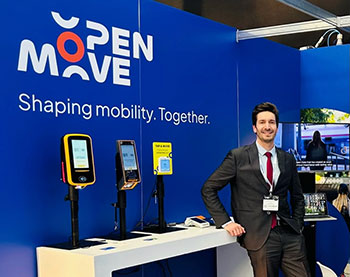
OpenMove, TTS Italia ordinary member, will collaborate with Arriva d.o.o., Kranj, Slovenia, to implement a mobility assistant based on conversational AI and a WhatsApp-based ticketing solution that simplifies access to public transport through chat interfaces to improve service use.
The selected projects are part of the Agile Innovation portfolio and are characterized by a rapid and results-oriented approach. Each project has a duration of 7 months and receives funding of €60,000. The activities will take place between April and October 2026, involving businesses, cities, public authorities, and private stakeholders in several European countries.
The developed solutions address some of the key challenges of contemporary urban mobility, including data management, public transport, urban logistics, vehicle electrification, and health-related applications.
A central element of the program is the demonstration phase in real-world settings, during which each project will be tested for at least two weeks in operational environments to validate its effectiveness and market readiness.
For more information, click here.
Source: EIT Urban Mobility |
|
Join PTV Innovation Day 2026!
PTV Innovation Day is the annual event hosted by PTV, TTS Italia ordinary member, to meet with its community of users and partners. It's a day of exchange and discussion among mobility experts to discover new software developments and present innovative product projects and applications. The event will take place on May 20th in Rome and will cover topics such as:
Assessing the accessibility of a redeveloped area for people with disabilities and reduced mobility through simulation models
Improving the accuracy of microsimulation for mixed traffic flow of automated and human-driven vehicles
The new era of simulation models
Modeling flexible mobility with path-based approaches
For more details and to register, click here.
Source: PTV |
|
Misappropriation: Targa Telematics Strengthens Prevention with AI-Driven Solutions
In Italy, misappropriation represents a small but significant component of illegally stolen vehicles, often arising in the context of unpaid rental or leasing contracts. For operators, the damages can be significant: financial (loss of the vehicle's residual value and interruption of payments), operational (legal and investigative costs related to vehicle recovery), and insurance (due, for example, to higher deductibles than for common theft). Indeed, it is estimated that in a medium-sized fleet, misappropriation can have an impact of over €1 million (considering an average fleet of 10,000 vehicles and an annual misappropriation rate on the average fleet of 0.46% – ANIASA data). According to analyses by the Observatory and the network of Operations Centers of Targa Telematics, a leading global player in the AIoT (Artificial Intelligence of Things) field developing digital solutions and platforms for connected mobility, and TTS Italia founding member, the phenomenon of misappropriation is growing rapidly: in 2025, out of 10,000 thefts, cases of improper and unauthorized use increased by 50%, representing almost 40% of total thefts.
The prevention strategy proves successful
Unlike direct theft, misappropriation arises from initially legitimate access to the asset; The risk evolves over time through non-compliant behavior, prolonged use or anomalous operating modes, making timely detection difficult. According to Targa Telematics' experience, the intelligent correlation of events - anomalies in behavior, exceeding agreed limits, inconsistent usage patterns - allows us to overcome the limitations of reactive models, based on post-hoc checks, and to adopt a prevention strategy capable of monitoring the vehicle and intervening before the misappropriation turns into a definitive loss. This preventive approach leads to concrete results: again according to the Targa Telematics Observatory, in fact, when the risk is intercepted at an early stage, the recovery rate can exceed 90%, significantly reducing the economic and operational impact for operators.
Targa Telematics' AI-driven solution
Thanks to the database built over years of experience in the field and enriched by large volumes of signals and real cases, Targa Telematics has developed an AI-driven solution - Smart Vehicle Protector (SVP) - to identify the risks of misuse and misappropriation in order to quickly activate the operators responsible for recovering the vehicle. Based on Artificial Intelligence, behavioral analysis, and Agentic AI (virtual agents capable of observing, reasoning, and acting autonomously), Smart Vehicle Protector (SVP) constantly monitors each asset like a dedicated digital operator, automatically correlating events and weak signals, recognizing hundreds of complex risk patterns, reducing false positives, prioritizing truly relevant alerts, enabling rapid and targeted interventions thanks to 24/7 Control Rooms operating across Europe. "Thanks to the Smart Vehicle Protector solution, Targa Telematics supports companies in the transition from reactive damage management to proactive asset protection, recognizing signals before the risk becomes a loss," commented Alberto Falcione, VP Sales at Targa Telematics. For rental and leasing operators, this translates into tangible savings in costs and resources dedicated to vehicle recovery. In a context where misappropriation is growing more than 50% and can generate significant impacts, prevention is no longer an option, but a strategic choice.
Source: Targa Telematics |
|
Mooney and Consorzio UnicoCampania Partner to Sell Local Public Transport Tickets – Positive Initial Results
Providing local public transport users in Campania with a simple, fast, and widespread way to purchase their tickets, thus encouraging the use of sustainable modes of transport. This is the goal of the collaboration between Mooney, an Italian local fintech owned by Enel, through Enel X, and Intesa Sanpaolo, through Isybank, and Consorzio UnicoCampania, a company responsible for managing local public transport fares in the Campania region and TTS Italia ordinary member. Approximately 4,000 Mooney outlets in Campania (tobacconists, bars, newsstands) offer users a simple purchasing experience: simply inform the retailer of the transport company and the desired route to have the ticket printed immediately. The system overcomes the difficulties associated with purchasing different types of tickets, offering the best option for your travel. The service allows the resale of single urban and suburban tickets from transport companies Air Campania, ANM, Busitalia Campania, EAV, Sita Sud, Trotta Bus, and A.B.C.D. Mobilità, as well as UnicoCampania integrated tickets. The results achieved in the first months of collaboration demonstrate the effectiveness of a service that simplifies user use and promotes widespread resale of travel tickets from all Consortium companies throughout the Campania region. This collaboration is particularly significant, given the territorial importance of the UnicoCampania Consortium, which provides its users with the entire regional rail and much of its road transport offerings.
Source: UnicoCampania |
|
Targa Telematics reports double-digit growth in 2025 and focuses on international expansion
In 2025, Targa Telematics, TTS Italia founding member, saw revenues grow by 10% compared to the previous year. The tech company—one of the leading global players in the AIoT (Artificial Intelligence of Things) field, developing digital solutions and platforms for connected mobility—recorded revenues of €125 million with an EBITDA of approximately €30 million.
Following the completion of the Viasat Group integration and the rebranding process, which led to the adoption of the Targa Telematics brand for the Group's foreign offices, the tech company aims to accelerate further this year, forecasting further revenue growth of around 12%, driven by a stable Italian market and a 35% increase resulting from strong growth in some foreign markets.
Overall, the company's international business currently accounts for approximately 25% of its total, characterized by a strong presence in Europe and a strong presence in Chile and several African countries. The company is able to operate on international projects with dedicated local teams.
"The acquisition of Viasat Group, completed in 2023, represented a particularly significant strategic step for Targa Telematics, involving the integration of nine companies that allowed us to make a significant leap in terms of size, international presence, and the expansion of our presence in several key market segments," said Nicola De Mattia, CEO and co-founder of Targa Telematics. "The completion of this process has created a leading European group in AIoT applied to the automotive sector, characterized by a widespread presence across the continent and advanced technological capabilities, capable of supporting customers in fleet digitalization projects on an international scale."
Furthermore, Berg Insight, a leading international independent analyst, recently ranked Targa Telematics first overall in Europe in terms of the number of vehicles connected to its platform (approximately 900,000 by the end of 2024) in its Fleet Management report. Targa Telematics has confirmed its position as the European Fleet Management leader for the third consecutive year and is a key player in the digital transformation of European mobility.
Finally, in the Insurance sector, the company continues to strengthen its distinctive positioning. According to the UBI Global Study published in January 2026 by Ptolemus Consulting Group – the most comprehensive analysis of the global connected car insurance market – Targa Telematics is ranked first in the European category of Usage-Based Insurance service providers for fleets. Thanks to the maturity of its accident detection and claims management solutions, Targa Telematics has been named the undisputed leader for insurance companies looking to strengthen their capabilities in fleet car insurance and UBI solutions.
Source: Targa Telematics
|
|
TTS Italia welcomes a new member!
Following approval by the Board of Directors, TTS Italia is pleased to welcome a new member: Turin Tech.
Turin Tech is a consulting firm that offers engineering services across various sectors, combining cross-sector expertise. This translates into the ability to offer clients inspiration in all areas of technological innovation in the Automotive, Marine, Aerospace & Defense, Railway, and Machinery sectors.
Source: TTS Italia |
|
|
|
TTS Italia begins work on developing the National ITS Action Plan
With a Decree of January 26, 2026, published in the Official Journal on February 18, 2026, Italy implemented Directive 2023/2661/EU of November 22, 2023, on the general framework for the deployment of intelligent transport systems in the road transport sector and in interfaces with other modes of transport.
This is undoubtedly a significant achievement for TTS Italia and its members, especially considering the support provided to the Ministry of Infrastructure and Transport (MIT).
However, now that implementation has been achieved, another complex and strategic step remains: the definition of a new National ITS Action Plan with a five-year timeframe.
To this end, TTS Italia was commissioned by the MIT to prepare a draft of the Plan, also involving other trade associations, in order to develop a proposed Plan shared with all interested stakeholders.
On April 15, the Ordinary Members' Meeting of TTS Italia officially launched work on the National ITS Action Plan.
The Board of Directors of TTS Italia, and especially President Rossella Panero, expressed their full availability to oversee the entire process of defining, adopting, and implementing the Plan. This was met with positive feedback from members, who expressed their support for the Board of Directors' continuation during a challenging phase in the Association's activity, characterized by what represents a major opportunity for the smart mobility sector. |
|
TTS Italia at the 17th European ITS Congress in Istanbul
TTS Italia also participated in the new edition, now the 17th, of the European ITS Congress, in Istanbul, Turkey, from April 27 to 29, 2026.
ITS Congresses boast programs that address the most relevant and current issues in the ITS ecosystem. They also provide space for the latest innovations in technology, policy, business models, and social and environmental factors related to Intelligent Transport Systems. Under the motto "Bridging Innovation: Integrated, safe, and seamless mobility," the event focused on four macro-areas of interest: Safe & Resilient Mobility; Multimodal mobility system management; Smart and sustainable logistics in the digital era; and Enhancing transport and mobility beyond the road.
TTS Italia Secretary General Olga Landolfi and Leonardo Domanico joined their members at the event, also taking advantage of important networking opportunities. Furthermore, Lorenzo Valletta participated in three different sessions related to the European projects CEF SCALE and KEYSTONE, of which TTS Italia is a partner. |
|
TTS Italia at the final event of the "Taratraffic" civic monitoring project: focus on Smart Mobility
TTS Italia, represented by Fabio Nussio, participated in the final event of the "Taratraffic" civic monitoring project on April 28, with a presentation on "Funding for Smart Mobility – Passenger and Freight Mobility."
During the morning, students from the III B Computer Science class of the IISS Augusto Righi - Taranto presented the results of their research on Ministry of Transport funding for the "Smart Taranto 4.0" project, a key initiative for the development of intelligent transport systems.
The initiative is part of the national "A Scuola di OpenCoesione" (ASOC) program and represents the culmination of an educational program that combines the acquisition of technical and IT skills with civic engagement, promoting transparency in the use of public funds for sustainable mobility.
The "SmartTaranto 4.0" project was implemented by the Municipality of Taranto using an ITS (Intelligent Transport Systems) system and digital technologies. It acts as an "intelligent mediator" to enhance the operations of the Local Police headquarters and monitor the road network and mobility in real time. "SmartTaranto 4.0" is a major innovation in the traffic management and urban network control system that aims to place Taranto at the forefront of urban traffic flow planning, preventing and reducing congestion and the resulting impact on the city's environment. |
|
Road Safety Index: The TTS Italia/FIA Webinar
On April 21, a webinar co-organized by the Association and the FIA – Federation Internationale de l’Automobile (FIA) was held for members of TTS Italia. The webinar focused on the Road Safety Index (RSI), recently launched by the FIA.
RSI is a rating system developed by the Federation to help organizations, regardless of sector or size, understand and report in a structured manner the impact of road safety on their value/supply chain (and vice versa). It provides an objective benchmark of initiatives and results in protecting employees, contracted personnel, and third parties.
The Index provides a score and a star rating and is built around concepts such as value chain analysis, sphere of influence, and road safety footprint (focused on deaths and serious injuries from road accidents), with an approach consistent with the Plan–Do–Check–Act (PDCA) cycle.
In its current version, the operational manual covers the Commitment and Footprint modules; It is also expected that, at a later stage, the Planning, Monitoring of Safety Performance, and Safety Culture Management modules will also be made available.
The RSI is designed to complement existing sustainability/ESG processes: it is inspired by sustainability reporting systems and aims to support more transparent and comparable communication of commitment and progress over time.
The webinar provided an opportunity for discussion and in-depth analysis of these aspects, in light of the safety standards that RSI ensures at the corporate level. |
|
Recommendations for the Large-Scale Deployment of Digital Transport Ecosystems: The KEYSTONE White Paper
The White Paper, developed as part of the European KEYSTONE project, of which TTS Italia is a partner, shares evidence-based recommendations and practical roadmaps for the large-scale deployment of digital transport ecosystems.
KEYSTONE addresses data interoperability issues among logistics operators through an integrated solution that combines a standardized API reference model and a dedicated web application. Its broader goal is to accelerate the digital transformation of freight transport by enabling seamless, intermodal, and interoperable digital information exchange between logistics players and regulatory authorities, while reducing compliance costs through automated and secure data sharing.
The project includes two pilot implementations. The first (P1) focuses on a road transport context based on a single-modal transport scenario with port interaction, in which a truck transports a container to the port of La Spezia and port inspections are performed with the support of automated ETA (Early Time of Arrival) transmission and digital document management in eCMR format. The second (P2) addresses an intermodal transport context, combining rail and road operations along a chain from the Rotterdam terminal to the CIM terminal in Novara, followed by a roadside inspection in Italy, with the aim of validating real-time data availability and verifying compliance along the entire intermodal chain.
The White Paper presents the evidence generated by these two pilot implementations and translates the results into policy recommendations and practical roadmaps for the large-scale implementation of digital transport ecosystems. It focuses on how standardized API-based data exchange and digital tools can support interoperable, secure, and reliable information sharing between logistics operators and regulatory authorities, both in the road and intermodal transport context.
Some key lessons from the White Paper:
• Successful digital implementation relies heavily on complete, timely, and consistent upstream data;
• Interoperability works well when supported by standardized APIs, but scalability remains sensitive to heterogeneity among local systems such as PCS and terminal platforms;
• Strong coordination, joint testing, and early alignment among stakeholders are essential for stable implementation;
• Early involvement of regulatory authorities is important to ensure compliance data can be accessed and validated under operational conditions;
• Resilience mechanisms, including fallback options in eCMR/eFTI exchanges, are necessary to avoid disruptions during implementation.
For the White Paper, click here. |
|
|