N° 3
March 2026
—
TTS Italia is the Italian ITS Association founded with the aim to promote the development and deployment of Intelligent Transport Systems (ITS) in Italy. |
|
|
|
|
| The interview by Morena Pivetti |
|
|
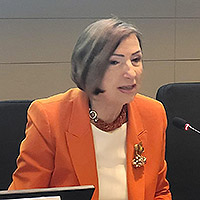
"This is how motorway concessionaires are facing the cybersecurity challenge together."
Interview with Emanuela Stocchi, Interim General Director of AISCAT and President of PIARC
At AISCAT, the Italian Association of Highway and Tunnel Concessionaires, they didn't wait for the implementation of the 2022 EU Directive on cybersecurity, NIS2, in September 2024, and especially for the entry into force of the new obligations on January 1st to act: they moved first. Both in Italy and at the European level. In 2023, they created a working group on cybersecurity, which immediately contacted the ACN, the National Cybersecurity Agency. In this interview with the TTS Italia newsletter, Emanuela Stocchi, Interim Director General of AISCAT and currently World President of PIARC, the World Road Association, recounts the experience of national highway concessionaires, which is entirely unique in the European landscape.
In the second half of 2025, the National Cybersecurity Agency (ACN) recorded 1,253 cyber events, a 30% increase compared to the same period in 2024. However, incidents with confirmed impact decreased to 304 cases, a 25% decrease, "a sign of increased effectiveness of the prevention and response measures adopted by the country," the agency wrote in its recently published report. The transportation sector remains a favorite target of cybersecurity attacks.

Highways are among the country's strategic infrastructures for mobility. The first question for Emanuela Stocchi is a must: are AISCAT members already compliant with the new requirements? Were you prepared for their implementation?
We had long set ourselves the goal of addressing the issue of defending Italian highways from cyber attacks in a shared, industry-wide manner, especially since much of the network is functionally and operationally interconnected. This is one of the unique features of our sector, compared to other European countries where each concessionaire operates independently. We overcame the fragmentation between sections of road under different jurisdictions back in the 1990s, with an agreement between companies that led to a convention for the shared and uniform management of operations, from tolls to traffic information, the management of exceptional loads, and emergencies. This means that when a company, especially if part of the interconnected system, suffers a certain type of attack, it becomes everyone's problem, no longer just the individual concessionaire.
In which years did you make the move?
Working groups of technicians and experts who monitor the various aspects of interconnection have existed practically since the system was born. It's clear that this is a world that has undergone profound transformations since the 1990s in line with technological evolution, and therefore the technical groups have worked—and continue to work—to ensure the appropriate developments of the system itself. Then, in recent years, also as a result of certain events recorded on the network as well as the requirements of the European directive, the need to create a dedicated structure specifically dedicated to cybersecurity has become more pressing, and we are practically at the beginning of 2023. From that moment, thanks also to the work already done by some Concessionaires under the first NIS Directive, it was natural to initiate discussions with the ACN.
How did the preparatory work proceed?
We could say it was a natural development starting from the first meeting with the Agency, which immediately strongly supported a general sector-wide action consistent, among other things, with the 2022-2026 National Cybersecurity Strategy. This framework therefore included the project to create, within AISCAT and not as individual motorway companies, an ISAC (Information Sharing and Analysis Centre) for the road transport sector, drawing on similar experiences initiated for other modes of transport, such as air and rail.
For our working group, this means meeting in plenary session at least once a year, between November and December, and regularly throughout the year: we analyze the overall situation, share experiences and projects initiated locally, monitor potential attacks and their types, and discuss how to respond to them from a technical perspective. We have also brought this working method to Europe, where we have created a cybersecurity task force within ASECAP, our European reference association, to further consolidate all our activities.
Transportation is one of the most targeted sectors. What's your take on the situation?
Transportation, or rather, the various types of transportation, affects millions of people every day and is one of the cornerstones of our socioeconomic system. This is even more true for a highly complex, strategic national network like the motorway network. Unfortunately, it's common for it to attract various types of cybercrime, including common phishing attacks. Then there are threats that focus on specific events, aiming to have a high impact—including media coverage—as in the case of the recent Milan-Cortina Winter Olympics.
What are the dangers of cyber attacks on the highway network?
I mentioned it before: ours is a complex, interconnected network, on which millions of people and tons of goods travel every day. There are various assets—physical, engineering, and management—that must be monitored and protected, to ensure not only the protection of the concessionaires' facilities, but above all the safety and regularity of national mobility. And as I said before, an attack on one concessionaire is an attack on all of them.
What is the relationship with the National Agency like?
We maintain close contact with the ACN, especially with the most operational services, with ongoing and highly effective discussions. Their representatives provide constant support at every stage of our activities, from system analysis to planning and implementing targeted actions to counter attacks, which, I would say, goes beyond the strict compliance with NIS2. In this regard, having worked to establish a dedicated ISAC for our sector is crucial.
And you can share best practices
The best ideas can come from large dealerships as well as small companies. This is a reflection we made last November at the last plenary meeting: we aim to pursue a planned strategy, seeking prevention wherever possible, but also working to respond in the event of an emergency. Moreover, and this is one of the key aspects of NIS2, it's not just about our operations, but also about the entire supply chain connected to us, including businesses and suppliers. I'd like to emphasize that we are an excellent example of public-private collaboration: our partners are both public and private companies, and I believe this is a significant added value.
As we look to the future evolution of mobility, advancing digitalization, smart roads, and connected and self-driving vehicles, the need to defend against cyber attacks becomes increasingly strategic.
Without a doubt, it is one of the great challenges facing us and all stakeholders in this process in the coming years. Cybersecurity measures must go hand in hand with the spread of digitalization; one presupposes the other, because it is necessary to protect all infrastructures, both tangible and intangible, and their connections. In this sense, training in highly specialized fields, such as cybersecurity, which also require continuous updating, will be increasingly important.
Alessandro Musmeci, your Technical Area Manager and Coordinator of the AISCAT Cybersecurity Working Group, is participating in TTS Italia's work on this topic. How is it going?
The collaboration between the two Associations has always been effective and fruitful. The exchange of knowledge between sectors and operators linked by common interests, despite differing "industrial" visions, allows, in our opinion, to increase the efficiency of the entire system. And this is even more important when potential interdependencies can constitute weak points in protecting against cyber attacks. In this sense, we seek to bring the experience we are gaining to the table, not only as an example for other transport players, but also to enhance our own expertise.
Who is Emanuela Stocchi. Emanuela Stocchi, expert in EU legislation and policies, is President of the World Road Association PIARC and Acting General Director for AISCAT (Associazione Italiana Società Concessionarie Autostrade e Trafori), the Italian Association of Toll Highways Concessionaires Companies, with a specific empowerment on International Affairs, ensuring the Association’s contacts with the EU Institutions and other European and International organizations active in the transportation field. Emanuela is also member of the ASECAP (European Association of Toll Highways Concessionaires Companies) Executive Committee, as well as Chair of the ASECAP Permanent Committee on Road Safety and Sustainability. Emanuela is currently serving as Past President of IBTTA (International Bridge, Tunnel and Turnpike Association), being member of the IBTTA Past Presidents Advisory Council, as well as of the International Committee, the Nominating Committee, the Sustainability and Resilience Task Force and lifetime member of the Women in Tolling Council of IBTTA. She served IBTTA and its members working in several committees, in the Board of directors and as President in 2017, under the theme she had chosen for her year "International Mobility Connections". Emanuela is fluent in Italian, French, English and Spanish. |
| |
|
|
|
TTS Italia and its members at Intertraffic Amsterdam 2026! Read the Newsletter Special!

From March 10th to 13th, Amsterdam once again hosted Intertraffic, now consolidated as the world's leading event for smart, safe, and sustainable mobility.
Many TTS Italia members will be present with a booth to showcase industry news and innovations: Aesys, AlmavivA; DataInfomobility; EngiNe; Famas; Kria; MOVYON; OpenMove; Safety21; Selea; Sinelec; Sodi Scientifica; Sprinx; SWARCO; Tattile; TecSen /La Semaforica; Yunex.
TTS Italia supported its members and actively participated at the booth of ITS Nationals, the Network of ITS Associations to which it belongs. Several members took part in the Mobility Pitch Sessions at the booth: Bridge129; Geoworks; Kria; Trafficlab; Selea; Sodi Scientifica presented solutions for traffic safety, enforcement, and driver behavior; digital traffic management and permitting; C-ITS, connectivity, and AI for urban mobility; and data-driven mobility and predictive insights.
Finally, TTS Italia was among the speakers at the session organized by ITS Nationals, "ITS deployment across the ITS Nationals Network in Europe," with the aim of highlighting successful national initiatives and international cooperation that have created added value.
Read the newsletter!
|
|
|
|
|
|
Headquartered in Vilnius, Teltonika has been operating globally for over 27 years, with subsidiaries across Europe, Africa, the Middle East, Asia, and the Americas. Today, the company has 29 offices in 20 countries. Teltonika Telematics is one of the world’s leading manufacturers in the transport telematics industry. As a key part of the Teltonika IoT Group, it designs and supplies GPS tracking devices for vehicles, indoor and outdoor asset trackers, e-mobility and personal tracking solutions, along with related accessories and software platforms for efficient fleet management of any size.
Thousands of Teltonika devices are used daily by customers across a wide range of industries worldwide, from car sharing and international logistics to specialized transport and indoor tracking. To deliver maximum value to customers and business partners, the company goes beyond developing high-quality hardware and firmware, creating advanced software tools and cutting-edge technological solutions. Guided by its core principles of Trust, Support, and Value, the company successfully collaborates with thousands of established partners in over 180 countries, building long-term, growth-oriented relationships within an ever-expanding network designed to stay close to its customers.
Customers are the driving force behind our growth. For this reason, we invest in highly qualified technical support capable of delivering comprehensive services, including product management, testing, quality assurance, training, and continuous assistance. With over 400 online meetings per year, certified training programs, and more than 90 specialized engineers across 16 global locations, we ensure widespread and effective support.
Complementing this offering are a dedicated VIP Help Desk, a detailed Knowledge Base, and 24/7 Crowd Support platforms, providing immediate access to information, guides, and best practices.
Our innovation is developed in-house. Our R&D team, composed of over 250 engineers, creates market-leading solutions through an agile approach and a strong commitment to continuous process improvement—a determined group that transforms ideas into concrete technologies.
Our products are manufactured internally at the Teltonika Technology Park in Vilnius, allowing us to maintain full control over the entire production process, from PCB manufacturing to final assembly and delivery. We have made significant investments in industrial automation, introducing advanced robotics and state-of-the-art technologies into our production processes to ensure quality, efficiency, and scalability.
Why Teltonika?
We design solutions that generate real value in the global telematics market. We provide reliable products, advanced technologies, and outstanding customer service, supporting partners in over 180 countries. With over 25 years of experience, a strong focus on innovation, state-of-the-art production facilities, and support that always meets expectations, Teltonika is the ideal partner for growing and competing on a global scale.
—
PRODUCT OF THE MOMENT
FTC305 & FTM305. Get ready for a new era of electric mobility
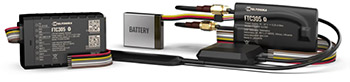
The global transition from fossil fuels to a more sustainable energy consumption model is now a reality. Companies benefit from government incentives for electric vehicles, consumers are pushing transport companies to become more “green,” and the electric mobility market continues to grow. Industry research agencies estimate that the global electric micromobility market will reach 360 billion USD by 2030, while the e-utility segment is expected to grow by 45 billion USD by 2032, with key markets in the EU, USA, and Southeast Asia.
This translates into more electric transport on the roads and, consequently, greater opportunities for solution providers offering dedicated e-mobility solutions.
We invite you to be part of this trend by leveraging our FTC305 and FTM305 devices, thanks to their innovative features and key benefits:
• Manual reading of CAN data and sending manual CAN commands to remotely control electric fleets
• Flexible installation options with versions available with or without a plastic enclosure
• Support for high-voltage power supplies and scenarios specific to electric mobility, such as fall detection or smart ignition management
• Input control: choice between DIN, AIN, or 1-wire
• Sleep mode: optimizes device performance based on usage and extends battery life
Example use cases:
• Management of e-bikes and e-scooters
• Monitoring of Battery Management Systems (BMS)
• Management of electric forklift fleets
• Monitoring of electric vehicles for urban sanitation and waste management
—
THREE QUESTIONS TO...
Davide Piccaluga, CEO of Teltonika Italy, the Milanese office of Teltonika.
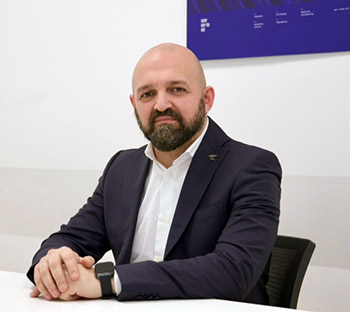
What is your company’s vision, and what problem are you solving in the telematics market today?
Our vision is to support clients in a sustainable and controlled growth journey, providing reliable technological solutions in an increasingly complex and unstable global environment. At Teltonika, we internally develop the entire product lifecycle, from design to production, to ensure the highest standards of quality, safety, and operational continuity. This approach allows us not only to deliver high-performance solutions but also to maintain a stable competitive position, an essential factor for our clients when planning their business.
The problem we are solving today is precisely this: providing certainty, scalability, and operational control in a market that demands ever-increasing efficiency and resilience.
Which emerging technologies are you integrating, and which ones are you focusing on in the short term to expand market opportunities?
One of the technologies we are investing in most confidently is Bluetooth Mesh, which represents a natural evolution of the telematics ecosystem. This technology allows us to extend our solutions to high-potential areas such as asset tracking and monitoring, both indoor and outdoor, enabling new use cases in fast-growing sectors like integrated logistics.
Our goal is to increasingly integrate data from vehicles, assets, and infrastructure, creating a connected and intelligent system that enhances visibility, operational efficiency, and decision-making capabilities for our clients.
What truly sets you apart from your
What truly sets you apart from your competitors, and why should a client choose you today?
What sets Teltonika apart is our ability to combine technological innovation, full control of the supply chain, and proximity to the customer.
We do not want to be perceived as just a supplier, but as a reliable, long-term partner. That is why we Morelly invest both in product development and in local presence, as exemplified by our Milan office, which allows us to be increasingly close to the Italian market and its specific client needs.
This combination, proprietary technology, European quality, and direct support, is what enables us to create concrete and lasting value for those who choose to work with us. |
|
|
|
|
A STORY THAT HAS BEEN MOVING FOR 25 YEARS:
SWARCO and TMB between technology, trust and buses

Twenty-five years, in the world of technology and public transport, are not simply an anniversary. They are proof of resilience, evolution and, above all, mutual trust. The collaboration between SWARCO and TMB (Transports Metropolitans de Barcelona) is one of those stories that are not born by chance and that, above all, do not last so long without solid foundations.
Today TMB manages one of the most important urban bus networks in Europe: approximately 1,100 vehicles, around 25% of which are electric, distributed across more than 110 lines that run through Barcelona like an always-active nervous system. Behind this complex and fascinating machine there is a technological heart that, for 25 years, has also been beating thanks to the SAE (Sistema di Ausilio all’Esercizio) supplied and evolved by SWARCO.
But how did it all begin? And above all: how does one come to celebrate a quarter of a century together?
Let us go back 25 years. The world was different, technology as well. At that time, speaking about real-time monitoring meant working with distances traveled, heuristic stop recognition logics and analogue radio. No widespread GPS, no advanced digital networks. And yet, even then, the objective was clear: to know where the buses were, manage the service more efficiently and improve the passenger experience.
The story with TMB began in a somewhat “classic” way: a public tender won by an Italian-Spanish consortium (Italtel–SICE), within which SWARCO entered as the supplier of the public transport software. The project included everything: control centre, onboard equipment and radio network for telecommunications.
Over time, however, the scenario changed. Italtel left the project, SICE gradually stepped back, until it no longer had an operational role. SWARCO, on the other hand, remained. And not only did it remain: it became the reference technological partner, responsible for support, maintenance and, above all, the continuous evolution of the system.
It was during this phase that the transition from tag-based localization to GPS took place, and from analogue radio to digital radio. A gradual process, built carefully, which led to the stabilization of the system and to the development of that reliability which, over time, would become one of the distinctive features of TMB’s SAE.
Meanwhile, TMB also grew. Barcelona changed, expanded, and reinvented itself. The bus network evolved and, with it, the service philosophy changed: moving from a radial network to an XY network, more similar to the logic of the metro, with interchange stops designed to make the system more flexible and efficient.
In this new scenario, the SAE ceased to be a simple monitoring tool and effectively became the core system of operations. It is the operational reference point that makes it possible to manage an increasingly extensive, complex and dynamic network. The system was literally “pushed” to the maximum of its capabilities in order to keep pace with TMB’s requirements. And it succeeded. Not because it is immutable, but precisely because it is flexible, scalable and designed to evolve over time.
At the same time, the onboard architecture evolved to accommodate new hardware and software equipment, often supplied by third parties, and the telecommunications system made a decisive technological leap with the transition to standard TETRA networks. This change ensured greater reliability, security and communication quality, and indispensable elements for a large-scale public transport service. The SAE grew together with the city. And like any good travelling companion, it learned to adapt to curves, unforeseen events and new destinations.
We thus arrive at the most modern phase, which we could define as that of digital maturity. The management of public transport services today can no longer be a collection of isolated systems. Integration, data sharing and an overall vision are required.
TMB is aware of this. It is within this context that the system entered a new phase of its evolution, becoming an integral part of TMB’s IT ecosystem. The information generated by the system is integrated with SAP, with planning systems, with operational management platforms and even with tools related to passenger communication and social media.
The SAE is no longer just a source of data, but an accessible, reliable information hub, perfectly integrated into TMB’s IT ecosystem. A system capable of interacting with the other company “main systems” and providing fundamental information for rapid and informed decision-making.
It has been exciting to describe the history that led SWARCO and TMB to this incredible collaboration, but behind every successful system there are always people. And this anniversary was also an opportunity to meet the present and the past of TMB.
In Barcelona, Carmine Ianzano and the SWARCO team met some of the protagonists of this story, such as:
Albert Fonseca, Antonio Fernández, Agustín López, Antonio Martínez, Diego Domínguez and Mayte Pavón.
A particularly symbolic moment was the meeting between Albert Fonseca, current Director of Technology at TMB, and Carmine Ianzano, responsible for the SWARCO system. Two “companions in battle” who, looking back, can say they have built something that has withstood time and change.

|
|
|
|
|
|
Alkemia Capital Partners entra in Circle
The Board of Directors of CIRCLE S.p.A. (“CIRCLE” or the “Company”) – an innovative SME listed on Euronext Growth Milan, head of the CIRCLE Group specializing in process analysis and the development of solutions for the innovation and digitalization of the port and intermodal logistics sectors, as well as international consulting on the Green Deal and energy transition, and TTS Italia ordinary member – announces that it has resolved to sell a portion of the treasury shares by the Company (the “Treasury Shares”) to Alkemia Capital Partners Società di Gestione del Risparmio S.p.A. (“Alkemia” or the “Buyer”), which will acquire them through the closed-end, reserved alternative investment fund called “PIPE” (Private Investment in Public Equity), which focuses on investments in listed companies operating in highly innovative sectors, particularly telco, media, technology, and energy-tech. Alkemia's entry into Circle's capital, as a strategic financial partner, represents a development opportunity with the aim of accelerating the implementation of the “Connect 4 Agile Growth” 2029 plan, and an attractive opportunity to monetize the Treasury Shares asset at a unit price per share that substantially reflects the recent performance of Circle's stock price. The aforementioned sale will also allow the Company, on the one hand, to increase the so-called free float and facilitate trading of the stock, thus also promoting its stability, and on the other hand, to broaden and diversify the shareholder base to primary, high-standing institutional investors such as Alkemia. The Treasury Shares subject to the Transaction were purchased by the Company over time pursuant to the authorization to purchase treasury shares approved by the Shareholders' Meeting of April 29, 2024, pursuant to Articles 2357 et seq. of the Italian Civil Code (so-called "Buy-back"), under the terms and in the quantities communicated to the market from time to time.
With regard to the other main strategic rationales underlying the Transaction, it is noted that the latter will allow the Company to (i) collect a significant amount, generating immediate liquidity that can be used to support core business, finance new investments, optimize the financial structure, or pursue other corporate objectives consistent with the business plan, as well as (ii) realize a capital gain of approximately €1.46 per share (approximately 20% of the carrying value of Treasury Shares), with a positive economic and financial impact for the Company. Giacomo Picchetto, Managing Partner of Alkemia, commented:
"We are extremely pleased to be investing in Circle, a company that perfectly embodies the investment thesis of our PIPE fund, which focuses on excellent, highly innovative listed companies. We are closely monitoring the Group's progress and are convinced that Circle offers significant growth prospects, thanks to its distinctive positioning in the digitalization of logistics and the Green Deal. As a strategic financial partner, we are pleased to be able to support the acceleration of the plan approved by Circle, contributing to a project that combines industrial solidity and cutting-edge technological vision." Luca Abatello, Chairman of Circle Group, added: "The transaction allows us to strengthen the quality of our shareholder base and the entry of a qualified institutional investor like Alkemia, while maintaining a balanced capital structure consistent with our growth objectives. Furthermore, the additional financial resources generated will allow us to accelerate ongoing product development and new M&A transactions under consideration. We are confident that the fund's focus on innovation and technology will support Circle's further development in the years to come, in line with the "Connect 4 Agile Growth" plan."
Source: Circle |
|
CIRCLE Group: new agreement worth over €380,000 for the digitalization of a leading intermodal logistics hub in Southern Italy
CIRCLE Group (“CIRCLE” or the “Company”) – an innovative SME listed on the Euronext Growth Milan market, head of the CIRCLE Group specializing in process analysis and the development of solutions for the innovation and digitalization of the port and intermodal logistics sectors, as well as international consulting on the Green Deal and energy transition, and TTS Italia ordinary member – announces that its subsidiary eXyond has signed an agreement with a leading interport operator in Southern Italy, managing one of the main logistics hubs in the region. The agreement covers the implementation of an integrated digital interoperability and gate automation project, in line with Measure M3C2 I 2.1 “Digitalization of the Logistics Chain” – Sub-investment 2.1.2 “Network of Ports and Freight Villages” of the National Recovery and Resilience Plan. (PNRR), funded by the European Union – Next Generation EU.
The project aims to strengthen interoperability related to e-CMR and the operational efficiency of the logistics hub through, on the one hand, integration with the national eFTI Gate Italy / Extender ecosystem, and on the other, the implementation of a Gate Automation system to control and automate the terminal's road and rail gates. The project is being developed in accordance with Regulation (EU) 2020/1056 on electronic freight transport information (eFTI), effective August 21, 2024, and with Italy's accession last year to the Additional Protocol to the Convention on the Contract for the International Carriage of Goods by Road (CMR) concerning the electronic consignment note, which makes the e-CMR/e-DDT fully usable as a replacement from September 26, 2024.
Specifically, the digital component involves the creation of API connectors to ensure interoperability between the freight village information system, FVS – TOS, and the GOS, as well as the national eFTI Gate. This will allow the system to receive and verify e-CMR information associated with road transports with loading or delivery locations at the relevant logistics hub, transmit gate-in and gate-out notifications to the eFTI Gate, manage and verify vehicle access data between interoperable hubs, and share, for the rail and intermodal component, the information contained in loading lists and rail consignment notes in eFTI dataset format. Thanks to the connectors with the eFTI Gates of European Union countries, it will also be possible to digitally receive and share information relating to international transports, according to the "once-only" principle and in compliance with the required access rights.
In parallel, the project includes the implementation of an integrated Gate Automation system, a solution from eXyond, a Circle Group company, aimed at optimizing the entry and exit flows of heavy vehicles, improving safety, and reducing transit times. For the road gate, the plan includes reviewing the road layout and positioning of barriers, installing sensors and detection equipment such as lasers and cameras, marking lanes, upgrading signage, and dedicated software configurations for integration with existing management systems. For the railway gate, automation is similar, given the specific characteristics of the tracks, with the aim of ensuring greater train traceability, streamlining checks, and full integration with eFTI digital information flows.
The project will last approximately six months.
The total investment is over €380,000. The project is being developed in accordance with the specific principles and obligations of the PNRR, including compliance with the "Do No Significant Harm" (DNSH) principle and the digital tagging required for the reference measure.
"This new project represents a further step in strengthening our presence in projects dedicated to the digitalization of the supply chain," said Luca Abatello, CEO of Circle Group. "The integration of digital interoperability and gate automation allows us to concretely accelerate the transition to secure, traceable, and paperless management of physical and document flows, generating benefits for economic operators and competent authorities. This was and remains one of the main pillars of our Connect 4 Agile Growth strategy."
With this initiative, Circle Group consolidates its role as a technology partner for interoperability between logistics hubs, public platforms, and private operators, contributing to the digitalization of the Italian supply chain and the competitive strengthening of the interport system and national and European intermodal logistics hubs.
Source: Circle Group |
|
Inclusive Mobility: Kentkart Triumphs at the 2026 Transport Ticketing Awards
For the second consecutive year, Kentkart, TTS Italia ordinary member, confirms its position as a global leader in inclusive public transport solutions. At the prestigious 2026 Transport Ticketing Awards, the company received the "Best Equity & Inclusion" award for the innovative project developed in collaboration with Antalya Ulaşım and the Antalya Metropolitan Municipality. Technology at the Service of Accessibility
The core of the solution awarded by the international jury is an accessibility notification system integrated into the app. The technology allows passengers with disabilities to communicate their needs to public transport drivers in real time and in advance. The goal is twofold: to ensure safer and more plannable journeys for passengers and to enable onboard staff to adequately prepare for assistance, breaking down physical and digital barriers. Antalya: a global model
The implementation of the system in Antalya, one of the world's most popular tourist destinations, represents a fundamental testbed. The project's success demonstrates how digital ticketing can become a powerful tool for social equity, making urban mobility truly accessible to residents and tourists with limited mobility. Kentkart's encore at the ticketing Oscars highlights a clear industry trend for 2026: technological innovation must not only optimize flows, but also ensure that no passenger is left behind.
Source: Kentkart |
|
Interporto di Bologna accelerates digitalization. Movyon and Aitek win the tender for an advanced gate control system capable of handling up to 5,000 transits per day
Movyon, TTS Italia founding member, and Aitek have won the tender called by Interporto di Bologna SpA for technological renewal of the access gate management system of the logistics platform in Emilia, one of the main European intermodal hubs in terms of traffic volume and operational complexity.
The work involves both updating the current transit control system at the south access, and implementing a gate automation system to service the new north access. It is a strategic project that aims to increase efficiency, reliability and operational continuity where approximately 5,000 heavy vehicles transit per day, for a total of over 1,600,000 transits per year, and where 130 freight transport and logistics companies are hosted.
When fully operational, the system will handle a total of 15 entry and exit lanes:
⁃ south access: six lanes for heavy vehicles, one for exceptional transport, three for cars and one return lane;
⁃ north access: two lanes for buses and two for cars.
Movyon is responsible for overall project management and, with its experience in implementing highly reliable access control systems for complex logistics situations, will work on the infrastructure and technological equipment for the gates. Aitek will contribute with software applications for the Sesamo-Gate platform to support automation of gate-in and gate-out processes and digital management of exit authorizations.
A key element of the project is the high level of system integration: the solution is designed to dialog natively with the railway terminal and with the paid parking area at the freight terminal so that heavy vehicle exit authorizations can be managed centrally and consistently, depending on logistics operations and vehicle parking conditions.
The system for controlling exiting vehicles is also particularly innovative. It is based on dual identification methods: automatic license plate recognition and reading on-board electronic tolling devices. This combination ensures high operational robustness, even in critical environmental conditions or when license plates are difficult to read, reducing manual interventions and inconveniences for freight carriers, and making flows smoother in a traffic-intensive area.
The project is funded under the PNRR, Italy’s National Recovery and Resilience Plan, (Measure M3C2 Investment 2.1 – Digitalization of the logistics chain – Sub-investment 2.1.2 “Port and terminal network”), confirming the strategic role of digitalization in making the national logistics system competitive.
With this initiative, Movyon and Aitek consolidate a collaboration aimed at developing and implementing advanced technological solutions for access control and digital transformation of logistics infrastructures, both in Italy and on international markets.
Fonte: Movyon |
|
START4.0 awards Circle S.p.A. two strategic open innovation contracts in the ports, transport, and logistics sectors
CIRCLE Group (“CIRCLE” or the “Company”) – an innovative SME listed on Euronext Growth Milan, head of the CIRCLE Group specializing in process analysis and the development of solutions for the innovation and digitalization of the ports and intermodal logistics sectors, as well as international consulting on the Green Deal and energy transition, and TTS Italia ordinary member – announces that the START4.0 Competence Center has awarded Circle S.p.A. two strategic open innovation contracts in the ports, transport, and logistics sectors. Two advanced consultancy services for process innovation aimed at increasing corporate competitiveness in the ports, transport, and logistics sectors through the structured introduction of open innovation approaches. The assignment is part of the activities funded by the National Recovery and Resilience Plan (PNRR) – Mission 4 “Education and Research”, Component 2 “From Research to Business”, Investment 2.3, with funds from the European Union – Next Generation EU, and aims to support the beneficiary company in defining a multi-year strategic innovation plan, in the creation of qualified European networks, and in the ability to attract national and European funding to support business development. The projects include technology and design scouting activities, support for the structuring of international partnerships, definition of internal processes for open innovation, and development of strategic skills related to digitalization, sustainability, decarbonization, and energy transition applied to logistics and port systems, with particular reference to ESG issues and the use of hydrogen. "This assignment confirms Circle's role as an industrial and strategic partner in innovation processes "We are delighted to announce the appointment of START4.0 as an open innovation platform for the logistics and transport sectors," said Alexio Picco, Managing Director of the Circle Group. "Working with START4.0 means making a concrete contribution to technology transfer and business competitiveness, leveraging expertise, European networks, and project capacity to transform innovation into measurable results." "Through this appointment to Circle S.p.A., we are strengthening START4.0's role as an enabler of growth and competitiveness for companies in the port, logistics, and transport sectors," said Georgia Cesarone, CTO of START 4.0. "The structured introduction of open innovation practices is not just an organizational evolution, but a true economic accelerator: it allows companies to attract national and European funding, develop high-value-added projects, and strengthen their position in international markets. The PNRR resources, managed by START4.0 in this context, therefore generate a concrete leverage effect. The consultancy service will lead to the creation of an innovation plan oriented towards co-financed projects, international networking reports, a structured project proposal, and internal monitoring procedures based on KPIs, in line with the industrial objectives of the final beneficiary company.
Source: Circle |
|
Stolen Vehicle Assistance: IVECO's solution against commercial vehicle theft
Across Europe, light commercial vehicles today present a significantly higher risk of theft than passenger cars, with a particularly significant impact in the rental sector. Vehicle theft has evolved over time, becoming more structured through the use of increasingly sophisticated techniques. Furthermore, stolen vehicles can be quickly re-entered into secondary markets for resale or parts recovery. For operators who use the Daily to keep their businesses running, theft is much more than a security issue: it can cause significant operational disruption. The Daily is a vital business asset, and losing even a single vehicle can compromise service continuity, generate financial losses, and jeopardize customer commitments. In response to this evolving scenario, IVECO, TTS Italia ordinary member, has introduced Stolen Vehicle Assistance, a solution integrated into the vehicle's factoryfit connectivity and fully integrated into the IVECO ON ecosystem, transforming basic vehicle tracking into a coordinated and structured recovery model. "With Stolen Vehicle Assistance, we help customers react quickly when a theft occurs and recover their vehicle as quickly as possible. By combining factory connectivity, AI-driven detection, and a 24/7 Security Center, we transform alerts into coordinated recovery actions that keep vehicles available and businesses running," said Alberto Buttiglieri, Product Manager for Safety and Security Services at IVECO. Stolen Vehicle Assistance supports rapid and effective recovery in the event of theft, helping reduce downtime and financial losses. The system is based on the standard connectivity of the entire IVECO range and integrates automated detection technologies based on artificial intelligence and geofencing, powered by Targa Telematics, a leading European player and global leader in AIoT and the development of digital solutions and platforms for connected mobility, and TTS Italia founding member. Virtual geographic boundaries can be defined, unusual movements can be detected, and, once theft is confirmed, recovery procedures are activated immediately. Through the IVECO ON portal and the Easy Daily app, customers maintain full visibility of their vehicles in daily operations, while benefiting from an additional level of professional support in critical situations. A key element of the service is the 24/7 Security Center, managed in collaboration with Targa Telematics which combines advanced telematics technologies and consolidated experience in stolen vehicle recovery services. Following a validated alarm, the Security Center immediately coordinates with the relevant authorities, manages vehicle tracking, and supports the recovery process in compliance with current regulations. The service is also supported by agentic AI assistants, capable of analyzing vehicle data and operational context, correlating events, and suggesting the most effective actions to operators. "By leveraging advanced data intelligence combined with years of operational experience in vehicle safety, we help fleets respond quickly and effectively to critical events," said Alberto Falcione, Vice President Sales Targa Telematics. Through close collaboration, we supported IVECO in developing a tailored solution to protect commercial vehicles and support fleet operators with both cutting-edge technology and dedicated managed services, ensuring business continuity and greater peace of mind. This end-to-end approach reduces response times, increases recovery rates—up to 90%—and helps limit the operational and insurance consequences of theft. In addition to vehicle recovery, the service provides structured assistance during a high-impact event, helping operators minimize disruptions and restore normal operations more quickly. Spain pioneered the service, which will now be rolled out across all European countries. Initial customer feedback highlights clear benefits in daily fleet management, particularly improved vehicle visibility during routine operations and additional protection in the event of theft. The result is peace of mind knowing that vehicles and operations are always protected. With Stolen Vehicle Assistance, IVECO reinforces its commitment to innovating connected services, offering customers not only efficient and sustainable vehicles, but also integrated digital solutions designed to protect their business and maximize fleet availability.
Source: Iveco |
|
Targa Telematics supports Transport UK London Bus in managing service vehicles for driver journeys
Targa Telematics – a leading global player in the field of AIoT (Artificial Intelligence of Things) in the development of digital solutions and platforms for connected mobility, and TTS Italia founding member– has announced a partnership with Transport UK London Bus, which operates bus services on behalf of Transport for London (TfL), to support the management of service vehicles used for driver shift changes between depots. The partnership involves the implementation of Targa Telematics' Car Sharing solution, which enables secure, keyless vehicle access for authorized drivers across a diverse fleet of 80 vehicles of various makes and models, distributed across four of the six depots managed by Transport UK London Bus. The deployment has been successfully completed on 68 vehicles, with the Twickenham and Beddington depots now fully operational. Installation at the Southall and Hayes depots is underway and is expected to be completed by the end of April 2026. By implementing Targa Telematics' Car Sharing solution, Transport UK London Bus will be able to ensure access to service vehicles through a fully digital system, eliminating the need to visit a desk or office to collect keys. By monitoring and limiting access to only authorized personnel, Targa Telematics' suite of services eliminates operational disruptions that can arise from lost or unreturned keys, increasing fleet utilization and reducing costs. Driver authentication occurs via individual RFID (Radio Frequency Identification) cards that are scanned on a dashboard-mounted reader, which deactivates the vehicle's immobilizer and automatically records the start of each driver's session. A formal logout process at the end of each journey ensures vehicle traceability and continued availability. Transport UK London Bus currently operates approximately 70 bus routes – including London's iconic red double-decker buses – representing 11% of the service, and manages a fleet of approximately 1,000 buses, 30% of which are zero-emission. "We are proud to partner with Transport UK London Bus to support the smooth running of one of the capital's most important public transport networks. Driver shift changes are a critical yet often hidden component of city bus operations. By digitising access to service vehicles and eliminating the operational risks associated with physical key management, our Car Sharing solution will enable greater efficiency, accountability, and service continuity. This partnership demonstrates how advanced digital mobility solutions can strengthen operational resilience in complex public transport environments, significantly improving fleet management," said Chris Horbowyj, UK Commercial Director of Targa Telematics. David Cutts, Managing Director of Transport UK London Bus, added: Ensuring our drivers reach shift change points on time is essential to providing a reliable public transport service. After a successful proof of concept, we are delighted to collaborate with Targa Telematics, which has created a secure and unique system that allows our staff to access service vehicles, a growing number of which, like our buses, are zero-emission electric. Congratulations to everyone who contributed to the creation of an innovative IT-based solution that benefits both our colleagues and passengers.
Source: Targa Telematics |
|
UnicoCampania launches the "Traveling for Legality" project, featuring customized travel passes and school meetings to promote civic awareness and respect for the rules.
"Traveling for Legality" is TTS Italia ordinary member UnicoCampania's new initiative to bring values, responsibility, and awareness into the daily travel of thousands of citizens.
The UnicoCampania Consortium has launched a new special series of tickets entirely dedicated to the theme of legality, transforming the customizable space on the tickets into a tool for daily reflection for thousands of citizens.
The initiative stems from the belief that language is one of the fundamental pillars for building a civil society. Words have the power to influence thought, guide actions, and actively combat the culture of illegality and crime.
To inaugurate this special edition, UnicoCampania has chosen three exceptional ambassadors, personalities committed to fighting crime, defending the vulnerable, and protecting the environment.
We begin with a powerful and timely quote from Dr. Nicola Gratteri, Public Prosecutor at the Court of Naples, taken from his book "Padrini e Padrini": "Mafias remain such even when they don't use violence."
A clear warning about the pervasive nature of criminal organizations, which aims to raise awareness of the need for constant vigilance, beyond the judicial news.
We then move on to a quote from Monsignor Mimmo Battaglia, Archbishop of Naples, which sends a message of hope, self-determination, and individual responsibility: "Strongly believe in change: don't outsource your conscience to anyone."
Finally, this first edition closes with a quote from the president of the Vesuvius National Park Authority, Attorney Raffaele De Luca, which is an invitation to change our perspective on the relationship between humanity and nature: "Listen to the rhythm of the volcano, respect Vesuvius."
The UnicoCampania travel pass boasts widespread circulation. It reaches across all age groups and social classes, finding its way into the pockets and hands of students, workers, and tourists. This transversal nature makes it an exceptional communication medium: a message of legality that physically travels across the country, reaching even those who aren't usually present in traditional forums of civil debate.
The "Traveling for Legality" project also continues, supporting the Carabinieri in meetings held in schools across Campania. In addition to raising awareness of the Consortium's activities and encouraging young people to respect the rules, copies of the book "Cuori Spenti" by journalist Raffaele Sardo (Guida Editori), which collects the stories of innocent victims of the Camorra, will be donated.
A book that speaks not only of death, but above all of choices, reinforcing the belief that legality is not a list of prohibitions, but an act of love towards one's community, and demonstrating that resistance to crime begins with small, everyday gestures and the rejection of indifference.
"We have always considered our media as a vehicle for promoting culture and social issues," emphasizes Gaetano Ratto, President of the UnicoCampania Consortium. "This year, we chose to focus on legality because we believe that educating through everyday language is the best way to strengthen social cohesion and respect for everyone's rights. And we chose to reach schools because they are the first place, after the family, where children experience community life, and it is there that the critical conscience of future citizens is formed."
Source: UnicoCampania |
|
|
|
|
|
|
TTS Italia at the Almaviva Road Show "Moova Mobilità ad Alta Quota"
During the Winter Olympics, the "Moova Mobilità ad Alta Quota" road show, organized by Almaviva, TTS Italia supporting member, focused on solutions, technology, and skills. For the Paralympics, the event will address topics in the fields of mobility, innovation, and knowledge transfer, with an inclusive approach that overcomes limits and barriers, and an all-female panel. Among the keynote speakers at the second event in Rome, on March 27, was Olga Landolfi, Secretary General of TTS Italia. Along with the other speakers, she shared perspectives on the mobility of the future: accessibility of services and solutions that make mobility more usable and more equitable for all, exploring its impact on everyday life, education, and sports. Mobility, but also social commitment and human value: a story that encompasses talent, leadership, and the ability to transform challenges into opportunities. |
|
Cybersecurity in Mobility: A New ITS Days at TTS Italia
On March 25, at its headquarters in Rome, TTS Italia organized the fifth "ITS Days" meeting, this time focusing on "Cybersecurity in Mobility."
Cybersecurity is now a critical component in ensuring security in the transportation sector, protecting not only user data but the entire interconnected infrastructure. A recent report confirmed a 48% increase in cyber attacks in the transportation sector over the past five years, highlighting growing system vulnerabilities.
The event, moderated by Secretary General Olga Landolfi, featured speakers from Roma Servizi per la Mobilità, 5T, Azienda Napoletana Mobilità (ANM), Mia-Platform, IBM Italia, Autostrada Pedemontana Lombarda, Concessioni Autostradali Venete (CAV), LEONARDO, Autostrade per L'Italia, and AXIS.
The meeting provided an opportunity to discuss security and threats to infrastructure, mobility services, smart roads, connected and autonomous mobility, and mobility data, among other topics.
We discussed why cybersecurity is a priority and the concrete, urgent steps needed for ITS operators. The risk surface has increased: more domains, more interconnections, more operational dependencies, and therefore an integrated approach is needed. This includes ongoing staff training, the need for ongoing spending, especially for local authorities, for SaaS, and a clear and updated regulatory framework. For the smart mobility sector, this means a new smart road decree and the upcoming definition of the National ITS Action Plan. |
|
|
|
|
|
• Italy
Street Lighting Maintenance Services
• Italy
Toll Collection Services
• Italy
Software Packages and Information Systems |
|
| Go to the private website |
|
|
|
|
|
|
|
|
|

17th ITS European Congress 2026
27-29 April 2026, Istanbul, Turkey
For further information, click here →
|
|
|
|